On Thursday, March 12, an Air Force Installation and Mission Support Center (AFIMSC) innovation project received a $3 million Small Business Innovation Research program award from the Air Force.
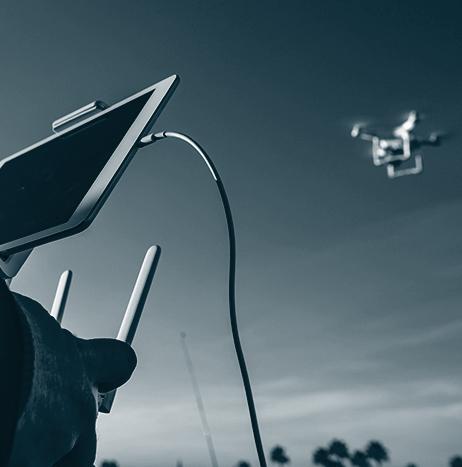
Through the project, drones and machine learning are used to revolutionize how the Air Force Civil Engineer Center collects data for its environmental mission. The drone project was one of the first innovation initiatives that the innovation office pursued after it was established in Nov. 2018.
Defense
Defense
Planck Aerosystems awarded contract to help small UAS operate in challenging environments
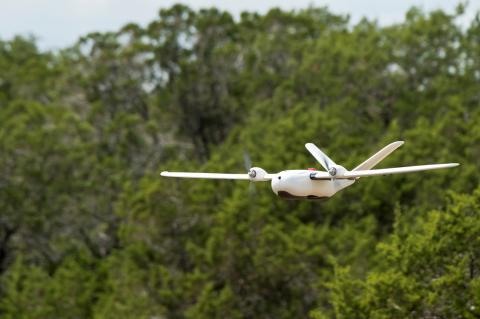
The United States Air Force Research Lab has awarded Planck Aerosystems Inc. (Planck Aero) a contract to develop guidance, navigation, and control solutions for small UAS operating in challenging environments.
The result of the most recent solicitation from the Air Force’s Open Innovation topics of the competitive awards-based Small Business Innovation Research Program (SBIR), the contract will result in Planck Aero developing a visual compass for small UAS in environments where existing commercial offerings may suffer degraded performance.
To help the small UAS operate safely and reliably without having to rely just on GPS or other expensive and heavy installed hardware, Planck Aero is leveraging existing products, as well as its expertise in vision-based navigation.
U.S. Air Force orders 180-plus FLIR Systems Centaur UGVs
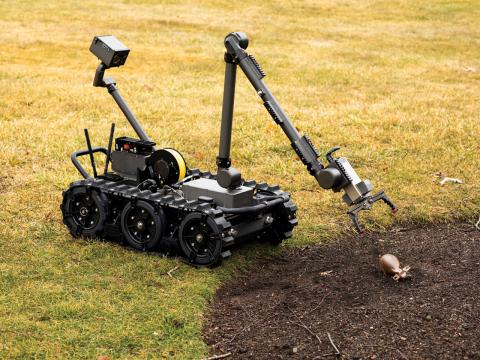
Through a $23 million contract sourced through the Dept. of Defense Man Transportable Robotic System Increment II (MTRS Inc II) program, the United States Air Force has ordered more than 180 of FLIR Systems’ Centaur UGVs, plus spares.
A remotely operated, medium-sized UGV system, Centaur provides a standoff capability to detect, confirm, identify, and dispose of hazards. The open-architected robot, which weighs approximately 160 pounds, is equipped with an advanced EO/IR camera suite, a manipulator arm that reaches more than six feet, and the ability to climb stairs. The robot's modular payloads can be used for CBRNE detection and other missions.
Shipments of the UGVs are expected to begin in the second quarter of 2020.
PEO USC grants Milestone C approval to the Unmanned Influence Sweep System program
The Unmanned Influence Sweep System (UISS) has been cleared for low-rate initial production (LRIP) following the Program Executive Officer for Unmanned and Small Combatants (PEO USC) granting Milestone C approval to the UISS program.
The Navy plans to exercise options for the procurement of three LRIP systems on the current Engineering and Manufacturing Development (EMD) contract with Textron Systems, the UISS prime contractor.


Swiss Army selects Parrot as its micro-UAS provider
As part of the “Swiss Mini UAV Program” (Swiss MUAS) call for tender against major civilian UAS players, Parrot has been selected to provide the Swiss Armed Forces with micro-drones.
A number of factors played into Parrot’s selection, including the company’s knowledge in professional UAS, the performance of its technologies dedicated to Defense and Security, and Parrot's ability to meet the high level of cyber security that the Swiss armed forces required.


Northrop Grumman brings DA/RC view to the modern battlefield
Northrop Grumman makes plenty of intelligent systems, including unmanned ones, and so do many other defense contractors.
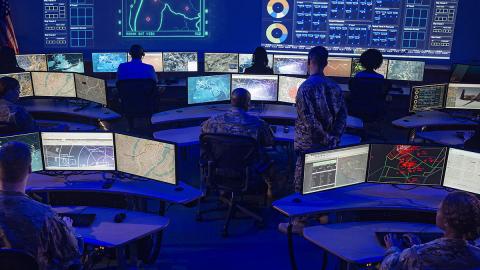
The company would like to allow them to all work together, seamlessly, while requiring relatively little human oversight: what it calls Joint All-Domain Command and Control (JADC2), and its subset, Distributed Autonomous Responsive Control, or DA/RC.
"It is essentially a battle manager on steroids," says Scott Winship, the senior vice president for advanced programs at Northrop Grumman Aerospace Systems. "These are all command nodes that exist, and communication nodes that exist ... so we could use what we have and link them this way."
Boeing, U.S. Navy use Growler as mission controller for two unmanned Growlers
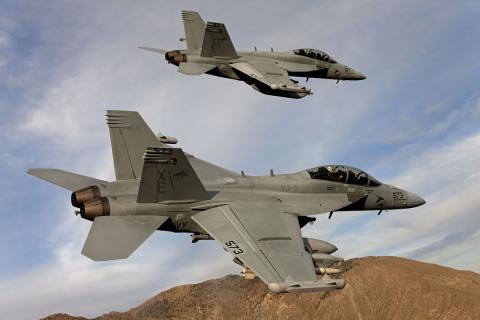
Boeing and the U.S. Navy successfully flew two autonomously controlled EA-18G Growlers as UAS, and used a third Growler as a mission controller for the other two.
Conducted during the Navy Warfare Development Command’s annual fleet experiment (FLEX) exercises, the flights, which took place at Naval Air Station Patuxent River, “proved the effectiveness of technology” allowing F/A-18 Super Hornets and EA-18G Growlers to perform combat missions with unmanned systems, according to Boeing.
Royal Australian Navy, Defence Science and Technology Group showcase AUVs during Summerfest event
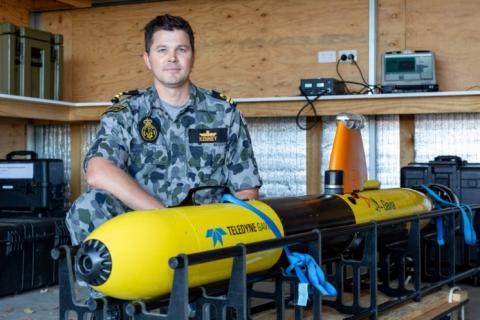
During the inaugural ‘Summerfest’ event at HMAS Creswell, Jervis Bay in Dec. 2019, the Royal Australian Navy and the Defence Science and Technology Group showcased new capability in the use of AUVs.
During the event, 32 AUV experts from Navy, Defence Science and Technology (DST), industry and academia came together to share knowledge and potential answers to common challenges in the growing AUV environment.
Navy engineers also had the opportunity to mark the progress made in AUV applied research and operations throughout 2019.