
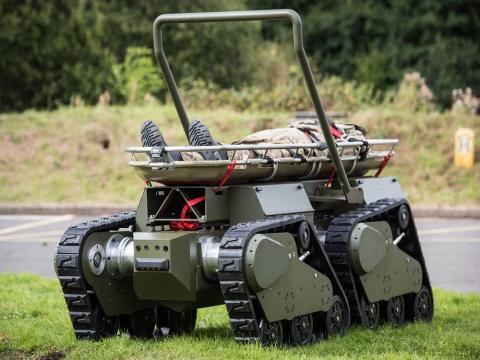
BAE Systems’ new UGV, called Ironclad, is designed to ultimately take soldiers out of certain dangerous situations by taking on dangerous jobs that they have traditionally been tasked with.
It will do this, in large part, thanks to its versatility, as the UGV can be fitted to conduct reconnaissance, combat and casualty evacuation missions.
Small enough to operate within tight urban environments, Ironclad still maintains the mobility necessary to handle extreme cross-country terrain.
Ground
Ground
Endeavor Robotics to provide improved UGV capabilities for the US Government
Endeavor Robotics is responding to an order worth more than $15 million for the US Government for upgrades and accessories to support fielded robot systems.
The company says that it is prepared to “rapidly deliver all items and remains dedicated to providing solutions to the US Government and global customers” as quickly as possible due to the “lifesaving nature of the company’s products.”
“We are a highly responsive, customer-focused, agile company that stands positioned to rapidly provide upgrades, accessories, and new platforms whenever called upon by our customers,” says CEO Sean Bielat.

From Unmanned Systems Magazine: Strategy Lays Out Army Plan for Moving Forward with Unmanned Ground Vehicles
The United States is moving to a new generation of military unmanned ground vehicles, but it won’t be easy — the effort faces technical and doctrinal challenges along the way.
The current generation of about 7,000 UGVs of various types has proven its worth in Iraq and Afghanistan, where the robots have been used in more than 125,000 missions to identify objects, clear routes, and locate and defuse improvised explosive devices. More than 11,000 IEDs have been found and rendered ineffective by Army, Navy and Marine Corps teams, the Pentagon says.
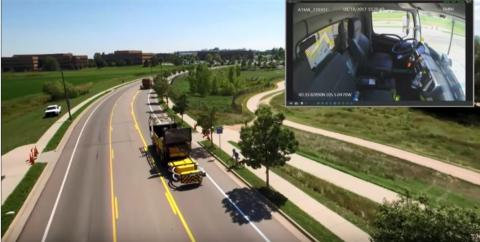
CDOT showcases autonomous vehicle designed to protect roadway maintenance crews
During a live roadway striping operation in Fort Collins, Colorado, the Colorado Department of Transportation (CDOT) and its partners unveiled and showcased the Autonomous Impact Protection Vehicle (AIPV), which is designed to help protect roadway maintenance crews.
Described as a “first-of-its kind work zone vehicle,” the AIPV is customarily positioned behind road construction crews so that it can protect road workers from the traveling public. Thanks to the AIPV removing the driver from a truck that is acrtually designed to be hit, the AIPV ultimately increases work zone safety for everybody.
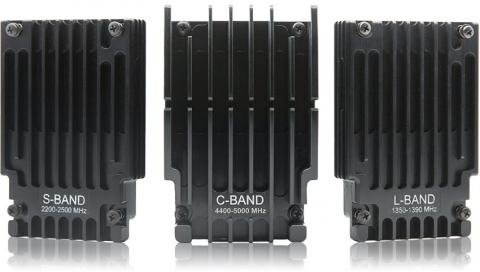
Persistent Systems introduces Lower C-Band RF module that can be used by UGVs
Persistent Systems, LLC has released a Lower C-Band RF module for its MPU5 radio system.
According to Persistent, the Lower C-Band frequency is a “requirement of multiple Unmanned Ground Vehicle (UGV) Programs of Record.”
The new Lower C-Band module operates in the 4400 to 5000 MHz frequency band; the same frequency band that is used by NATO Military Forces, Federal / Homeland Security (DHS, DOJ), and Public Safety organizations.
Long range performance and high throughput are achieved thanks to Persistent’s radio module providing “6W of transmit power via its 3×3 MIMO architecture.”
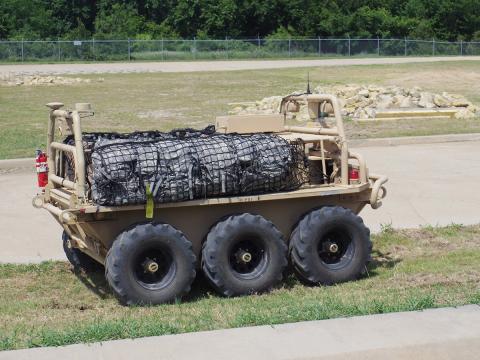
Endeavor Robotics to deliver 32 Small Unmanned Ground Vehicles to United States Armed Forces
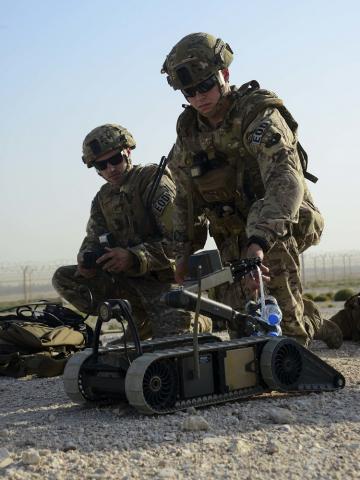
Endeavor Robotics will deliver 32 of its Small Unmanned Ground Vehicles (SUGV), equipped with the Endeavor Robotics uPoint Multi-Robot Control System, to the United States Armed Forces.
The SUGV meets IP67 ratings, can operate in all environmental conditions, and has increased capabilities thanks to its ability to integrate various sensors and hardware.
The SUGV can also climb and descend stairs, and it provides “dexterous and robust manipulation and lift/inspection capabilities,” while also having the ability to extend “operational range through mesh networking” with other Endeavor systems that are deployed.
Weekend Roundup
This Week in the Unmanned Systems and Robotics World
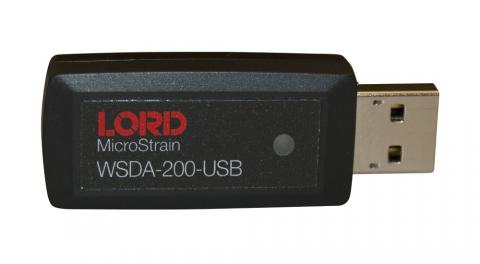
LORD Corporation, which develops wireless and embedded sensing systems, has introduced its LXRS+ wireless networking protocol, which features a bandwidth of 16,000 samples per second per channel, and an aggregate system bandwidth of 256,000 samples per second over 16 channels. According to LORD, “the wireless sensor nodes that operate using LXRS+ protocol are designed to operate at incredibly low-power,” which allows battery powered networks to operate for long periods of time, and “makes the use of energy harvesting systems a viable option for permanent installations.”
Autonomous robots approved for operation in Concord, California
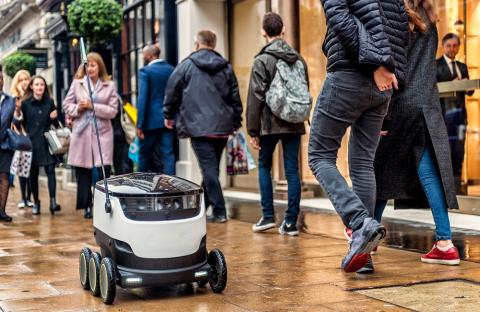
The city of Concord, California is preparing to welcome Starship Technologies’ autonomous delivery robots to its sidewalks and streets, after the city’s leaders agreed to make Concord a testing ground for the technology.
This announcement comes after Starship Technologies approached the city of Concord last month and asked for permission to conduct a 12-month pilot program.
“Concord, as a city, is a great candidate for robot deliveries with the layout, pedestrian density and number of potential partners,” says Starship Technologies spokesman Henry Harris-Burland, via the East Bay Times.
AUVSI Unmanned Systems – Defense. Protection. Security.
Unmanned Systems—Defense. Protection. Security. is the most comprehensive government-focused event within the unmanned systems industry—bringing together defense leaders, government decision makers and technology experts responsible for unmanned systems, intelligent robotics and components.
www.thedefenseshow.org

Automated Vehicles Symposium 2017
The Automated Vehicles Symposium convenes industry, government, and academia from around the world to address complex technology, operations, and policy issues. 1,500 thought leaders meet over 3 days to move us toward safe, automated mobility. The symposium is produced in partnership with the Transportation Research Board (TRB).
www.automatedvehiclessymposium.org