
The Kansas Department of Transportation (KDOT) UAS Integration Pilot Program (IPP) team has been granted permission to conduct the first ever beyond visual line of sight (BVLOS) UAS flight that utilizes only onboard detect-and-avoid systems.
According to the KDOT team, this is the first-ever FAA authorized Part 107 operation to fly without visual observers or ground-based radar in place, as the flight will leverage Iris Automation’s onboard collision avoidance system, Casia.
Software
Software
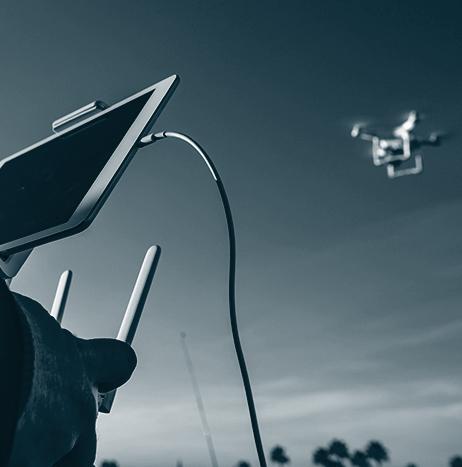
Carolina Unmanned Vehicles successfully demonstrates Small Tactical Multi-Payload Aerostat System
Carolina Unmanned Vehicles (CUV) has announced that during the 21st Century Maneuver, Logistics, and Force Protection Advanced Naval Technology Exercise (ANTX) at USMC Base, Camp Lejeune North Carolina, it successfully demonstrated the Small Tactical Multi-Payload Aerostat System (STMPAS).
Described as a “mobile cost effective aerostat system,” STMPAS provides persistent 24/7 EO/IR Surveillance, Networked Communications Relays and Signal Intelligence collection.

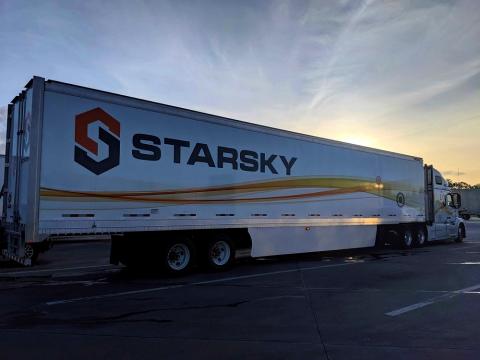
Loadsmart, Starsky Robotics automatically dispatch autonomous truck to haul freight
Digital freight broker Loadsmart and autonomous truck startup Starsky Robotics have announced that they were able to automatically dispatch an autonomous truck to haul freight.
Loadsmart successfully priced, tendered and booked the dispatchment, while Starsky's self-driving technology was used to pick up and deliver the shipment.
There was no need for human intervention during this process, thanks to the integration of Loadsmart's artificial intelligence (AI)-powered pricing and load matching technology with Starsky's API.
Electrify America, Stable Auto partner to deploy robotic charging platforms for self-driving vehicles
Electrify America, a wholly-owned subsidiary of Volkswagen Group of America, has announced that it will work Stable Auto, a San Francisco-based electric vehicle (EV) fleet charging company, to deploy robotic charging platforms for self-driving vehicles in a pilot demonstration site in San Francisco.
Together, the companies will deploy a pilot platform in San Francisco, which will seek to charge autonomous EVs without human intervention using a robotic platform attached to a 150-kilowatt DC fast charger.
Expected to open in early 2020, the charging location will be Stable’s first commercial autonomous charging site.

DJI introduces DJI Digital First Person Viewing Transmission System for drone racing
DJI has introduced its DJI Digital First Person Viewing (FPV) Transmission System, which it describes as an “advanced digital ecosystem” that includes FPV goggles, an FPV Air Unit Transmission Module, an FPV remote controller and an FPV camera.
Recogni seeks to make autonomous vehicles a reality with low-power AI processing
A company called Recogni Inc. that designs a vision-oriented artificial intelligence (AI) platform for autonomous vehicles has emerged from stealth with the announcement of $25 million in Series A financing.

UTA researchers, Lockheed Martin collaborating on project surrounding sensors on unmanned vehicles
Two University of Texas at Arlington researchers are working with Lockheed Martin to “optimize how unmanned vehicles use sensors to gather information.”
Frank Lewis, the Moncrief-O’Donnell Chair and professor of electrical engineering, and Yan Wan, an associate professor of electrical engineering, are helping Lockheed figure out how to use sensors on vehicles underwater, on the ground and in the air, to measure and predict the activities of a target.
Ford acquires Quantum Signal to boost its autonomous vehicle efforts
Ford has announced its acquisition of a Saline, Michigan-based company called Quantum Signal that works on mobile robotics for a number of different clients, including the military.
With a mindset towards further advancing its goal of launching a self-driving vehicle business, Ford says that it plans on leveraging Quantum Signal’s “extensive experience” in real-time simulation and algorithm development to develop its Transportation as a Service (TaaS) platform, as well as vehicle controls that support the customer experience, functional safety and other vehicle systems.
AT&T, Badger Technologies partner on autonomous robots for retail
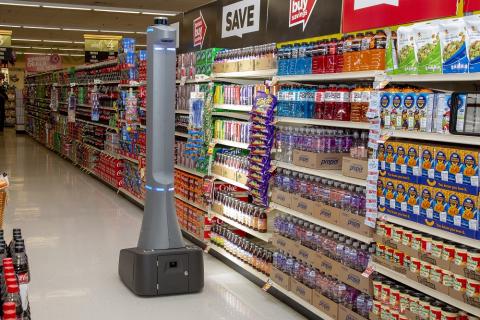
Badger Technologies is working with AT&T to enable autonomous robots with 5G wireless networking capabilities to accelerate retail automation.
According to Badger Technologies, its robots give retailers the ability to identify out-of-stock, mispriced or misplaced inventory, as well as store hazards, which ultimately helps improve operational efficiencies and customer experiences.
While these “advanced mobile data collection systems” can “fill major gaps in the collection and sharing of vital in-store data and images,” Badger Technologies says, they can also take a toll on a store’s existing Wi-Fi network.
Liteye Systems, Red Six Solutions partnering on counter-UAS tech
Liteye Systems Inc., the provider of manufacturing, integration, training, and services of the Anti-UAS Defense System (AUDS), has announced a partnership with a red team strategic advisory company called Red Six Solutions LLC.