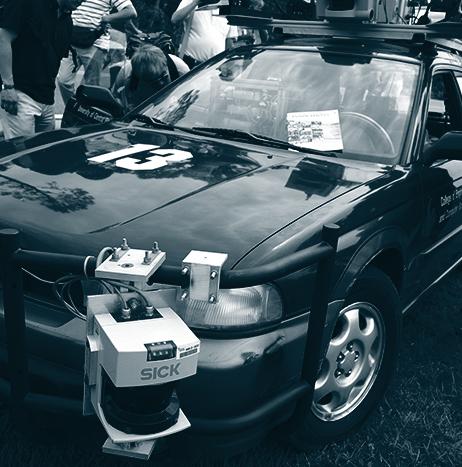
Raytheon and AirMap have announced that they will collaborate on future projects to safely integrate UAS into the national airspace system, and “unlock the positive economic and social benefits of expanded commercial drone operations.”
The agreement combines the expertise of each company. Air traffic controllers across the U.S. use Raytheon's Standard Terminal Automation Replacement System (STARS) to provide safe and efficient aircraft spacing and sequencing guidance for more than 40,000 departing and arriving aircraft daily at both civilian and military airports.
Software
Software
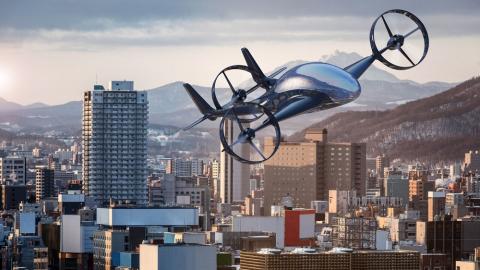
Black Swift Technologies to develop UAS that can autonomously track eyewall of tropical cyclones and hurricanes
The National Oceanic and Atmospheric Administration (NOAA) has awarded Black Swift Technologies (BST) a contract to develop an air-deployed UAS to perform lower boundary layer observations in difficult atmospheric conditions that are commonly encountered in convective storms such as hurricanes and tropical cyclones.
Known as the S0 Air-Deployed UAS, the proposed vehicle would be tube-launched from an aircraft such as NOAA’s Lockheed P3 Orion.

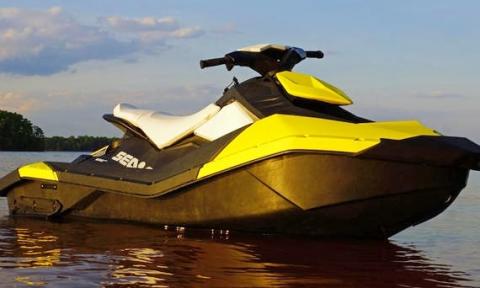
UAV Navigation announces autopilot for USVs and ASVs
UAV Navigation has announced that it has developed an autopilot for USVs and ASVs.
Designed to comply with IP66—which means that it can work in humid conditions, including salt spray and saline environments—UAV Navigation’s autopilot is capable of completely autonomously controlling a USV mission from beginning to end.
According to UAV Navigation, all of the advanced features available for UAS can be used by USV operators, including multiple waypoints, multiple onboard mission plans, and no-go zones.
One of the most useful features of the autopilot, according to UAV Navigation, is ‘relative routes,’ which is the ability to install the Ground Control Station (GCS) on a moving ship, and then to fix a mission plan relative to the moving vessel.
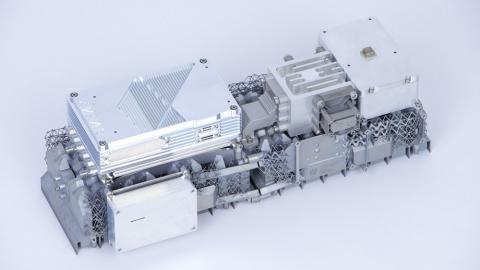
IMSAR, Optisys develop SWaP radar specifically for HALE platforms
IMSAR LLC, a privately owned research, development, and manufacturing company that specializes in lightweight, low-power Synthetic Aperture Radar (SAR) devices and radar image processing, has teamed up with Optisys LLC, a privately-owned RF design and additive manufacturing company, to create a low-Size, Weight, and Power (SWaP) radar, which is designed to be used on High Altitude, Long Endurance (HALE) platforms.
The high-altitude radar system combines Optisys's ability to miniaturize antenna arrays through 3D printing with IMSAR's military-proven radar technology.
Volvo Trucks' autonomous vehicle Vera to help transport goods in Sweden
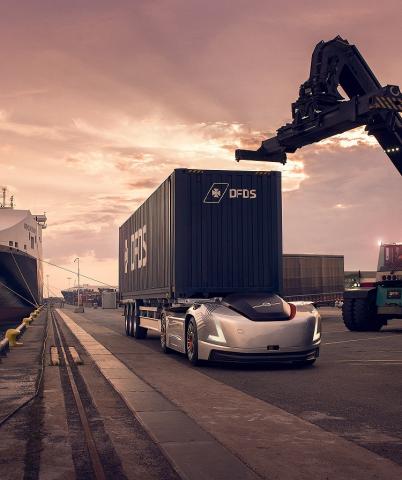
Volvo Trucks and DFDS, a ferry and logistics company, are collaborating to use Volvo Trucks' electric, connected and autonomous vehicle Vera as part of an integrated platform to transport goods from a logistics center to a port terminal in Gothenburg, Sweden.
The goal of the collaboration is to utilize Vera in a real application as part of a connected system for a continuous flow of goods from a DFDS’ logistics center to an APM Terminals port facility in Gothenburg, for distribution across the world.
Eramet gets access to new collaborative platform for analyzing UAS data through Delair partnership
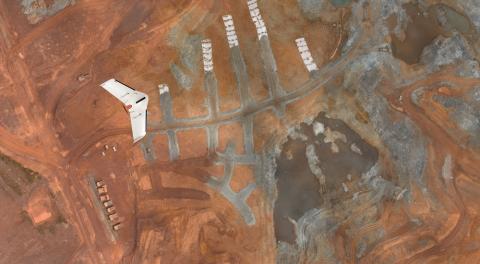
Eramet, a global mining and metallurgy group, has signed a framework agreement with Delair to accelerate the digital transformation of its mining activities.
Through the agreement, Eramet will get access to Delair Aerial Intelligence (delair.ai), which is a new collaborative platform for analyzing UAS data and turning the results into valuable business insights.
Delair notes that its Delair.ai platform has been up and running at the Tiébaghi mine in New Caledonia since January. By the end of the year, it will be used by all of Eramet’s mines.
Currently, nine UAS are operating at Eramet. The plan is for nine more to be deployed by the end of the year, including Delair’s fixed-wing UX11 drone.
Hyundai, Kia invest in Aurora to accelerate development of autonomous vehicle technologies
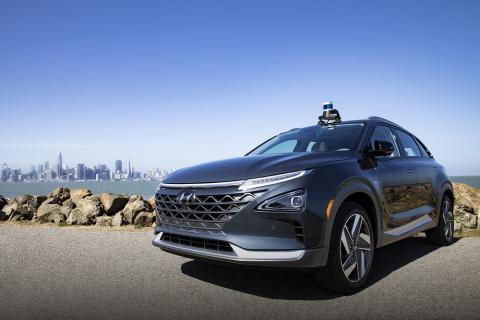
In an effort to accelerate the development of autonomous vehicle technologies, Hyundai Motor Group and Kia Motors Corporation have invested in autonomous technology developer Aurora.
Having formed a strategic partnership in 2018, the companies say that this investment will strengthen that partnership which, thus far, has seen Hyundai, Kia, and Aurora working together on self-driving technologies on NEXO, Hyundai’s flagship fuel cell vehicle.
The companies will use this new investment to expand research to a wide range of models, and to build an optimal platform for Hyundai and Kia’s autonomous vehicles.
Auterion announces new hires and U.S. office
Known for providing an open-source-based, enterprise operating system for drones called Auterion Enterprise PX4, Auterion has announced two new hires, and a U.S. office to guide the company’s growth.
David Sharpin, formerly vice president of Sales and Business Development for AeroVironment, has been named the General Manager for Auterion U.S., while Marco Bill-Peter, current SVP Red Hat, has been named an Auterion Board Member.
Auterion notes that currently, the Defense Department’s drones run largely on custom software that is created and maintained by several military contractors. The open source software development model is starting to change that, though, according to Auterion.
Draper, Harvard University building microrobots for search and rescue operations
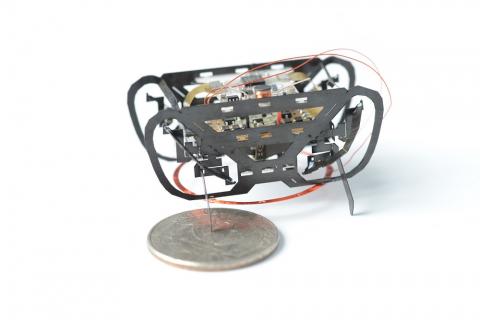
Engineers from Draper and Harvard University’s Wyss Institute for Biologically Inspired Engineering and Paulson School of Engineering and Applied Sciences (SEAS) are collaborating to create a small climbing robot that could be used for search and rescue operations in high-risk environments.
Aurora, Fiat Chrysler Automobiles partner to work on self-driving commercial vehicles
Autonomous technology developer Aurora has partnered with Fiat Chrysler Automobiles (FCA) to work on self-driving commercial vehicles.
Aurora says that the partnership will “further expand the scope” of the Aurora Driver, which is an independent platform that Aurora describes as “the hardware, the software, and the data services that guide vehicles powered by it safely through the world.”
This will ultimately allow Aurora to offer a variety of technologies to strategic customers in logistics, transit, and other use cases, the company says.