Software
Software
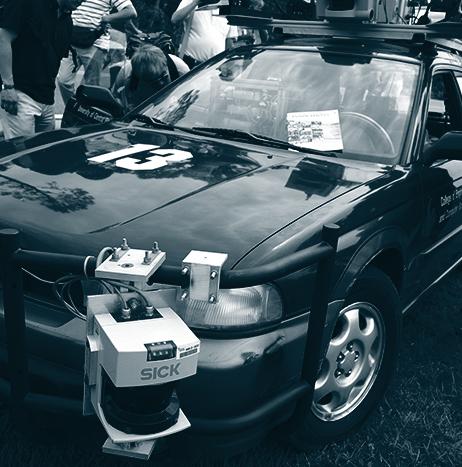
Tomahawk Robotics, FLYMOTION partner to bring robotic control technology to public safety and government market
In an effort to bring its Kinesis software suite to the public safety and government market, Tomahawk Robotics, a developer of robotic control technologies, has announced a partnership with FLYMOTION, which provides end to end UAS platforms and services.
According to Tomahawk Robotics, Kinesis allows robotic systems to be managed no matter their underlying hardware. Whether in the air, on the ground or in the water, users can control their robotic systems in the same way, port autonomy capabilities from one platform to another, and leverage information across these systems, using Kinesis.

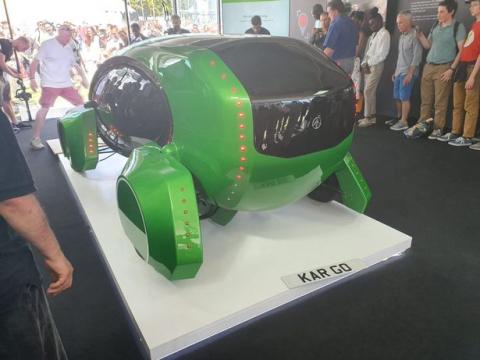
Cobalt Robotics combines autonomous patrol robots with human specialists to keep places safe
Cobalt Robotics, a developer of indoor autonomous robots, has announced that it has raised $35 million in Series B financing, which is expected to help the company expand its services throughout the domestic United States.
Combining autonomous patrolling robots with human specialists, Cobalt’s Robots-as-a-Service model allows organizations to provide a 24-hour security strategy that complements current security assets such as manned security guards and access control systems (ACS).
According to Cobalt, this comprehensive strategy results in a “highly effective” security program that not only reduces costs, but also features robots that remain up-to-date with the “latest and greatest software.”
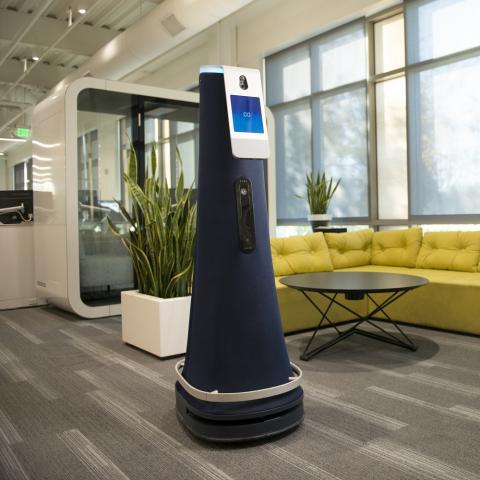
CerbAir, AirMap partner to enhance low-altitude airspace safety
European counter-UAS manufacturer CerbAir has announced plans to work with AirMap to provide “integrated, comprehensive solutions” for low-altitude airspace safety and security.
CerbAir and AirMap say that through their partnership, they will respond to the “urgent need” to combine efficient UAS traffic management with reliable protection from rogue or accidental UAS intrusions.
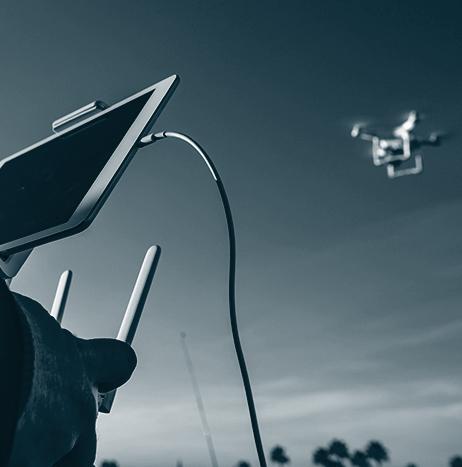
BlackBerry, LG partner to advance connected and autonomous vehicle technology
In an effort to “accelerate the deployment of connected and autonomous vehicle technology” for automotive OEMs and suppliers around the world, BlackBerry Limited is expanding its partnership with LG Electronics Inc.
Through the agreement, LG Electronics will build next generation digital consolidated cockpits— including infotainment systems, digital instrument clusters, and telematics systems for several OEMs—using a variety of BlackBerry QNX software and services.
EasyMile's quality management system receives ISO 9001 certification
Known for its EZ10 electric driverless shuttle, EasyMile has announced that international certification agency Bureau Veritas has awarded ISO 9001:2015, an international standard related to quality management, to the company's quality management system.
“The ISO 9001:2015 is a very important step for EasyMile towards worldwide Autonomous Transport System acceptance,” says Gilbert Gagnaire, founder & CEO of EasyMile.
UAVOS develops advanced leaf spring leg for heavy UAS
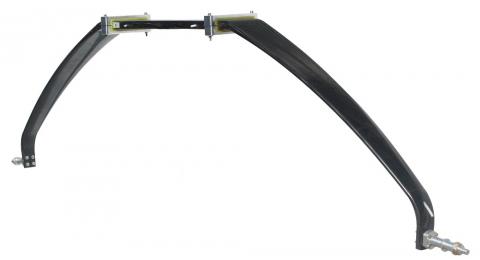
UAVOS has developed an advanced leaf spring leg for the main landing gear of UAS that weigh up to 2,400 pounds.
According to UAVOS, the spring leaf is stronger, thinner and lighter by 38 percent in comparison with fiberglass, thanks to being made of “aircraft carbon prepreg by the high-temperature molding procedure.”
A duct for the brake hose and the landing sensor wire is inside the spring leaf. Its modern material and chassis design allows it to save seven kilograms of the spring weight (in comparison with fiberglass), which reduces aerodynamic resistance, ensuring the protection of the brake hydraulic system and electrical wiring leading to the chassis.
Volvo Group, NVIDIA partner to develop decision making system for autonomous vehicles
The Volvo Group and NVIDIA have signed an agreement to collaborate on the development of the decision making system of autonomous commercial vehicles and machines.
The system will be designed to safely handle fully autonomous driving on public roads and highways, the companies say.
The system will use NVIDIA’s end-to-end artificial intelligence platform for training, simulation and in-vehicle computing. It will be built on NVIDIA’s full software stack for sensor processing, perception, map localization and path planning, which will facilitate a number of possible autonomous driving applications including public transport, freight transport and refuse and recycling collection.