Unmanned Traffic Management (UTM) technology provider Altitude Angel is partnering with low-altitude air traffic data provider INVOLI to provide what they’re describing as “an unrivalled picture of airspace” to ANSPs, operators, pilots and drone-centric risk management applications.
After working together informally on a few initiatives, Altitude Angel and INVOLI believe a strategic partnership is beneficial for both of them. Most recently, the companies worked together at the African Drone Forum and Lake Kivu Challenge 2020, where Altitude Angel served as the lead and umbrella UTM provider, while INVOLI delivered its air traffic awareness system and drone tracking platform.
UAS
UAS
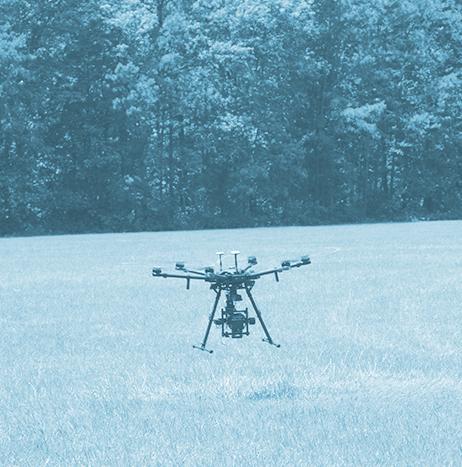

QUT researchers to use drones to identify wildlife populations in bushfire affected areas
As part of a collaborative project, researchers at Queensland University of Technology (QUT) in Queensland, Australia will use drones and infrared imaging to identify wildlife populations in bushfire affected areas.
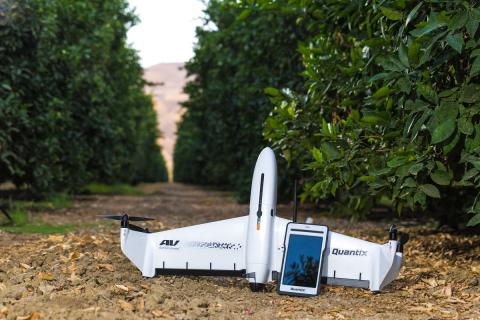
Draganfly to distribute AeroVironment's Quantix Mapper UAS to commercial markets globally
Draganfly will distribute AeroVironment’s Quantix Mapper drones to commercial markets across the world after the two companies announced a teaming agreement on Tuesday, March 17.
Described as a “simple to use” drone that empowers users through its fully-automated operation and instant insight, Quantix Mapper features a hybrid design that allows the aircraft to launch vertically and transition to horizontal flight, which maximizes aerodynamic efficiency and range.
High resolution imagery can be viewed immediately by users on the included Operating Tablet without the need for other devices, internet or additional software. Users can quickly and safely generate up-to-date maps for infield assessment with just the touch of a button.
AFIMSC innovation project utilizing UAS and machine learning receives SBIR award from Air Force
On Thursday, March 12, an Air Force Installation and Mission Support Center (AFIMSC) innovation project received a $3 million Small Business Innovation Research program award from the Air Force.
Through the project, drones and machine learning are used to revolutionize how the Air Force Civil Engineer Center collects data for its environmental mission. The drone project was one of the first innovation initiatives that the innovation office pursued after it was established in Nov. 2018.
Planck Aerosystems awarded contract to help small UAS operate in challenging environments
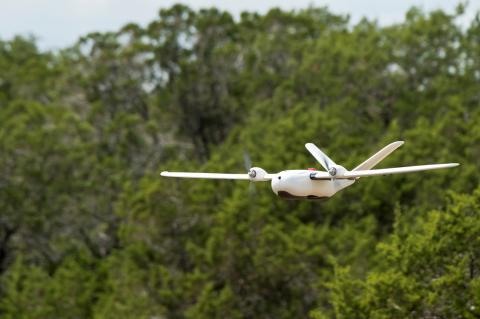
The United States Air Force Research Lab has awarded Planck Aerosystems Inc. (Planck Aero) a contract to develop guidance, navigation, and control solutions for small UAS operating in challenging environments.
The result of the most recent solicitation from the Air Force’s Open Innovation topics of the competitive awards-based Small Business Innovation Research Program (SBIR), the contract will result in Planck Aero developing a visual compass for small UAS in environments where existing commercial offerings may suffer degraded performance.
To help the small UAS operate safely and reliably without having to rely just on GPS or other expensive and heavy installed hardware, Planck Aero is leveraging existing products, as well as its expertise in vision-based navigation.
First Responder UAS Endurance Challenge seeks out 'last drone standing'
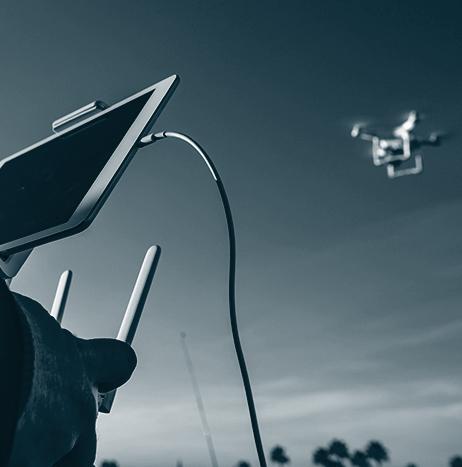
You’ve heard the expression last man standing. Beginning April 1, a new competition will seek out the last drone standing.
In an effort to help equip first responders with the necessary technology to aid them during various operations, the First Responder UAS Endurance Challenge is designed to crowd-source as many inventive drone designs as possible for first responders.
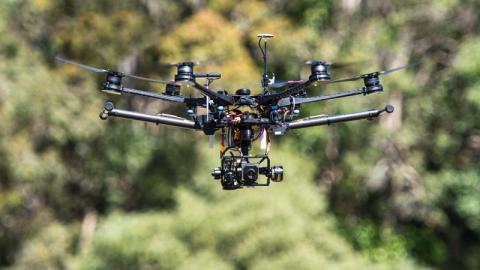
Mathematicians equip drone with speaker and microphones to make it echolocate like bats
Mathematicians have discovered that a drone equipped with microphones and a speaker—with the help of algebra and geometry—can echolocate similarly to how bats use echolocation to orient themselves with their surroundings.
According to Purdue University associate professor of mathematics and electrical and computer engineering Mireille “Mimi” Boutin, this signal processing research could have potential applications for people, underwater vehicles and even cars.


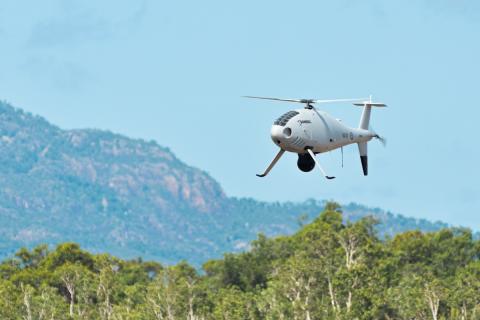
Schiebel completes acceptance tests of new heavy fuel S2 engine for Camcopter S-100 UAS for Royal Australian Navy
Schiebel has successfully completed the acceptance tests of its new Schiebel-designed heavy fuel S2 engine for its Camcopter S-100 UAS for the Royal Australian Navy (RAN).
With more than 12 years of experience developing engines for the Camcopter S-100, Schiebel has learned a variety of lessons from extensive operations across the globe that have helped in the development of the S2.
“Given the single fuel policy adopted by the world’s Navies, we have responded to the requirement and have now developed, tested and produced our own Schiebel-designed heavy fuel engine for the Camcopter S-100 system,” says Hans Georg Schiebel, chairman of the Schiebel Group.