
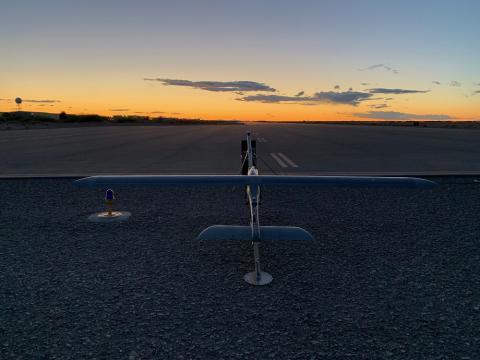
Silent Falcon UAS Technologies has introduced its new Silent Falcon Extended Endurance (EE) UAS.
Equipped with the newest technological innovations in solar panels, battery and solar power conversion, the Silent Falcon EE UAS can stay aloft for up to eight hours during the day, and four hours at night.
The communications capabilities of the Silent Falcon EE have also been upgraded, thanks to the inclusion of three MIMO MANET radios at the Ground Control Station with the SF TriAntenna configuration. Not only does this configuration greatly increase connectivity, bandwidth and reliability, but it also allows one of the radios to be used to connect a remote site, such as a command center to the radio network.
UAS
UAS
UAVOS introduces new ground control station to monitor and control UAS
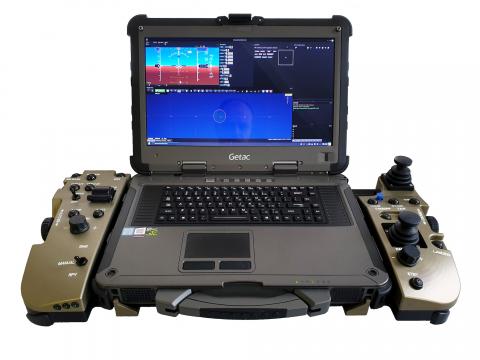
UAVOS has introduced its new Portable Ground Control Station (PGCS 3), which is “implemented as a console with controls collected on the ergonomic control panel,” the company says.
In its basic configuration, PGCS 3 comes with a military-grade rugged Getac X500 laptop. Thanks to the ability to integrate different 15-inch laptop computer models, the PGCS 3 is an “even more” versatile platform to use, UAVOS notes.
Described as a “detachable computer and a console with additional controls,” the PGCS 3 is fully compatible with UAVOS autopilot. Console joysticks, push-buttons and switches are all industrial water-proofed units, and the panel is equipped with a quick-release mechanism for docking the laptop.
South Carolina's Oconee County Sheriff's Office purchases UAS
The Oconee County Sheriff’s Office in South Carolina has purchased a new UAS.
The UAS will be used in conjunction with the sheriff's office’s helicopter for various operations such as search and rescue missions, locating the elderly as a part of Project Life Saver, and locating potentially dangerous fleeing suspects.
The sheriff’s office says that UAS offer capabilities that helicopters do not for certain missions. UAS take less time to deploy, and they can also help find subjects that are located in areas where an extended aerial view may be limited.

N.C. A&T professor to help NCDOT examine how UAS can be used to inspect bridges
In October, a North Carolina Agricultural and Technical (A&T) State University professor will help the North Carolina Department of Transportation (NCDOT) on a project to examine how UAS can be used to inspect aging civil infrastructure.
Fairfax County Board of Supervisors approves Public Safety small UAS program
On Tuesday, May 21, the Fairfax County Board of Supervisors voted unanimously to approve a Public Safety small UAS program in Fairfax County, Virginia.
Vestas selects Sulzer Schmid, WKA to inspect wind turbines using UAS
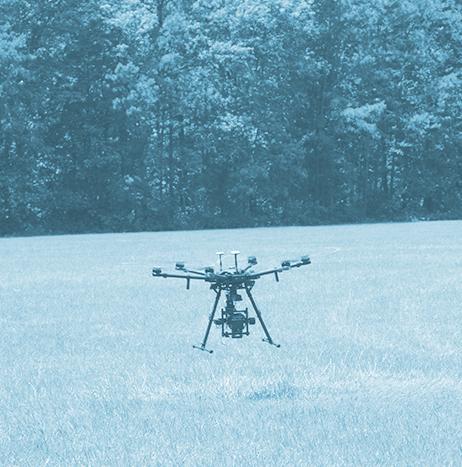
Wind turbine company Vestas has selected Sulzer Schmid, a Swiss UAS technology company for rotor blade inspections, and WKA, a blade inspection and repair service provider, to conduct a large UAS-based blade inspection campaign in Scandinavia on 1,250 wind turbines in less than 12 weeks.
Located across Sweden and Finland, the blades of the 1,250 Vestas turbines must be inspected by the end of June, just in time for the beginning of the repair work season, which traditionally takes place during the less windy summer months.
To meet this tight deadline, Vestas opted for UAS, which is the “only approach that can meet its high-quality standards within such a demanding time-frame,” the companies say.
DJI equipping new consumer drones with airplane and helicopter detectors
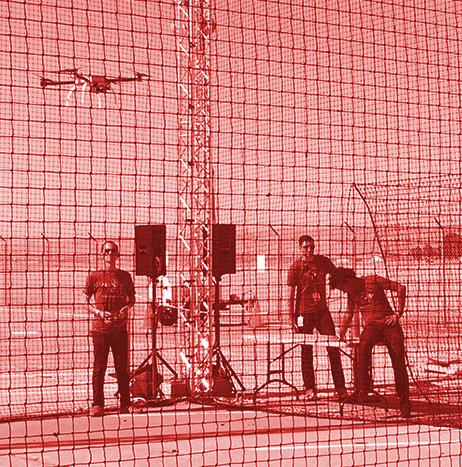
As part of a 10-point plan to “ensure the world’s skies remain safe in the drone era,” DJI has announced that it will install airplane and helicopter detectors in new consumer drones.
AirSense technology, which receives ADS-B signals from nearby airplanes and helicopters and warns UAS pilots if they appear to be on a collision course, will be integrated into all new DJI drone models released after January 1, 2020 that weigh more than 250 grams. According to DJI, this will be the largest single deployment of ADS-B collision awareness technology to date, and will set a new standard by putting professional-grade aviation safety technology in drones available to everyone.
Alpha Unmanned Systems' Alpha 800 selected as UAS platform for H2020 ResponDrone Project
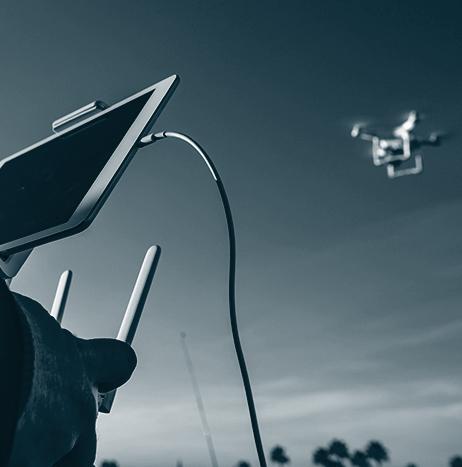
Alpha Unmanned Systems has announced that its Alpha 800 has been selected as the UAS platform for the European Union's three year €8.3 Million H2020 ResponDrone Project.
According to Alpha, the Alpha 800 will be used to demonstrate how multi-UAS operation can deliver high value data and services for first responders following a disaster.
The project, which kicked off on Monday, May 20 in Madrid, Spain, is made up of 20 companies—including Thales, IAI and DLR—from 12 countries. Alpha says that it will manage all flights and systems integration into both the Alpha 800s and the cloud-based data analysis platforms.
Soldiers train with first personal UAS in the U.S. Army
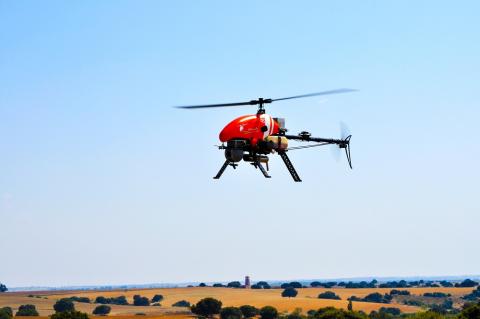
From April 29 to May 3, Program Executive Office Soldier (PEO Soldier) fielded the first personal UAS in the U.S. Army to soldiers of 3rd Brigade Combat Team, 82nd Airborne Division at Fort Bragg, North Carolina.
Along with inventory and taking possession of the technology, soldiers also spent the week-long fielding receiving classroom instruction on the system's capabilities, its controls, and how to operate it.
Embry-Riddle professor develops counter-UAS tech that safely grounds unauthorized UAS
Embry-Riddle Aeronautical University and Drone Defense Systems LLC have announced a licensing agreement to commercialize new technology that detects and commandeers unauthorized UAS, and guides them to a safe landing.
Developed by Embry-Riddle faculty member Dr. Houbing Song, the technology suggests a “safe, affordable” way to neutralize rogue UAS without having to shoot them down or force them to crash-land. The technology allows for this to be done even in civilian settings such as large outdoor entertainment arenas and airports.
According to Dr. Stephanie A. Miller, executive director of technology transfer for Embry-Riddle’s Research Park, Drone Defense Systems has received exclusive rights to commercialize the technology under the licensing agreement.