The Spring Lake Fire Department in Spring Lake, North Carolina recently used its UAS to rescue stranded kayakers from the Little River.
Over multiple days, the department rescued seven people in two separate incidents. One rescue utilized a boat and took the department all morning to pull a family of five from the river. The other water rescue, though, utilized the department’s new UAS, and took just minutes.
“These drones can fly a lot faster than walking though woods and going down to the river in a boat so just making eye contact and putting a visual image on somebody is key to this,” says Drone Pilot Brandon Fitzhugh, via ABC 11.
UAS
UAS
Grand Sky, Harris create BVLOS 'super corridor'
Grand Sky Business and Aviation Park and Harris Corp. have announced that they have collaborated to enable the country’s first and largest UAS airspace to support beyond visual line of sight (BVLOS) flight operations, as well as UAS Traffic Management (UTM) research.
Described as a “super corridor,” the BVLOS corridor, which stretches up to 100 miles, is the “most technologically sophisticated UAS airspace supported by multiple and redundant systems for cooperative and non-cooperative surveillance,” according to Grand Sky and Harris.
A variety of UAS BVLOS applications are possible thanks to these surveillance capabilities, including in oil and gas, public safety and package deliveries.
senseFly drones approved for Brazil's first-ever BVLOS operations
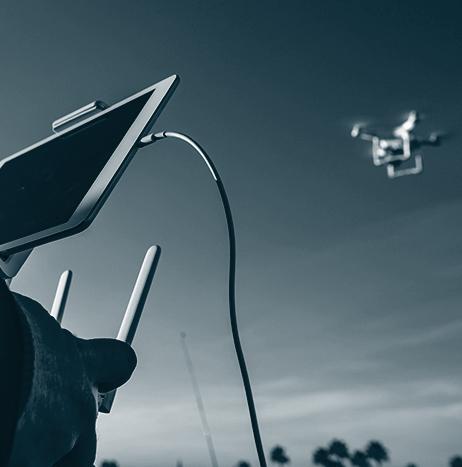
In collaboration with drone engineering and consulting specialists AL Drones and geotechnology company Santiago & Cintra, senseFly has announced that the National Civil Aviation Agency (ANAC) has approved beyond visual line of sight (BVLOS) flights to be carried out in Brazil for the first time in the country’s history, using UAS technology from senseFly.
SenseFly’s UAS can now be used for future BVLOS missions conducted by Brazilian drone operators.
“This is a momentous step forward for BVLOS operations in Brazil, and a really exciting time for the country’s expanding commercial drone industry,” says Pierre-Alain Marchand, regulatory compliance manager, senseFly.

Alta Devices announces new solar product for HALE market
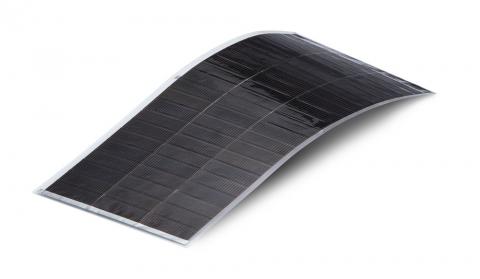
Alta Devices has unveiled a new solar product that is designed to meet the specific needs of UAS that can serve as platforms for cellular and IoT connectivity.
According to Alta, the product, known as AnyLight Solar, combines “breakthrough” solar cell technology with several new inventions to provide features to maximize power, minimize weight, and provide sufficient protection from the harsh environment commonly found in the Earth’s stratosphere.
“Alta Devices recognizes that our aerospace customers need to innovate every aspect of these new and complex aircraft systems,” says Alta Devices CEO, Jian Ding.
ESAero to support Planck Aerosystems' defense and commercial UAS business through new partnership
Aerospace manufacturer Empirical Systems Aerospace Inc. (ESAero) will support the defense and commercial UAS business of Planck Aerosystems (Planck Aero) through a new partnership between the two companies.
In support of increasing demand across Planck’s customer base, both domestically and internationally, ESAero will manufacture Planck Aero’s Group 1 UAS, Shearwater, in its manufacturing plant in San Luis Obispo, California, which will support Planck’s strategy to scale the company.
The companies note that the Shearwater UAS is the preferred small multi-rotor platform to host the Planck Autonomous Control Engine – ACETM navigation system, which enables the UAS to operate autonomously from moving vehicles and vessels, including vision-based precision landing.
Black Swift Technologies' S2 UAS to be deployed in Greenland for atmospheric research studies
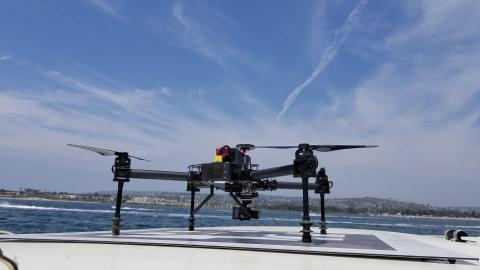
Black Swift Technologies (BST) has announced that its Black Swift S2 UAS will be used to conduct high-altitude high-latitude atmospheric research studies in Greenland, as part of the international East Greenland Ice-Core Project (EastGRIP).
With support from the National Science Foundation (NSF), the work will be conducted by the Institute of Arctic and Alpine Research (INSTAAR), which is part of the University of Colorado Boulder.
The Black Swift S2 will operate at temperatures as low as -20 degrees Celsius or colder, and will be flying at altitudes up to 14,000 feet— right on the edge of commercial airspace, Black Swift notes—to make routine atmospheric measurements.

Virginia Tech engineers hope to redefine search and rescue protocols by teaming up human searchers with UAS
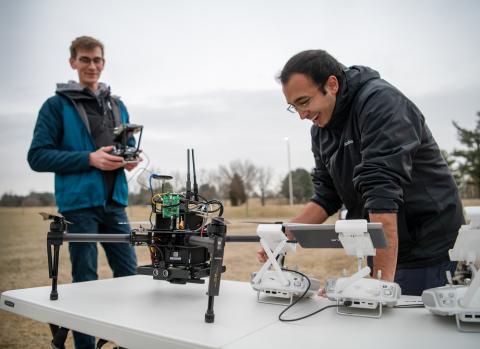
With the help of a grant from the National Science Foundation worth $1.5 million, a group of Virginia Tech engineers will pair up human researchers with UAS, in hopes of redefining search and rescue protocols.
Utilizing autonomous algorithms and machine learning, the UAS will complement search and rescue efforts from the air. Additionally, they will suggest tasks and send updated information to human searchers on the ground.
The researchers hope to make searches more effective by using mathematical models based on historical data that reflect what lost people actually do combined with typical searcher behavior, which balances autonomy with human collaboration.
uAvionix integrating its ADS-B IN receive capability into CubePilot's Carrier Board
uAvionix has partnered with CubePilot (ProfiCNC and Hex), a designer and manufacturer of “The Cube” autopilot—formerly known as “Pixhawk”—for UAS.
Through the partnership, CubePilot will equip its Carrier Board with uAvionix’s ADS-B IN receive capability.
Available in July, the new Carrier Board integrates uAvionix’s custom ADS-B silicon for 1090MHz ADS-B reception for worldwide Detect and Avoid (DAA) functionality.
Previously, CubePilot, which utilizes the open-source ARDUPILOT platform, provided plug-and-play functionality for several uAvionix ADS-B IN and OUT products. The companies note that support for these products is retained in the new design, which allows for “978MHz ADS-B reception or integration of ADS-B OUT functionality.”
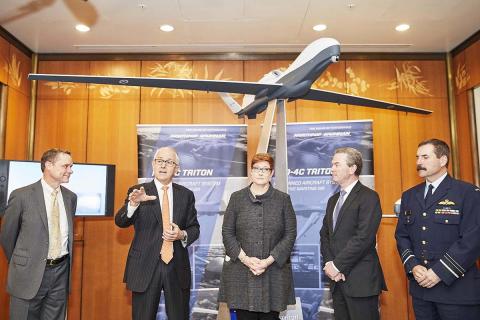
Australian Government purchasing second MQ-4C Triton UAS from Northrop Grumman
Northrop Grumman has announced that the Australian government will purchase a second MQ-4C Triton UAS from the company.
The UAS will be delivered through a cooperative program between Northrop Grumman and the United States Navy.
“Northrop Grumman is excited to develop this unrivaled capability for the Royal Australian Air Force,” says Doug Shaffer, vice president and program manager, Triton programs, Northrop Grumman. “Triton will provide the Australian Defence Force a high-altitude, long-endurance system for intelligence, reconnaissance and broad area surveillance missions to enhance the security of Australia’s borders.”