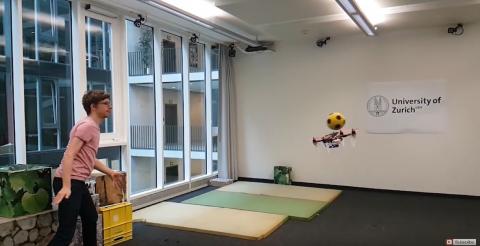
According to the Verge, researchers from the University of Zurich have developed a UAS capable of autonomously dodging objects thrown at it, even at close range.
“We wanted to really push the boundaries and see what these robots are capable of,” University of Zurich research Davide Falanga tells the Verge.
UAS
UAS
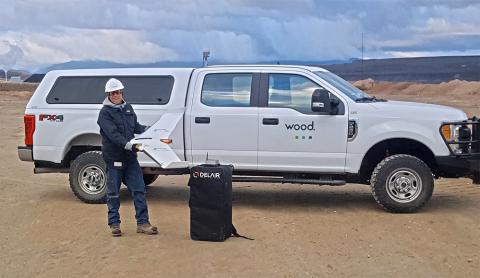
Wood uses Delair's UX11 UAS for mining and quarry projects
Wood, a provider of project, engineering and technical services to the energy, industry and built environment sectors, has adopted Delair’s UX11 UAS for its work in site planning and asset management in mining and quarry projects in the western part of the United States. This is the first fixed-wing UAS that Wood has deployed in the Western U.S.
Initially, Wood is using the UAS to conduct high accuracy, 3D topographic surveys and materials quantification for mineral mining in Idaho and Wyoming.
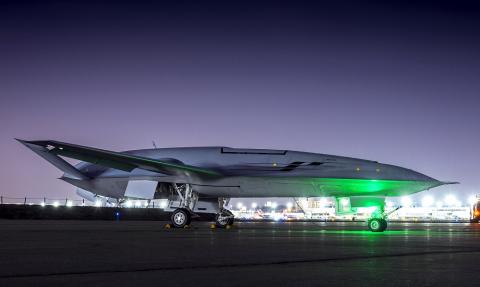
Aitech to supply key mission interface systems for MQ-25 unmanned aerial refueling program
Boeing has awarded Aitech Defense Systems Inc. a contract to supply key mission interface systems for the MQ-25 unmanned aerial refueling program.
Under the contract, Aitech will provide Boeing with an advanced, customized remote I/O interface controller based on the commercial-of-the-shelf (COTS) Ai-RIO remote interface product.
“Ensuring the success of the unmanned MQ-25 Engineering and Manufacturing Development (EMD) test aircraft requires precision electronics and close-knit cooperation among the companies involved,” explains Moshe Tal, CEO, North America of Aitech Group.
QinetiQ to deliver UAS to Canadian Armed Forces
QinetiQ has announced that it has been awarded a C$51m contract to deliver UAS to the Canadian Armed Forces.
The UAS, which have vertical takeoff capability, will provide the Royal Canadian Navy and Canadian Special Operations Forces Command with Intelligence, Surveillance, Target Acquisition and Reconnaissance (ISTAR) services for both domestic and international operations.
Based on the UMS SKELDAR V-200 UAS, the system will be equipped with a variety of sensors including an Active Electronically Scanned Array (AESA) radar and Electro-optic infrared (EO/IR) camera.

AeroVironment, Kratos partner to develop multi-domain unmanned platforms
AeroVironment Inc. and Kratos Defense & Security Systems Inc. are teaming up to develop and demonstrate “highly integrated and operationally effective” multi-domain unmanned platforms for near-peer, denied environments.
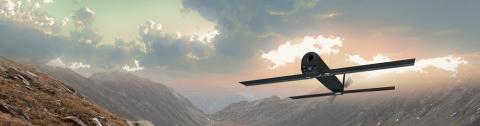
The companies say that their first collaborative project is designed to demonstrate the ability to launch, communicate with, and control a small, tube-launched loitering aircraft from a larger runway-independent UAS.
“Kratos and AeroVironment offer complementary capabilities while sharing an intense focus on disruptive and affordable unmanned aircraft solutions for the DoD,” says Steve Fendley, president of Kratos Unmanned Systems Division.
More than 500 students in New York State trained in use of UAS for public safety operations
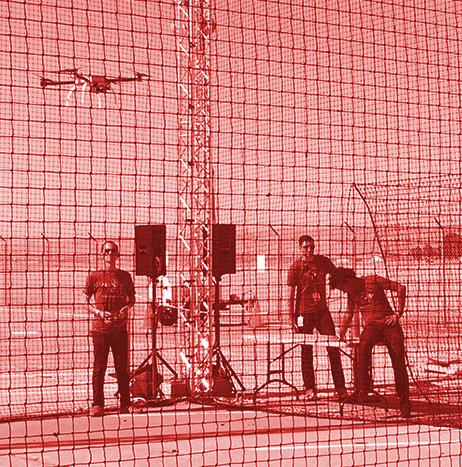
New York Governor Andrew M. Cuomo has announced that more than 500 students have been trained in the use of UAS for public safety operations at the State Preparedness Training Center in Oneida County, New York.
This milestone was reached in April during the New York State Division of Homeland Security and Emergency Services’ UAS Awareness workshop, which is one of four courses offered on UAS operations. The other courses offered are the UAS Part 107 Preparation Course, the UAS Basic Operator Course, and the UAS Advanced Operator Course.
The courses are designed to help educate public safety officials and first responders on how to integrate UAS into their public safety operations.
Schiebel's Camcopter S-100 UAS selected for search and rescue trials as part of Arctic 2030 project
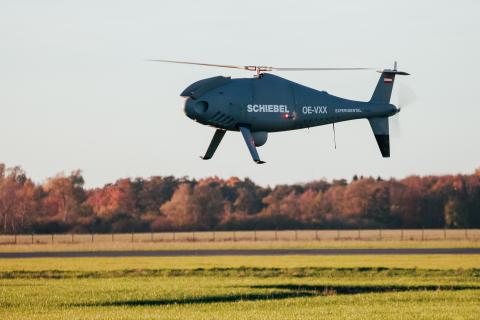
Schiebel has announced that its Camcopter S-100 UAS has been selected by Norway’s Andøya Test Center for extensive search and rescue trials as part of the Arctic 2030 project.
In a typical configuration, the Camcopter S-100 operates six hours continuously, and can carry multiple payloads at the same time, which provides users with significant payload flexibility. As a result, the S-100’s missions deliver aerial views that reach “considerably farther than manned helicopters,” Schiebel notes.
Speakers: Unmanned systems technology is changing lives, but public acceptance is key
As AUVSI President and CEO Brian Wynne introduced Tuesday’s keynote speakers at Xponential 2019, he first pointed out that the biggest challenges facing the professionals in the audience involve convincing a generally skeptical public that the new technologies they are fostering will improve their quality of life.
Wynne called for “complete agreement that the number one thing we need to work on is pubic acceptance.”
With that, speakers with divergent backgrounds expounded on how unmanned technology is fostering a cultural revolution of sorts, which is changing nearly every aspect of human existence and will continue to do so.

Hirth Engines showcasing lightweight propulsion system technologies for UAS during Xponential
Hirth Engines has announced that during Xponential 2019, it will demonstrate its future innovation program, and showcase the latest lightweight propulsion system technologies.
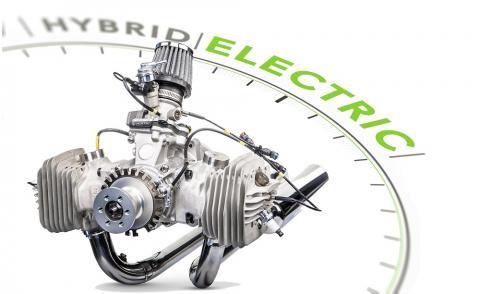
With its two-stroke propulsion systems, Hirth says that it meets customers’ needs for endurance, reduced footprints, lightweight platforms, cost-effectiveness and safer operations.
To deliver technologies for the future, Hirth says that it is now looking toward hybrid applications to “harness the power” of both an internal combustion engine and electrical motors.
Iris Automation launches detect and avoid tech to enable BVLOS operations for UAS
Iris Automation has launched Casia, which the company describes as the “first commercially available computer vision detect-and-avoid solution to enable beyond visual line of sight (BVLOS) operations for autonomous vehicles.”
According to Iris, Casia allows a UAS to truly understand the aviation environment around it as if a pilot were on board, as it detects other aircraft, classifies them using machine learning, and makes intelligent decisions about the threat they may pose to the vehicle, and triggers automated maneuvers to avoid collisions.