
Florida has a big problem. Actually, it’s a very small problem, but there are a lot of them: mosquitos.
Fighting mosquitos has long been an existential problem for the state, home to swamps and miles of coastal marshes. The land is flat, it’s warm year-round and there’s a lot of water, all things the biting insects love.
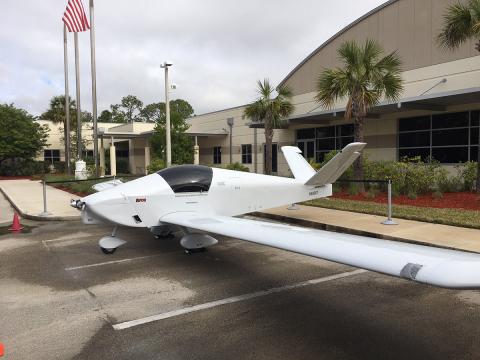
“We can grow more mosquitos here than anywhere else on Earth,” says Eric Jackson, the public information officer for the Lee County Mosquito Control District, which is enlisting new technology to join the fray: drones both big and small.
Technology
Technology
AUTOSAR's latest version of Adaptive Platform can be used in highly autonomous systems
Real-Time Innovations (RTI) has announced that AUTomotive Open Systems ARchitecture (AUTOSAR) has released the latest version of the Adaptive Platform, Release 18-10, which features a full network binding of the Data Distribution Service (DDS) standard.
The release of the Adaptive Platform allows automotive manufacturers to now implement an AUTOSAR Adaptive framework with DDS and develop highly autonomous systems, such as Level 4 and Level 5 autonomous vehicles.

Autonomous shuttle service headed to Albemarle County, Virginia
An autonomous shuttle service is headed to Albemarle County, Virginia, thanks to the recently announced $600,000 partnership between Albemarle County, robotics software company Perrone Robotics (PRI), and “XR solutions provider” JAUNT Inc.
The location of the service has yet to be decided, but the partners say that the service will allow riders to get on and off the autonomous shuttle along a fixed route.
The shuttle will operate autonomously, but a safety-trained transit “ambassador” will be on-board to answer customer questions, offer any required assistance, and take over as a driver if necessary.

Aurora reveals autonomous aircraft Odysseus
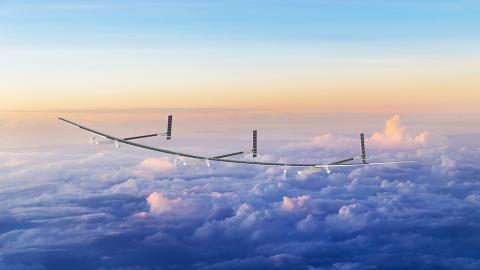
Aurora Flight Sciences has revealed what it claims is the world’s most capable solar-powered autonomous aircraft, Odysseus, which is powered only by the sun.
Described as an “ultra-long endurance, high-altitude platform built for groundbreaking persistence,” Odysseus can effectively fly indefinitely, Aurora says, thanks its utilization of advanced solar cells, and its design, as it is built with lightweight materials.
“Odysseus offers persistence like no other solar aircraft of its kind, which is why it is such a capable and necessary platform for researchers,” says Aurora President and CEO John Langford.
Australian safety authority to use ROVs to search for containers lost from ship
On Nov. 8, the Australian Maritime Safety Authority (AMSA) signed a contract to begin operating remotely operated underwater vehicles, or ROVs, to investigate the containers lost from the YM Efficiency container ship.
The ship lost dozens of cargo containers in the summer due to a massive storm. In July, the ship’s insurer, Aus Ship, and operator, Yang Ming, conducted survey operations in the area and located approximately 37 containers, but there have been delays in further search operations as a result of weather and sea conditions. An analysis by AMSA of the completed surveys indicates that there are as many as 42 containers still missing.

ZF Friedrichshafen becomes first company in Germany to fly UAS over factory premises
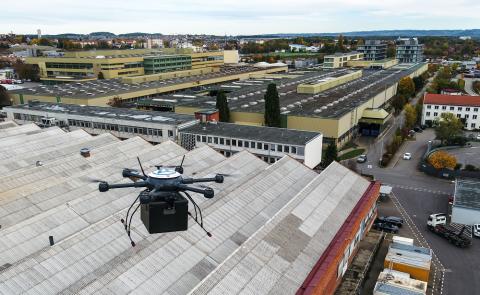
German car parts maker ZF Friedrichshafen has announced that it has become the first company in Germany to receive permission to conduct automated UAS flights over factory premises.
The company recently began using a prototype UAS to fly spare parts such as sensors or control cards from the central warehouse to workshops.
According to ZF, once it has completed test flights and the UAS are properly deployed, these flights will relieve vehicle traffic at the plant, ultimately saving time on the up to one kilometer-long delivery routes that are often on the upper floors of buildings.
ComfortDelGro and partners to test autonomous shuttle bus service in Singapore
A land transport company called ComfortDelGro has announced that it will test an autonomous shuttle bus service in real traffic conditions on the National University of Singapore’s (NUS) Kent Ridge campus starting in March 2019.
The year-long autonomous bus shuttle operational trial will include ComfortDelGro and NUS, as well as Inchcape Singapore and EasyMile.
If the trial is successful, the service could be implemented commercially.
Addison Lee Group and Oxbotica begin mapping London's Canary Wharf in prep for autonomous vehicles
A few weeks after agreeing to a “wide-ranging strategic alliance” that accelerates the implementation of autonomous vehicles to the streets of London, Addison Lee Group and Oxbotica have launched a 3D street mapping exercise in London’s Canary Wharf.
With the goal of rolling out Addison Lee’s autonomous services by 2021, this mapping process is expected to create the backdrop for new autonomous services that meet urban requirements for efficient transport, reduced congestion and improved air quality.
Along with their partners Canary Wharf Group and insurer AXA XL, Addison Lee Group and Oxbotica have started the mapping process using a vehicle equipped with mapping technology to record every curb, road sign, landmark and traffic light in Canary Wharf’s 128-acre estate.
Daimler and Bosch to test automated ride-hailing service in San Jose, California next year
Next year, Daimler and Bosch plan to begin testing their fully automated driving (SAE Level 4/5) on-demand ride-hailing service in San José, California.
According to the companies, San José wants to prepare itself for a future where autonomous cars operate on the streets, so Daimler and Bosch will use automated Mercedes-Benz S-Class vehicles to offer their service to a selected user community in the San Carlos/Stevens Creek corridor between downtown and west San José.