
Three hundred and fifty teams. Forty-four countries. Seven competitions. One community.
After spending an entire year or more working tirelessly to create robotic vehicles, teams from all over the world attempted one or more of the seven competitions sponsored by RoboNation, the new name of the former AUVSI Foundation. Not only were these students in school while they worked on their projects, many had jobs and internships, on top of finding the time and resources to build a successful system.
Technology
Technology
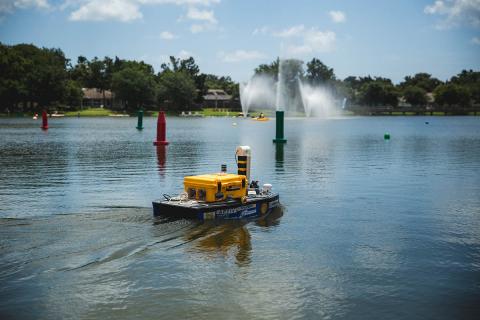
General Dynamics releases new Bluefin-9 autonomous UUV
During Oceans 2018 in Charleston, South Carolina on Tuesday, Oct. 23, General Dynamics Mission Systems released the new Bluefin-9 autonomous UUV.
Completely reengineered, the vehicle provides defense, commercial and academic customers with highly-detailed subsurface data in just minutes thanks to the combination of high navigational accuracy, outstanding sonar resolution, and precision manufacturing.
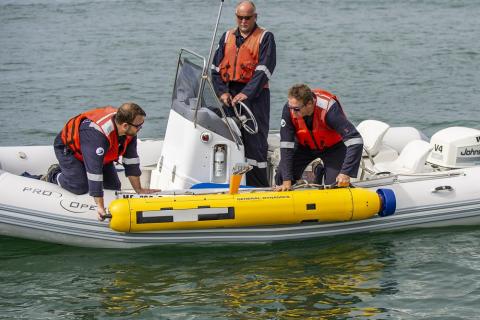
Capable of providing the same data collection capabilities of larger UUVs, the two-man portable Bluefin-9 autonomous UUV can be deployed and recovered from piers, a rigid-hulled inflatable boat (RHIB) or other vessels of opportunity.
DJI improving its geofencing technology to refine airspace limitations for UAS flights near airports
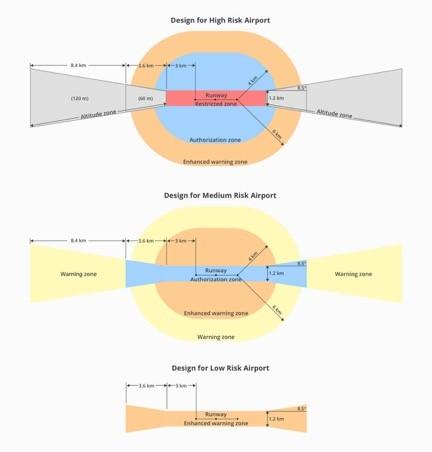
In an effort to provide smarter protection for airplanes in critical areas, DJI has announced that it is improving its geofencing technology to refine the airspace limitations for UAS flights near airports.
The updated Geospatial Environment Online (GEO) Version 2.0 will be phased in starting in November once the revised zones take effect for airspace around airports in the United States. DJI says that upgrades in other regions will follow in “due course.”
“DJI is proud to once again lead the industry in developing proactive solutions for safety and security concerns,” says Brendan Schulman, DJI Vice President of Policy & Legal Affairs.
Auro receives license to test autonomous vehicles on public roadways in California
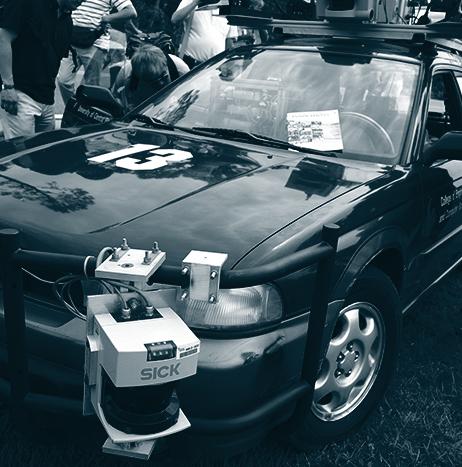
Auro, which is the self-driving vehicle division of Ridecell Inc., is now licensed to test autonomous vehicles on public roadways in California.
“Receiving a California autonomous testing permit signals an important expansion of our new mobility product offering,” says Aarjav Trivedi, CEO of Ridecell.
“Ridecell’s successful ridesharing and carsharing fleet management platform will now expand as our Auro division begins operations testing of self-driving passenger cars and minivans on public streets in cities across California.”
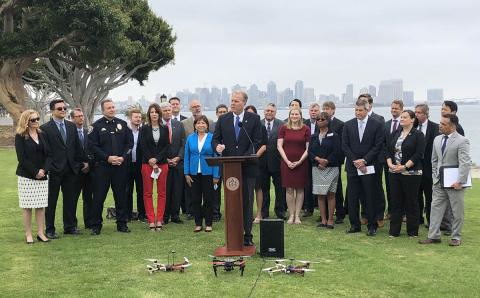
Meet the IPP Sites: City of San Diego pursues several diverse UAS applications
The city of San Diego is one of 10 jurisdictions selected to participate in the U.S. Department of Transportation’s UAS Integration Pilot Program, and one of two municipalities selected in the final group of 10.
The city’s Office of Homeland Security was the lead program applicant, with support from the San Diego Regional Economic Development Corporation (EDC) and approximately 20 partner organizations representing business and government throughout the region.
Calgary opens Point Trotter Autonomous Systems Testing Area to test UAS and autonomous vehicle tech
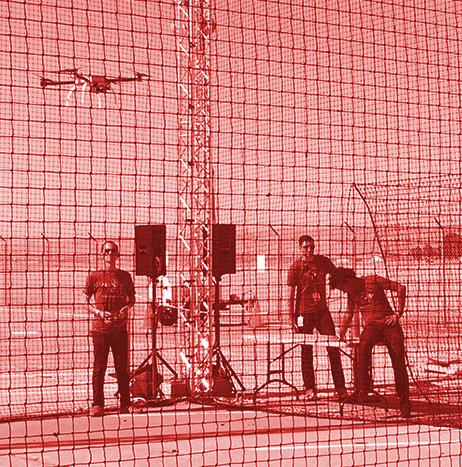
On Friday, Oct. 19, Point Trotter Autonomous Systems Testing Area (Point Trotter ASTA) opened in Calgary, Alberta, Canada.
Point Trotter ASTA will offer businesses, industry and researchers in Calgary a “low cost and accessible” place to test a variety of innovative technologies, including UAS and autonomous vehicles.
“Point Trotter Autonomous Systems Testing Area is a great example of how the The City of Calgary is working with our community partners to support innovation and allow entrepreneurs to bring their big ideas to fruition,” says Mayor Nenshi.
L3 ASV receives funding for "pioneering project" on autonomous navigation of maritime vessels
L3 ASV has received funding from the U.K. government for a “pioneering project” on autonomous navigation of maritime vessels.
Along with its partners in the Maritime & Coastguard Agency (MCA) and United Kingdom Hydrographic Office (UKHO), L3 ASV will conduct a study that focuses on the “future of marine navigational data and charts.”
Funded by the Department for Transport’s Transport Technology Research Innovation Grant (T-TRIG), the project will look to promote early-stage science, engineering or technology innovations, with the potential to advance the U.K.’s transport system.
To start, L3 ASV’s T-TRIG project will explore the characteristics of navigational data and charts in terms of what they’re made of, their structure and how they are updated.

Newly formed 'Deseret Unmanned Aerial Systems' group hopes to make Utah a leader in UAS industry
A new group in Utah called Deseret Unmanned Aerial Systems is hoping to make the state a leader in the “wave of drone innovations.”
“The biggest untapped resource in the U.S. and the world is our airspace,” says Tulinda Larsen, executive director of Deseret UAS, via Deseret News. “And that's where Deseret UAS is stepping up.”
The result of a joint effort by Tooele and Box Elder counties in partnership with Ogden city, Deseret UAS is looking to advance the work of Utah businesses working in the UAS arena, and ultimately attract new endeavors to the state.
Delta Regional Authority awards ULM professor $90,000 grant to teach people how to operate UAS
In an effort to meet the growing demand of using UAS for commercial and practical applications, the Delta Regional Authority (DRA) has created the program, “Workforce Development: Training the Trainer Using Unmanned Aerial Systems.”
Through the program, DRA recently awarded a $90,000 grant to Sean Chenoweth, associate professor of geosciences at the University of Louisiana Monroe (ULM), to teach people in northeast Louisiana how to operate a UAS. Once those people are trained UAS operators, they can go out and train others.
U.S. Navy commissions first UAS test and evaluation squadron
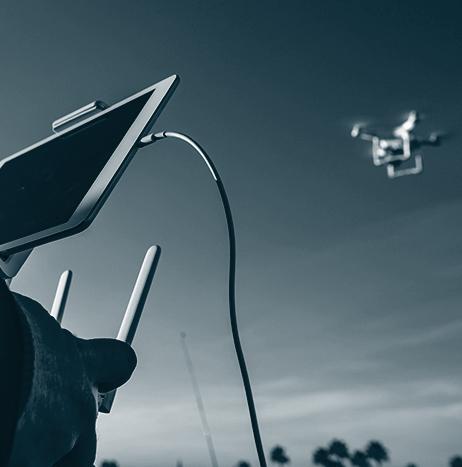
During a ceremony at Naval Air Station Patuxent River’s Webster Outlying Field on Oct. 18, the U.S. Navy commissioned its first UAS test and evaluation squadron.
Known as Air Test and Evaluation Squadron (UX) 24, the new unit flies over 23 fixed and rotary wing UAS, including the MQ-8 Fire Scout, RQ-20 Puma, RQ-21 Blackjack and RQ-26 Aerostar.
The ceremony marked UX-24’s official transition from what was formerly known as NAWCAD’s UAS Test Directorate, which was previously overseen by Commander Matthew Densing. Under Densing’s leadership, the directorate executed more than 2,200 flight hours and 2,000 ground test hours in support of UAS developmental test.
During the ceremony, Cdr. Densing officially assumed leadership of UX-24.