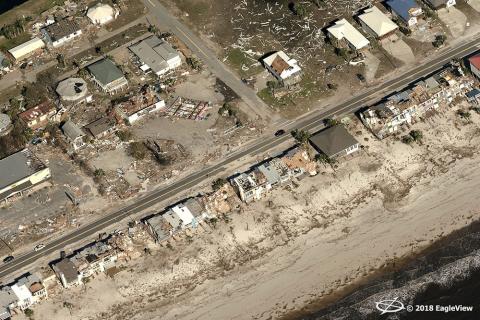
After deploying its aircraft in the aftermath of Hurricane Michael, Eagle View Technologies, which provides property intelligence for government, insurance and commercial sectors, has received its first post-event images following the deadly storm.
Launched less than 18 hours after the storm made landfall on the Florida Panhandle, EagleView’s fixed-wing aircraft captured ultra-high-resolution Reveal aerial imagery captured at .75-inches ground sample distance (GSD).
With EagleView’s high-resolution aerial imagery, first responders, insurance carriers, and electric utility customers are provided with “rapid access to crucial post-event property information,” including roof damage, and the locations of fallen trees, flooding and other emergency conditions.
Technology
Technology

From Unmanned Systems Magazine: Self-driving cars ‘will be a reality,’ but regulatory hurdles remain
For the automobile industry, it might be said that everything old is new again, helped along by the coming of automated vehicles.
As in the early days of the industry, many players are entering the AV space, regulators are wondering how to keep up and the public is unsure of the technology.
“Automated or “self-driving” vehicles are a future technology rather than one that you’ll find in a dealership tomorrow or in the next few years,” the National Highway Traffic Safety Administration says in an overview of its guidelines for automakers and state regulators. “A variety of technological hurdles have to be cleared, and other important issues must be addressed before these types of vehicles can be available for sale in the United States.”

Aurora receives authorization to test autonomous vehicles in Pennsylvania
Aurora has become the first self-driving company operating in Pennsylvania to receive authorization to test autonomous vehicles in the state.
Aurora says that this authorization is the culmination of its efforts to “meaningfully engage, constructively respond, and be a good partner” with the Pennsylvania Department of Transportation (PennDOT).
“We voluntarily complied with PennDOT’s request because we believe this will help the communities in and around Pittsburgh to be aware of Aurora, our testing, our commitment to safety, and our vision for a self-driving future,” the company says in a blog post.

GA-ASI completes Follow-On Operational Test & Evaluation for its MQ-1C ER Gray Eagle Extended Range UAS
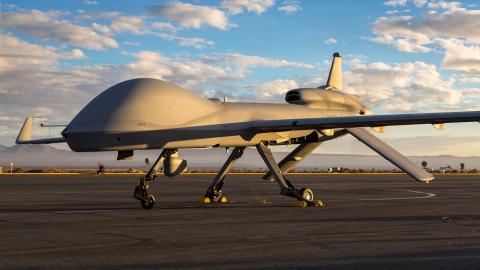
General Atomics Aeronautical Systems Inc. (GA-ASI) and the U.S. Army recently completed Follow-On Operational Test & Evaluation (FOT&E) for GA-ASI’s MQ-1C ER Gray Eagle Extended Range UAS at Air Force Plant 42 in Palmdale, California.
Testing of the UAS, which began in early June, spanned 644 flight hours during the testing period.
According to GA-ASI, the successful test opens the door for MQ-1C ER initial fielding to the U.S. Army Intelligence & Security Command (INSCOM) and Special Operations Command (SOCOM), followed by units from Forces Command (FORSCOM).
Global UAV's Procyon 800E UAS successfully takes off and lands from a moving off-road vehicle
Using one of its research and development UAS from NOVAerial Robotics Inc., Global UAV Technologies Ltd., along with Planck Aerosystems Inc., successfully performed a fully autonomous landing and takeoff from a moving off-road vehicle.
The companies were able to accomplish the precision landing and takeoffs thanks to Planck integrating its precision flight control software technology into the Procyon 800E UAS. The software enables the UAS to autonomously take off and land from moving vehicles and marine vessels of various sizes.

Honeywell's UAS service helps utility customer inspect more than 100 miles of power lines
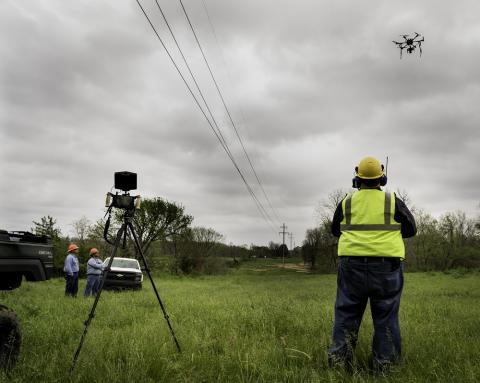
Honeywell has announced that its UAS-based inspection service helped utility customer Ozarks Electric Cooperative inspect more than 100 miles of power lines and provide actionable data in just five days.
When performed on foot, it takes approximately two weeks with up to 15 employees to inspect the same distance. It only takes one day by helicopter, but this method of performing inspections comes with a higher safety risk and cost, as well as insufficient data quality.
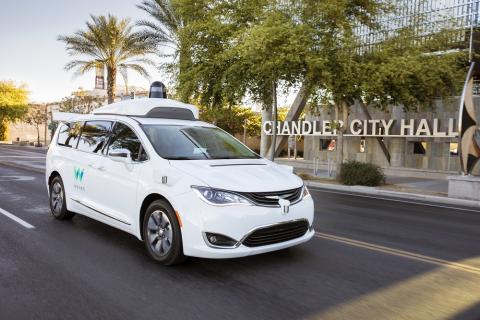
Waymo's self-driving vehicles reach 10 million miles driven on public roads
On Oct. 10, Waymo announced that its self-driving vehicles surpassed 10 million miles driven on public roads.
Waymo’s vehicles have driven in 25 cities in states such as California, Arizona and Michigan, providing a variety of conditions to test the company’s technology in.
“When it comes to driving, experience is the best teacher, and that experience is even more valuable when it’s varied and challenging,” says Waymo’s CEO John Krafcik in a company blog post.
FLIR Systems' FLIR Black Hornet Vehicle Reconnaissance System features Black Hornet 3 nano UAS
FLIR Systems has announced the launch of its FLIR Black Hornet Vehicle Reconnaissance System (VRS), which features the Black Hornet 3 nano UAS designed for global military, government agency, and first responder vehicle-mounted operations.
Based on an adaption of the Black Hornet Personal Reconnaissance System (PRS), which is the world’s smallest combat-proven nano UAS according to FLIR, the Black Hornet VRS provides the warfighter with the ability to maintain situational awareness, threat detection, and surveillance for battle damage assessment, pre-deployment and route and point reconnaissance, and targeting information. All of this can be done without warfighters having to leave the vehicle.
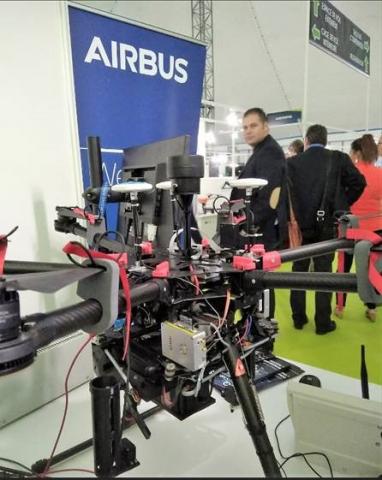
Airbus integrates Mobilicom's SkyHopper PRO technology into its Innovation drone platform
Airbus has integrated Mobilicom’s SkyHopper PRO technology into its Innovation drone platform, which is used to expand Airbus’ vision, and showcase the company’s mission operation technologies in the commercial and homeland security UAS space.
According to Mobilicom, SkyHopper is a “holistic solution” for commercial and industrial UAS and robotics. The SkyHopper PRO is a “communication solution” for control, telemetry and video or payload sharing to and from the UAS platform to the ground control systems and users.
Airbus is using the SkyHopper PRO Datalink with its mission specific software and accessories.