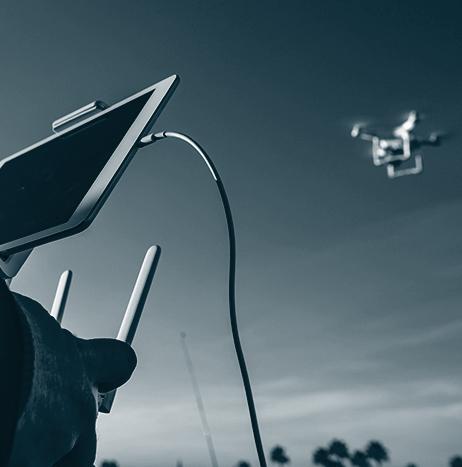
On Wednesday, Jan. 24, more than 150 police officers, firefighters and other emergency responders attended a free workshop for public safety agencies that have already, or would like to soon, incorporate UAS into their operations.
Hosted by the North Carolina Department of Transportation’s (NCDOT) Division of Aviation Unmanned Aerial Systems Program Office, the program included scenario-based live flight demonstrations, as well as a panel discussion of current regulations and presentations from agencies that have already began taken advantage of this technology.
Technology
Technology
Driverless shuttle bus in Minneapolis welcomes passengers during Super Bowl festivities
On Friday, Jan. 26, the Minnesota Department of Transportation (MnDOT) offered free shuttle rides in a driverless shuttle bus traveling a one-block section of the Nicolet Mall, which is located in downtown Minneapolis. The rides were scheduled to continue, subject to weather conditions, on Jan. 27 and 28.
The rides were offered as part of the Super Bowl festivities taking place leading up to the game on Feb. 4 in Minneapolis. Approximately 80 people showed up to test out the vehicle on Jan. 26, and according to the Star Tribune, the vehicle received positive reviews. Shirley Moises called it “the wave of the future,” while Kyle Delahunt said the ride was “enjoyable.”

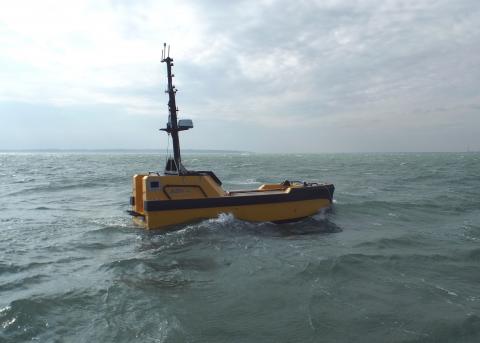
ASV Global's autonomous C-Worker 7 supports Subsea 7
ASV Global has announced that one of its C-Worker 7 class of autonomous surface vessels was successfully deployed for Subsea 7, which is a subsea engineering, construction and services company. The C-Worker 7 was used to support a pipelay operation off the coast of Egypt.
The C-Worker 7, which was equipped with a survey suite made up of a multibeam echosounder and side scan sonar, conducted touchdown monitoring in support of the Seven Antares pipelay vessel.
“The C-Worker 7 has proven to be a very capable vessel providing an excellent stable survey platform controlled by the Pipelay Vessel,” says a spokesperson from Subsea 7.
Weekend Roundup
This Week in the Unmanned Systems and Robotics World
On Jan. 24, Purdue officials and leaders celebrated the launch of the new Center for Brain-inspired Computing Enabling Autonomous Intelligence (C-BRIC). According to C-BRIC director Kaushik Roy, researchers at the center will work to develop “autonomous intelligent systems capable of reasoning and decision-making to complete mission-critical tasks without human intervention.” (Purdue)

Colorado's La Plata County Sheriff's Office plans to start using UAS
The La Plata County Sheriff’s Office in Durango, Colorado will start using UAS for certain emergency situations, after La Plata County Sheriff Sean Smith said he planned to sign a policy allowing the department to use the county’s UAS on Jan. 25.
According to Smith, procedures will be in place to give approvals to use the county’s three UAS only during emergency situations after they have been requested by responding deputies.
Connecting Cars, Connecting Users: Challenges and Opportunities Offered by Automated Vehicles
Recently a range of diverse companies have launched high-profile automated vehicle programs and have begun describing their implementation plans. As automated vehicles gain traction and garner headlines, complex questions have arisen in the automated vehicles community, some of which were expected and others more surprising.
Innovators are exploring seemingly next-gen possibilities today. Ideas such as driverless delivery, smart roads, and AI are becoming actualities. This webinar will explore these topics and more, as industry leaders discuss their visions for future mobility and what it holds for road users.
Who Should Attend

How do Drones Help Farmers?
Contributed article by Len Calderone, AgriTech Tomorrow
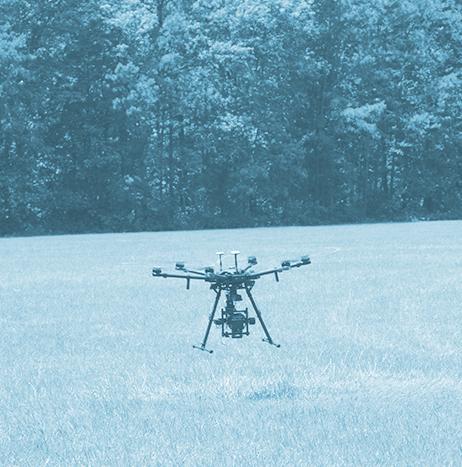
Drones are becoming a critical tool for farmers. Many farmers are already benefitting from drone (UAV) technology; and we’ve only scratched the surface of what this relatively new technology can do for agriculture.

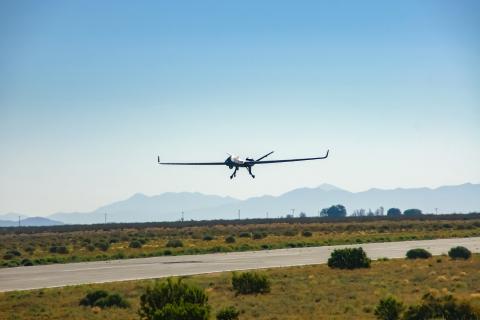
GA-ASI demonstrates latest Automatic Takeoff and Landing Capability using SATCOM data link for MQ-9B RPA
General Atomics Aeronautical Systems, Inc. (GA-ASI) has announced that it successfully demonstrated its latest Automatic Takeoff and Landing Capability (ATLC) using a Satellite Communications (SATCOM) data link for its MQ-9B SkyGuardian/SeaGuardian Remotely Piloted Aircraft (RPA). The demonstration also included the first SATCOM taxi of the MQ-9B.
GA-ASI says that with this capability, there will no longer be a need for a ground control station and pilot/flight crew to be located at the aircraft’s base, which will significantly reduce airlift requirements when the RPA is “forward deployed.”
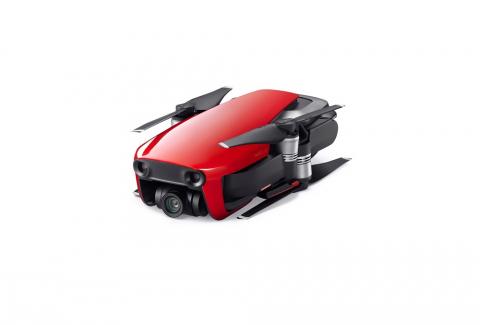
DJI unveils smartphone-sized Mavic Air UAS
On Tuesday, Jan. 23, at an event in New York, DJI unveiled its latest product, Mavic Air, which the company describes as an “ultra-portable, foldable camera drone that delivers higher performance, more intelligent features and greater creative possibilities than any other consumer drone.”
According to DJI, Mavic Air was developed with the traveler and outdoor enthusiast in mind, as it inherits the best features of DJI’s Mavic series but is considerably smaller, at half the size and 40 percent of the weight. It's closer in size to the company's Spark, but actually has a smaller footprint because its rotor arms fold up, and it carries a better camera.
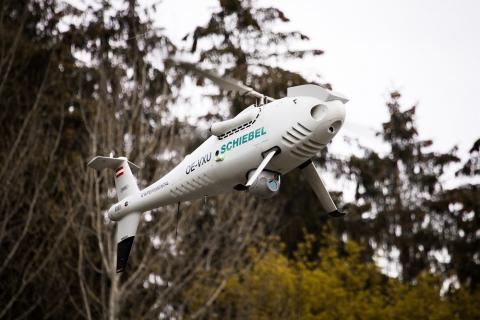
Schiebel's CAMCOPTER S-100 UAS helps in search for fugitive in Australia
Schiebel has announced that as part of an ongoing homicide investigation in Stiwoll, Austria late last year, its CAMCOPTER S-100 UAS demonstrated its suitability for search and rescue missions, during a first of its kind operation.
During the operation, Schiebel provided Austrian law enforcement with its CAMCOPTER S-100 UAS and operating personnel to help in the search for a double homicide suspect assumed to be hiding in a forest region.
“This is a prime example for the potential civil use of a UAS such as the S-100,” says Hans Georg Schiebel, Chairman of the Schiebel Group.