This Week in the Unmanned Systems and Robotics World
Technology
Technology
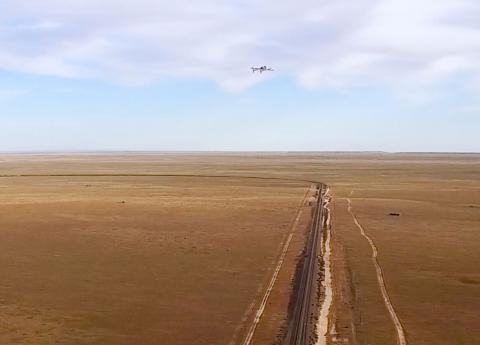
Bihrle and BNSF's 'RailVision' proves beneficial during long range UAS railway inspections
Bihrle Applied Research (Bihrle) and BNSF Railway (BNSF) have announced that they successfully demonstrated the processing of several thousand images at a time, covering hundreds of miles of track for the automatic detection, classification and reporting of rail conditions.
This feat was made possible thanks to RailVision, which is a “computer vision technology solution” developed by the companies in support of BNSF’s UAS research initiatives.
RailVision allows BNSF to automatically process images collected by UAS during supplemental railway inspection flights, and generates actionable reports in a significantly less amount of time required by traditional methods.
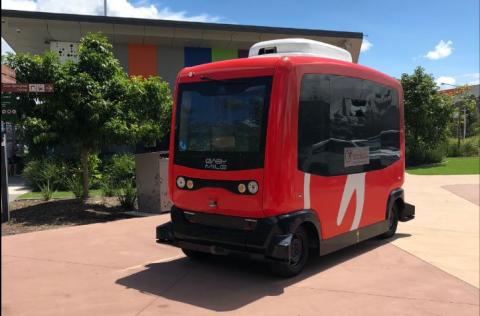
EasyMile's EZ10 electric driverless shuttle bus to begin trial in Ipswich, England
EasyMile's EZ10 electric driverless shuttle bus will begin a trial in Ipswich, England starting on Monday, Feb. 26.
Ipswich City Council is trialing one of the driverless shuttles around its Orion water theme park lagoon near the Orion Shopping Centre on John Nugent Drive at Springfield. The trial is open to anyone who would like to ride the shuttle during the public demonstration times.
“The loop along John Nugent Way takes about five minutes, so it’s a great way to get a taste for what the future of public transport might be like,” says EasyMile spokesman Simon Pearce via the Brisbane Times.
Kansas State University Polytechnic Campus to offer UAS Law Enforcement Training course in April
From April 9-12, Kansas State University Polytechnic Campus and law enforcement partners will offer a training course specifically targeted at how first responders can use UAS in daily operations and safety procedures. The course will be held at the campus in Salina, Kansas.
Attendees of the course will be taught the necessary skills to operate UAS for specific law enforcement purposes. Pilots will receive hands-on flight training in several areas such as, but not limited to, accident scene reconstruction, search and rescue operations, and night operations.
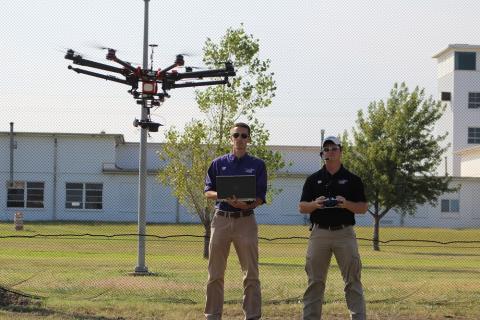
DARTdrones pledges $100,000 in UAS training grants to public safety organizations
DARTdrones has announced that it is pledging $100,000 in UAS training grants to public safety organizations as a way to give back, and ultimately, save more lives with UAS.
For DARTdrones, UAS provide a number of benefits for public safety entities and first responders, but the financial costs associated with launching a UAS program remains an obstacle for many public safety organizations.
DARTdrones believes that every department should have the opportunity to use UAS technology as part of its daily operations, so with this in mind, the company is launching the DARTdrones Public Safety Grant to provide a “pathway for departments to adopt this cutting-edge technology.”
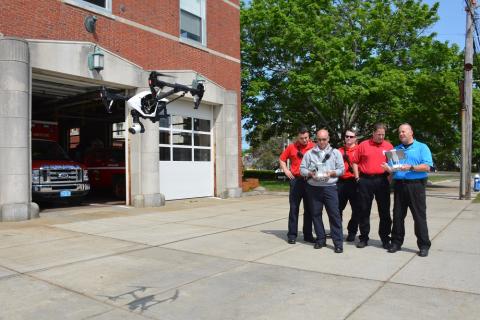
Lockheed Martin's new VCSi software allows operators to simultaneously control dozens of unmanned vehicles
On Feb. 20, Lockheed Martin announced the launch of its new vehicle control software, VCSi, which is a commercial software that enables operators to simultaneously control dozens of unmanned vehicles and conduct information, surveillance and reconnaissance missions.
VCSi will be unveiled during the Unmanned Systems Exhibition and Conference in Abu Dhabi this month, and according to Lockheed, it has several major enhancements.
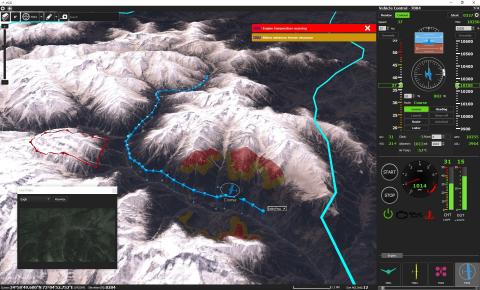
AeroLabs and BGE autonomously inspect distribution assets in Maryland using UAS
In early February, AeroLabs and Baltimore Gas and Electric (BGE) successfully completed a test on the use of a DJI Matrice 210 UAS to perform autonomous inspections of distribution assets in a rural area of northern Maryland.
AeroLabs says that the Matrice “held its own and flew quite well on its programmed flight path” despite flying in adverse conditions, which included strong 15+ mph winds.
The test consisted of a 10-12 pole segment of a circuit that presented various hardware configurations, and tree encroachments that allowed AeroLabs to showcase the UAS' ability to safely maneuver around the assets, and avoid environmental hazards.

Waymo receives permission to launch ride-hailing service using its driverless vehicles
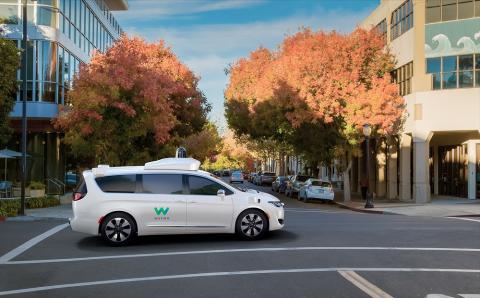
Waymo is preparing to launch a ride-hailing service that utilizes its driverless vehicles, after the company received a permit from the Arizona Department of Transportation to operate as a Transportation Network Company (TNC) in late January.
According to Bloomberg, the designation allows Waymo’s fleet of driverless Chrysler Pacifica minivans to pick up and drop off paying riders in Arizona through a smartphone app or website.
Since April 2017, Waymo has been testing a self-driving car service in the Phoenix area that lets passengers hail cars through an app, similar to ride-hailing services such as Uber and Lyft.
Weekend Roundup
This Week in the Unmanned Systems and Robotics World
Transport Canada has granted Drone Delivery Canada (DDC) a Compliant UAV Operator Special Flight Operations Certificate (SFOC). DDC says that receiving this additional approval “represents the balance of the remaining two steps of a methodical process to prove the Company’s operational safety practices and our professionalism to Transport Canada.” (Drone Delivery Canada)
V-cube Robotics announces solar power plant inspection package service utilizing UAS
V-cube Robotics, Inc., which is headquartered in Shibuya, Tokyo, has announced that it will begin offering a solar power plant inspection package service that uses UAS called ‘SOLAR CHECK.’
The UAS, which are equipped with infrared thermography cameras, autonomously fly around a facility, imaging the solar panels. These images are then analyzed using artificial intelligence, which, according to VStar, dramatically improves the efficiency of inspection, making it possible to discover discrepancies and report on the results of an inspection in a short amount of time.