
The Oil & Gas Technology Centre, Total E&P (Total), taurob and the Technische Universitaet Darmstadt (TU Darmstadt) are all working together to develop a robot that could work autonomously alongside humans on a North Sea platform.
Through an 18-month project, which is being described as a “world-first,” the entities will develop and trial a mobile robot for “autonomous operational inspection” of facilities on Total’s onshore Shetland Gas Plant and offshore Alwyn platform.
According to the entities, the trial is the first time that an autonomous ground robot will be used on an operational oil and gas installation, and they believe that the project “could start a revolution in robotics offshore that improves safety, enhances productivity and reduces costs.”
Technology
Technology
From Unmanned Systems Magazine: Special operations community looks to drone racers, new tech to stay ahead of adversaries
The proliferation of micro, mini and small unmanned aircraft systems is nothing new in the defense community.
However, as the capabilities of so-called “near peer” adversaries continue to advance at a rapid pace, the special operations community in particular is considering next-generation technology, tactics, techniques and procedures to maintain tactical overmatch on the battlefield — including taking some tips and tech from drone racers.
Speaking to Unmanned Systems, defense sources associated with the NATO Special Operations Forces community describe multiple development efforts in this area, designed to increase capacity and skill sets in response to emerging requirements across the current operating environment.
AI Incorporated releases design for autonomous refuse robot
AI Incorporated, which is a Canadian robotics and artificial intelligence research company, has released a design for an autonomous refuse robot, which is considered a new application for mobile robotics, the company says.
The new AI enhanced robotics system introduces a device that can autonomously travel to the curbside and wait for the pickup truck at pre-scheduled times. Scheduling is completed using an app, and a user can also use the app to control the robot in the event that it needs help with navigation, or if it gets stuck.
According to AI Incorporated, this invention will render humans emptying trash cans “a thing of the past,” as the bins will simply leave their post to be emptied when it is time for pickup.

DARPA soliciting proposals for second 'swarm sprint' for its OFFSET program focused on unmanned systems
DARPA has announced that it is soliciting proposals for the second “swarm sprint” for its OFFensive Swarm-Enabled Tactics (OFFSET) program.
OFFSET envisions future small-unit infantry forces using small UAS and/or small unmanned ground systems (UGSs) in swarms of 250 robots or more to accomplish “diverse missions in complex urban environments.”
According to DARPA, each of the five core “sprints” focuses on one of the key thrust areas: Swarm Tactics, Swarm Autonomy, Human-Swarm Team, Virtual Environment, and Physical Testbed.
The second group of “Swarm Sprinters” will get the chance to work with one or both of the OFFSET Swarm Systems Integrator teams to develop and assess tactics, as well as algorithms, to enhance autonomy.
PACI receives Part 107 waiver to operate UAS BVLOS
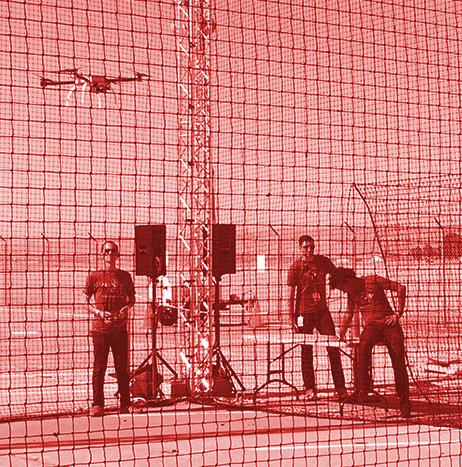
Praxis Aerospace Concepts International (PACI) has announced that it has received a Part 107 waiver from the FAA to operate UAS beyond visual line of sight (BVLOS).
According to PACI, which is based in Southern Nevada, it is now one of the few companies in the United States allowed to offer BVLOS operations for professional aerial work.
“We are absolutely thrilled to be the first Nevada company to receive permission to fly commercial BVLOS,” says Jonathan Daniels, CEO of PACI.
“This is a major step over the hurdle for the commercial UAS industry. This will open up many opportunities for businesses already anchored here and those corporations who want to start-up here at our Searchlight Airpark facility.”

Missouri man rescued with aid of UAS
On the night of March 27, a UAS was used to help rescue a man who drove on to a bridge and found himself in the flooded James River at the Crighton Access Point in Missouri.
The Logan Rogersville Fire Department called on Pilot Tom Baird to provide aerial assistance for this mission. Within seven minutes, Baird got the UAS into the air, and helped crews find the man who needed help faster than if they were to search waterways by boat or on foot.
Weekend Roundup
This Week in the Unmanned Systems and Robotics World
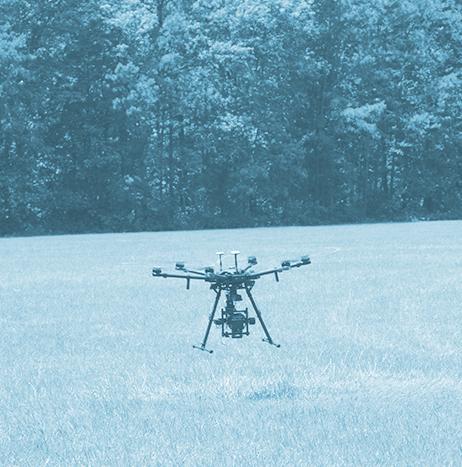
UAVOS has introduced its new Borey-10 fixed-wing UAS. Among its many capabilities and features, the UAS has a heated battery compartment that allows it to fly in temperatures as low as -22F, and it can fly for four hours, nonstop, with a payload of two pounds. The UAS is also equipped with an EW countermeasure system, which makes it possible to conduct research operations in the absence of GNSS signals. (UAVOS)

Hubsan launches 'high-quality, affordable' H501A+ UAS
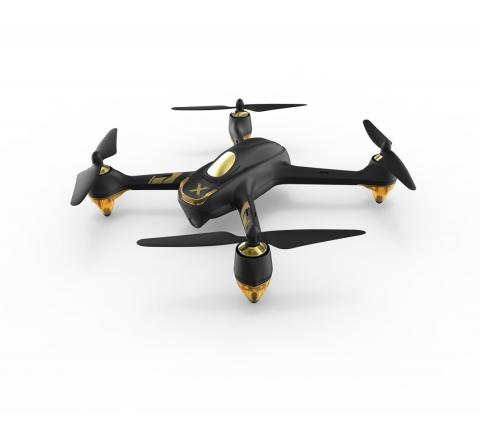
A UAS company called Hubsan has launched its newest signature product, the H501A+ UAS.
Available starting at $199, the UAS is a “high-quality, affordable drone option,” according to Hubsan.
The H501A+ UAS has a variety of unique features. Among them, the UAS has both a high-quality video camera and photo features, it has a flight time of 20 minutes, and it has GPS positioning, automatic take-off and Return to Home features.
“We designed Hubsan's drones, and the H501A+ model, with quality and affordability in mind,” says Kevin Chen, Hubsan's U.S. branch manager.
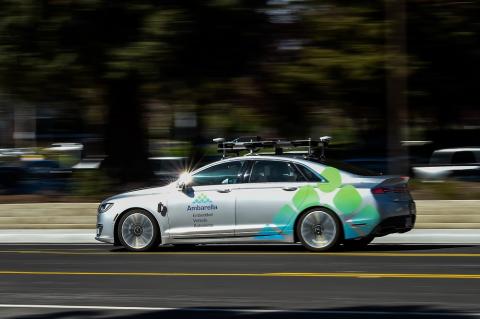
Ambarella testing its fully autonomous EVA vehicle on the roads of Silicon Valley
Ambarella, Inc., which develops low-power, HD and Ultra HD video processing semiconductors, is demonstrating its fully autonomous Embedded Vehicle Autonomy (EVA) vehicle on the roads of Silicon Valley to industry analysts and customers.
Ambarella says that EVA has been trained to handle different traffic scenarios presented by Silicon Valley’s challenging urban environment.
EVA combines software and algorithms based on more than 20 years of autonomous vehicle research with Ambarella’s “low-power CV1 embedded computer vision processors” based on its CVflow architecture.
SkyWatch.AI partners with Starr Companies to offer 'ingenious telematics-based UAV insurance platform'
SkyWatch.AI, which is a data analysis, risk-assessment and active risk-reduction platform for the UAS industry, has signed an exclusive partnership deal with Starr Companies (Starr) to offer an “ingenious telematics-based UAV insurance platform.”
Through the partnership, Starr will expand its existing UAS insurance product, and offer a unique telematics-based insurance to UAS operators.