
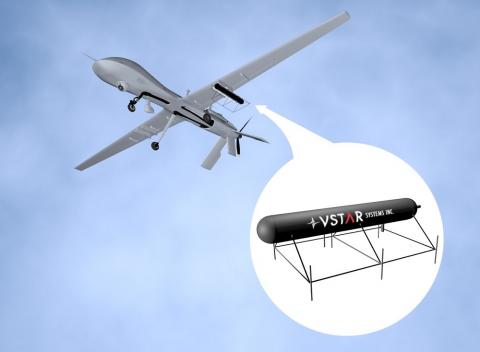
VStar Systems has announced the new MA-C MiniPod, which is a pod version of the company's MA-C SIGINT Sensor.
VStar designed its MA-C Sensor System to provide signal intelligence such as “signal copy, signal identification and direction finding” to a wide variety of platforms. The MA-C system is designed to function as a “modular, scalable, flexible tactical COMINT sensor,” specifically intended to address design challenges posed by Class 2 or 3 UAVs, while also optimizing operator efficiency.
Technology
Technology
Loveland Innovations launches deep learning engine built specifically for UAS-based inspections
A company called Loveland Innovations has announced the launch of the beta version of IMGING Detect, a “deep learning engine built specifically for drone-based inspections.”
Deep learning is an “advanced approach to artificial intelligence (A.I.) that allows IMGING to “learn” as it gathers more data,” Loveland explains, which makes IMGING “more sophisticated and accurate each time it’s used.”
Loveland says that this capability has “vast implications” for a variety of applications such as, but not limited to, damage detection and object and materials detection. Loveland adds that IMGING’s proprietary damage detection algorithms are the “most advanced currently available” to the UAS-based roof, building and property inspection space.

Skydio introduces R1, the 'world's first fully autonomous flying camera'
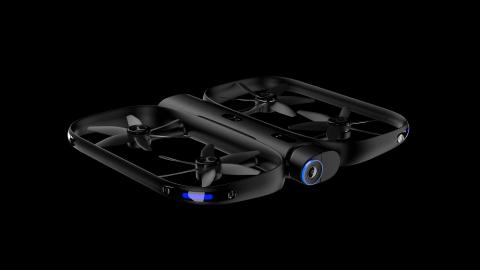
A California-based company called Skydio has announced the availability of its first product, R1, which is a fully autonomous flying camera. Skydio says that with the introduction of R1, it is “taking a step toward the future of autonomous drones and enabling a new type of visual storytelling.”
According to Skydio, a team of world-class researchers and engineers built R1 from the ground up for autonomous flight. The fully autonomous flying camera is powered by the Skydio Autonomy Engine, which allows it to “see and understand” the world around it, so that it can fly safely at high speeds while avoiding obstacles, even in dense and challenging environments.
Intel's Shooting Star UAS light up Olympic Winter Games PyeongChang 2018 Opening Ceremony
The Olympic Winter Games PyeongChang 2018 Opening Ceremony featured 1,218 of Intel's Shooting Star UAS, in what was the Winter Olympics’ first-ever drone light show.
The flight, which was prerecorded for the event, set a Guinness World Records title for the “most unmanned aerial vehicles airborne simultaneously,” breaking Intel’s previous record of 500 UAS flown simultaneously in Germany in 2016.

Oklahoma's Broken Arrow Police seeing immediate benefits using new UAS
In Broken Arrow, Oklahoma, the Broken Arrow Police Department says that its new UAS has proved beneficial in a variety of use cases over the last two months.
The UAS provides a real-time view from above, which officers say is very important when their special operations team is activated.
One recent use case for the UAS came a few weeks ago, when the UAS was deployed during a standoff. Via News on 6, officer James Koch says that “the initial information that we received was that there may be someone inside who could have someone held hostage.” Koch goes on to say that “we didn't know if there was anybody inside that was lying in wait.”
PrecisionHawk to launch 'nation's largest network of commercially licensed drone pilots' after acquisition of Droners.io and AirVid
PrecisionHawk Inc. has acquired two companies—Droners.io and AirVid—that have platforms that enable users to commission UAS pilots for commercial jobs.
PrecisionHawk will merge the companies to form a network of more than 15,000 commercially licensed UAS pilots, which will be the largest network of its kind, according to PrecisionHawk.
PrecisionHawk will continue to connect certified UAS pilots directly to customers. The company will also use the network to service its growing base of enterprise customers in insurance, agriculture, energy, construction and government, as it has received increasing demand for UAS flight services from the business and government sectors since 2016, when the FAA began allowing corporations to use UAS for commercial purposes.
Weekend Roundup
This Week in the Unmanned Systems and Robotics World
PropelUAS has announced that it is working with Lockheed Martin and Medical Express Ambulance Service (MedEx) to “combine the very best elements of emergency management systems with the potential of tactical UAS.” PropelUAS, which is a division of Evans Incorporated, works with organizations “to assist in navigating and integrating UAS technologies into their organizations.” (PropelUAS)
UAS being used for plenty of good, but counter-UAS still integral for protection of U.S. citizens, speakers say
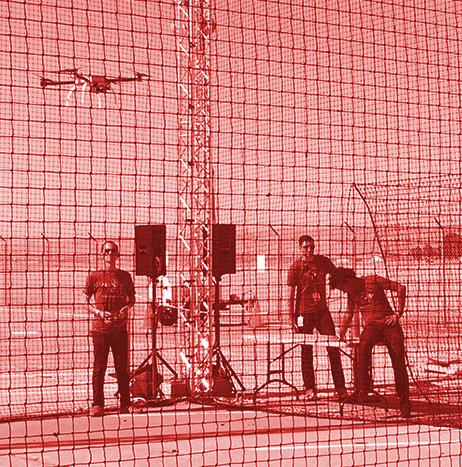
While UAS are being used in a variety of productive and positive ways, there is always the possibility for this technology to get into the hands of the wrong people, who might want to use it for harm. Protection against those bad users becomes more and more important each day with the constant development of these various technologies, according to speakers during the final day of Unmanned Systems Defense. Protection. Security.
Artificial Intelligence, trust in unmanned systems among the focuses of Day 2 of USDPS
Trust in unmanned systems – particularly autonomous ones – was among the hot topics for the second day of Unmanned Systems Defense. Protection. Security, which was delayed due to icy weather but soon warmed up with some hot topics.
“Change is coming faster than we think,” said keynote speaker Army Lt. Gen Edward C. Cardon, director of the Office of Business Transformation in the Office of the Under Secretary of the Army. “The combination of all of these technologies is going to have a huge impact on the operations for not just the joint force, but for the entire Army.”

Military moving fast to field advanced technology, speakers say
The U.S. military is committed to moving faster to get high technology into the field, according to several speakers at the opening day of AUVSI Unmanned Systems Defense. Protection. Security in Maryland.
“We need new unmanned systems, fast,” said Lt. Gen. Robert Walsh, commanding general, Marine Corps Combat Development Command.
The USMC is going back to its early days of being a highly experimental command, Walsh said, resurrecting its Sea Dragon series of exercises and putting a variety of off-the-shelf systems into demonstrations to see how they fare.