
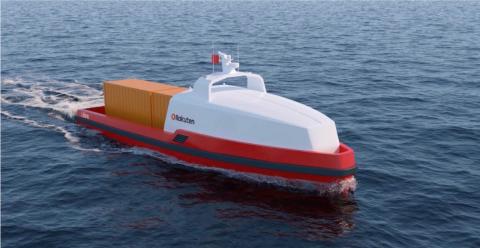
The International Maritime Organization (IMO), a United Nations agency that sets global rules for shipping, is undertaking a “scoping exercise” to explore whether any of its regulations should be changed to accommodate the expected advent of autonomous ships.
The research effort will first review IMO rules to see whether they apply to Maritime Autonomous Surface Ships (MASS) and would preclude MASS operations. The exercise will then “determine the most appropriate way of addressing MASS operations,” says IMO spokeswoman Natasha Brown.
Commercial
Commercial
Going to the TOP with AUVSI's Trusted Operator Program
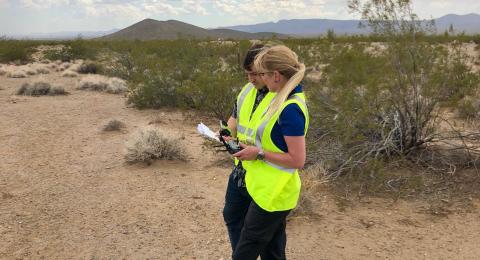
AUVSI is about to give unmanned aircraft systems operators a way to increase their safety and boost their standing in a burgeoning marketplace, through the new Trusted Operator Program (TOP).
Becoming a commercial drone pilot and operating a UAS represents an exciting and rewarding career in a dynamic and emerging industry, but from a regulatory perspective, there is little required for the commercial drone operator to demonstrate competency or proficiency in his or her operations. There are training courses available to the prospective drone pilot, however, so far there has been no industry unification with respect to remote pilot competency training or testing programs.
Volvo Trucks' new transport system includes autonomous electric commercial vehicles
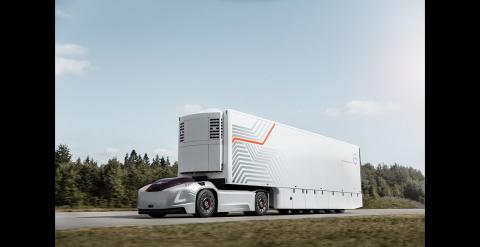
Volvo Trucks has introduced its new transport system, which is made up of autonomous electric commercial vehicles that can contribute to “more efficient, safer and cleaner transportation.”
According to Volvo Trucks, the long-term goal is to provide companies that need continuous transport services between fixed hubs a complement to what's offered today.
“The transport system we are developing can be an important complement to today's solutions and can help meet many of the challenges faced by society, transport companies and transport buyers,” says Claes Nilsson, President Volvo Trucks.
Self-Deploying Drone Pilots may be Problem for Hurricane Response Efforts
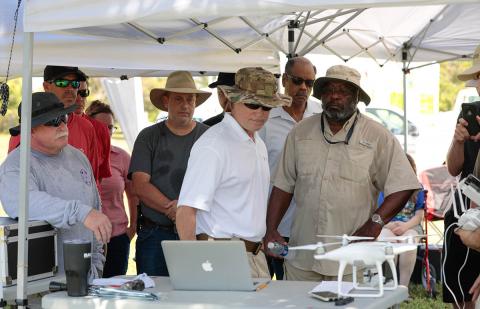
Last year’s hurricane season was a benchmark year for the role of drones in emergency management. Harvey, Irma, and Maria all had varying characteristics that served well to showcase the benefits that unmanned aircraft systems can provide for response and recovery operations. However, the well-documented — and publicized — success of those efforts is now likely to create a new problem: well-intentioned remote pilots who self-deploy to disaster scenes hoping to help save the day.
Impossible Aerospace raises $9.4 million in Series A funding and unveils US-1 UAS
Impossible Aerospace, a company that is building long-range electric aircraft, has raised $9.4 million in a Series A funding round, bringing the total amount raised by the company thus far to more than $11 million.
In addition to this funding, Impossible Aerospace has also unveiled its US-1 UAS, which is an electric commercial-grade drone with a flight time of up to two hours.
According to Impossible Aerospace, the US-1’s battery life outperforms the approximate single-charge flight time of other UAS available today—25 minutes—and “brings it to parity with gasoline-fueled systems,” the company says.

Braille Battery completes test trials for its customized lithium batteries for commercial UAS applications
Braille Energy Systems Inc. has announced the completion of Braille Battery’s test trials for its customized lithium batteries for commercial UAS applications such as Aerial LiDAR surveys, Aerial Photogrammetry and other Aerial Inspections.
According to Braille, the trials showed that Braille Battery batteries provide longer discharge cycles—with a lot less weight—than the incumbent battery.
Braille Battery is “extremely pleased with the results of its trials and the achievement of meeting another key milestone,” especially with the commercial UAS market projected to grow steadily in the upcoming years.
3DR and Yuneec establish 3DR Government Services based on Dronecode platform
Two founding members of the Dronecode software consortium, 3D Robotics (3DR) and Yuneec, have established a US-based joint venture known as 3DR Government Services to bring new products based on the Dronecode platform to market.
With a focus on serving the security and open platform needs of US government customers and their vendors in construction, engineering, and public safety, 3DR Government Services will combine Yuneec’s UAS expertise and manufacturing scale with the capabilities offered by 3DR’s software.
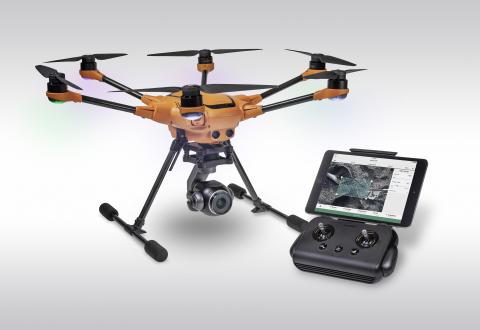
Kroger and Nuro launch autonomous grocery delivery service in Arizona
After announcing their pilot program for a fully autonomous grocery delivery service in June, Kroger and Nuro have now announced that the program is launching in Scottsdale, Arizona.
Starting August 16, customers can place delivery orders with a single location of Fry's Food Stores via the store’s website or the Fry's Food Stores mobile app. Orders are placed based on slot availability.
Grocery orders can be scheduled for same-day or next-day delivery by Nuro's fleet of self-driving vehicles. There is no minimum amount required to place an order, and the service charges a flat fee of $5.95.
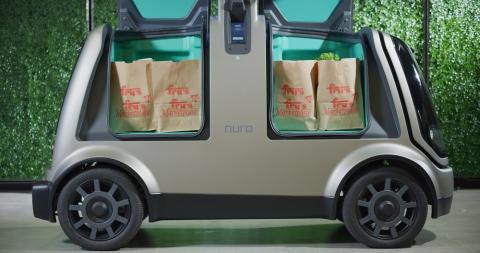
Mobilicom's SkyHopper tech for UAS and robotics completes first year of activity
After launching in August 2017, Mobilicom Ltd.’s SkyHopper technology has completed its first year of activity.
A provider of “global mission-critical-communications” systems, Mobilicom describes SkyHopper as a “holistic solution” for commercial and industrial UAS and robotics.
In its first year of activity, SkyHopper was sold to, and successfully operated by, customers in 14 different countries, and integrated with 45 UAS manufacturers.
“I am proud to say that SkyHopper has exceeded its aggressive first-year goals plan, and evolved from concept to business success in only one year,” says Mobilicom’s CEO, Oren Elkayam.
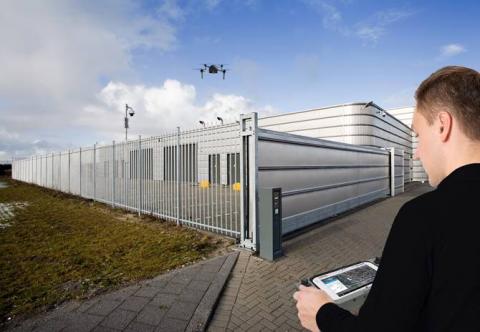
DOT chief Chao urges AV community to educate the public
The “quite brilliant” engineers and technologists who are developing automated vehicles need to “step up and educate the public about this new technology” to boost confidence, U.S. Department of Transportation Secretary Elaine Chao said Tuesday.
“Without public acceptance, automated technology will never reach its full potential,” Chao said in her keynote address at the Automated Vehicles Symposium’s first full day. “Consumer acceptance will frame the limitations to growth of this technology, so we all need to work together to get it right.”
The DOT held a “listening session” in March to get input on the autonomous revolution, covering topics including accessibility, public safety, insurance and liability, jobs, cybersecurity and public outreach.