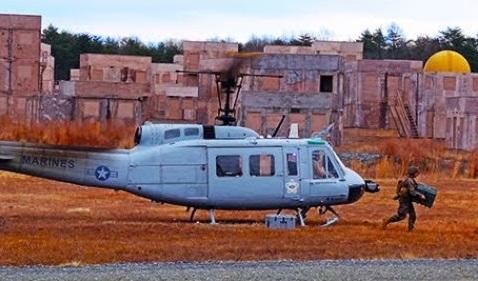
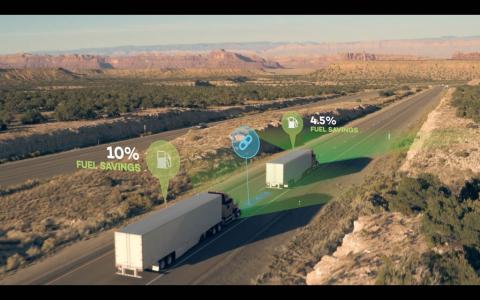
Semi-autonomous vehicles traveling in convoys, or platoons, have the potential to save lives and transport material more efficiently and safely than manned vehicles, but the technology has a way to go before it can be touted as fully autonomous.
In the commercial sector, the rush to full autonomy is limited by fuel cost efficiencies already achievable with semi-autonomous systems, but the need to protect soldiers on the ground and in war zones may drive the U.S. military to advance the technology into full automation sooner rather than later.
Commercial
Commercial
Weekend Roundup
This week in the unmanned systems and robotics world
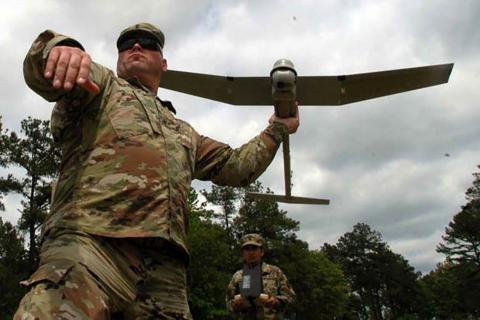
The Colorado Division of Fire Prevention and Control has deployed unmanned aircraft to survey growing damage caused by several wildfires in the state. An official said the information gathered by one of the drones is crucial to providing the department an estimate of the size of one of the fires. (The Independent)
Kroger, Nuro team for autonomous grocery delivery
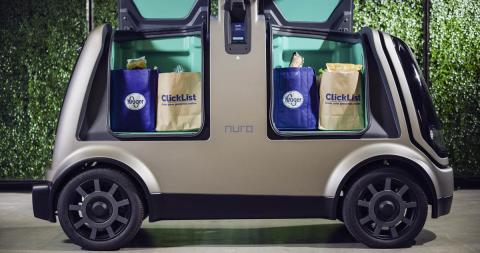
No time to go to the store? Grocery giant Kroger and Silicon Valley company Nuro have announced a pilot program for a fully autonomous grocery delivery service.
The companies say that customers can place same-day delivery orders through Kroger’s ClickList system and Nuro’s app, and the orders will then be brought to the doorstep by a Nuro autonomous vehicle.
The pilot market will be announced soon, with deliveries expected to begin this fall. Kroger has 2,800 stores in 35 states.
From Unmanned Systems magazine: Software, mobile sensors, AI team to enable better inspections
Imagine if a manager arrived at their desk on Monday morning and the computer dashboard flashed a message — a key component in the company’s production system has an 85 percent chance of breaking within the next three months.
Now, let’s say the manager clicked on the part onscreen and was able to view pictures of the component from multiple angles, data about throughput slowing, and information that indicates a problem. They would have everything needed to discuss ordering a replacement part and deciding the best time to schedule a repair. In the meantime, they could check to see if other maintenance tasks or repairs could be scheduled simultaneously to reduce downtime.
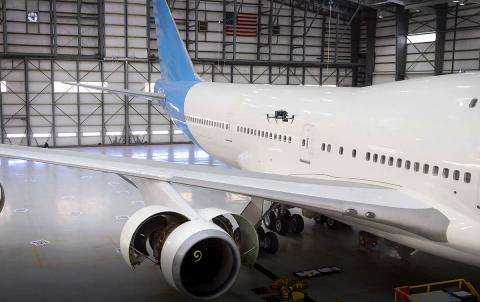
Vanilla Aircraft is now Vanilla Unmanned, a joint venture
Platform Aerospace, which provides rapid aircraft and drone prototyping, modification, and systems integration, has established a joint venture with an unnamed partner to acquire substantially all the assets of Vanilla Aircraft, which designed and built the VA001 ultra-endurance UAS.
The joint venture, named Vanilla Unmanned, will leverage Platform Aerospace’s prototyping and integration experience and the partner’s experience with aerospace and defense electronics to further develop the record-setting VA001, “creating a disruptive persistent aerial solution for both military and commercial applications,” the new company says.

Magna and May Mobility partner to develop and deploy self-driving shuttles
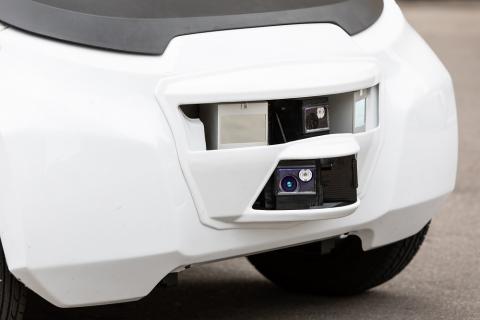
Through their newly announced partnership, Magna and May Mobility will “retrofit and scale up” May Mobility's fleet of self-driving shuttles set to enter the US market.
Magna is retrofitting low-speed self-driving micro transit electric vehicles from the chassis up, and the initial fleet of vehicles is expected to debut on June 26 with May Mobility's first commercial deployment, taking place in Detroit, Michigan.
“Magna is pleased to work with a company like May Mobility to help support new mobility in city centers,” says Swamy Kotagiri, Magna Chief Technology Officer.
SoftBank Vision Fund investing $2.25 billion in GM Cruise to strengthen GM's plans of commercializing autonomous vehicle technology at large scale
The SoftBank Vision Fund will invest $2.25 billion in GM Cruise Holdings LLC (GM Cruise).
The investment, according to GM, will strengthen GM’s plans to commercialize autonomous vehicle technology at large scale.
“Our Cruise and GM teams together have made tremendous progress over the last two years,” says GM Chairman and CEO Mary Barra.
“Teaming up with SoftBank adds an additional strong partner as we pursue our vision of zero crashes, zero emissions and zero congestion.”
'Purpose-built legislation' being developed in Australia for automated vehicles
In Australia, “purpose-built legislation” will be developed to allow an automated driving system (ADS) to drive more automated motor vehicles in place of a human.
National Transport Commission (NTC) Chief Executive Paul Retter says that a new national law—expected to be in place by 2020—would bring certainty to manufacturers and operators that want to bring more automated vehicle technology to the country.