
Companies that export unmanned systems or related components to customers abroad; who collaborate with overseas companies in the development or production process; or who share technical data with foreign nationals in the United States need to be aware of the potential impact of export control laws and regulations.
Export controls restrict the cross-border flow of strategic technologies and can even restrict the release of certain technical information within the United States. These restrictions can apply to unmanned systems and their related components and technical data.
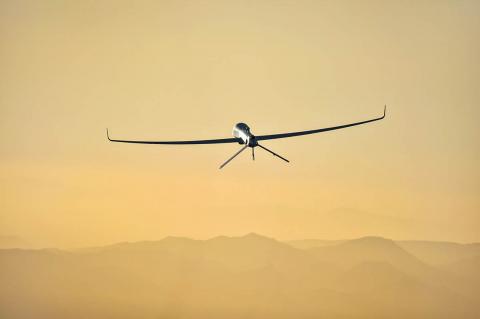
This article provides an overview of U.S. commercial and military export controls, assesses how export controls apply to unmanned systems and provides compliance tips.
Commercial
Commercial

Artificial Intelligence: Dispelling the Terminator Myth and Debunking the Future
Over the last year, AI debates have come in various shapes and sizes; as technologists, entrepreneurs, researchers, and almost everyone else, put forth their AI opinions. Questions about the capabilities and potential of AI were posed by people of diverse backgrounds prompting critical discussions and spurring more questions.
During this webinar, AI and deep learning experts will introduce attendees to their world, explain their visions for the future, and answer the question of what it means when science-fiction is within our reach.
Who Should Attend?
Roboticists
Futurists
Individuals interested in the impact of autonomous systems and artificial intelligence
Speakers
Keynote speakers for closing day of Xponential tout 'Unmanned for Good' stories
Keynote speakers at Xponential's "Unmanned for Good" session stressed the benefits of unmanned aerial systems for the humanitarian and public safety communities and the responders who risk their lives to make everyone safer.
UAS and the data they provide are becoming so effective for tasks like fighting fires that it is becoming unethical not to use them, said Robin Murphy, professor of computer science and engineering at Texas A&M University.
This, said AUVSI President and CEO Brian Wynne, is "extremely meaningful."
"We have an obligation" to provide technology, said Commander Tom Madigan of the Alameda, California, County Sheriff’s Office.
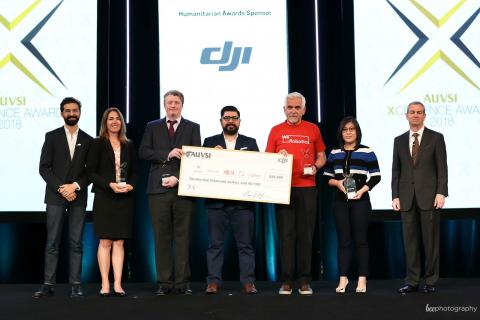
XPO speakers see bright future, with focus on safety and jobs
As divergent as the three keynote speakers who addressed a full house at Xponential 2018 were Tuesday, they shared a common message of optimism for the future of unmanned systems.
From a business point of view, PrecisionHawk Inc., chief executive officer Michael Chasen described how his company’s work in preparation of the newly released Pathfinder Report provides a practical path toward ensuring that manned and unmanned aircraft could share the skies safely.
“There’s been tremendous growth in this industry,” Chasen said, involving everything from large corporations to garage tinkerers.

Colorado’s energy, attributes attract unmanned systems industry
When Canada’s Aeryon Labs decided to set up a separate defense-focused company so it could work with the U.S. military on unmanned systems programs, it quickly settled on Colorado — and specifically Denver — as home for the new Aeryon Defense, which just launched on Feb. 1.
Tom Jackson, a retired U.S. Marine Corps officer and AH-1W Super Cobra pilot who is the company’s vice president and general manager, was already in the area, as were other employees who formed the nucleus of the new venture.
Beyond that, however, the state and city offered some unique attributes. Colorado is very centrally located, so it’s easier for the company to support multiple time zones and for company officials to travel to defense facilities around the country.

From Unmanned Systems Magazine: Special operations community looks to drone racers, new tech to stay ahead of adversaries
The proliferation of micro, mini and small unmanned aircraft systems is nothing new in the defense community.
However, as the capabilities of so-called “near peer” adversaries continue to advance at a rapid pace, the special operations community in particular is considering next-generation technology, tactics, techniques and procedures to maintain tactical overmatch on the battlefield — including taking some tips and tech from drone racers.
Speaking to Unmanned Systems, defense sources associated with the NATO Special Operations Forces community describe multiple development efforts in this area, designed to increase capacity and skill sets in response to emerging requirements across the current operating environment.
DroneUp enables LAANC available on its operating platform
DroneUp, which is a community-endorsed pilot network and leader in small UAS safe operations and training, has announced that it has enabled Low Altitude Authorization & Notification Capability (LAANC) available on its operating platform, through AirMap LAANC Deep Linking.
DroneUp says that since late 2017, it has been working to offer LAANC and other essential compliance and regulatory features to its pilots.
“We are committed to continuous education and safe operations, and we are excited to add LAANC so our community will have more opportunities to build drone businesses and fly missions,” says Tom Walker, CEO of DroneUp.

DJI integrating FLIR thermal imaging sensor technology into new DJI Zenmuse XT2 drone camera
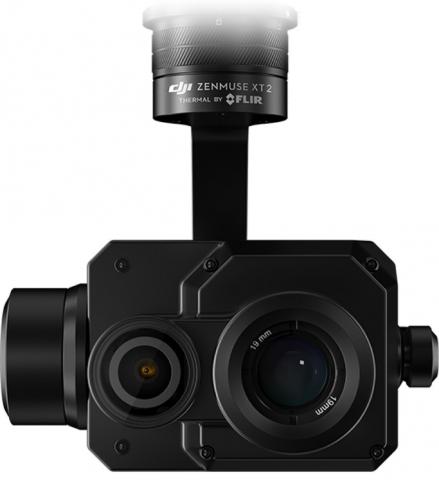
DJI will integrate a FLIR thermal imaging sensor technology into its new DJI Zenmuse XT2 drone camera, which is DJI’s first dual-sensor and most advanced gimbal-stabilized camera for commercial UAS applications.
The DJI Zenmuse XT2 is built with industrial and public safety applications in mind, and according to FLIR and DJI, the camera expands upon the benefits offered by the DJI Zenmuse XT, which is the first thermal-equipped camera jointly developed by the companies.
From Unmanned Systems Magazine: How can insurers benefit from using drones?
Insurers fundamentally sell and must deliver on promises. So, we expect them to be rock-solid, reliable, and conservative. And yet we also hope that they will innovate, adopt new technologies and adapt accordingly. Each carrier strikes their own balance, which is reflected in their varied approaches to unmanned aircraft.