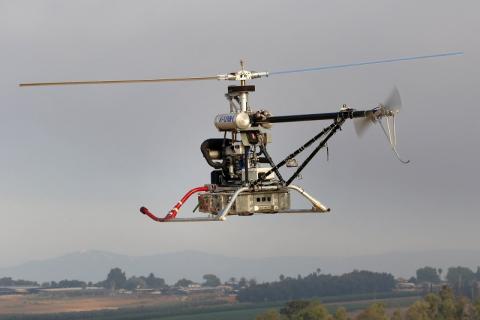
Thanks to receiving a “production contract for multiple awards totaling $97 million,” L3 Technologies will support the U.S. Army’s Apache Manned/Unmanned Teaming – eXpanded Capabilities (MUMT-X) helicopter program.
L3 Technologies is a provider of a wide range of communication, electronic and sensor systems used on military, homeland security and commercial platforms.
MUMT-X facilitates communications and data teaming between manned and unmanned aircraft, which gives the Apache AH-64E helicopter a “transformational warfighting capability” that is notably more robust, lighter and less expensive than the original UAS control system.
Defense
Defense
University of Pennsylvania researchers to develop teams of robots for U.S. military
Thanks to a five-year, $27 million government grant from a United States Army Research Laboratory program that seeks to advance robotic technology, researchers from the University of Pennsylvania will develop a team of autonomous, specialized and resilient robots for the United States military.
One of the researchers for this project, Electrical and Systems Engineering Chair George Pappas, says that this research is unique because its focus will be on specialized teams of robots, instead of individual robots.
These robots will also be able to learn from one another in unknown environments.

Media Advisory: Webinar on UAS Integration into Government and Military Operations, Oct. 18, 2017
FOR IMMEDIATE RELEASE: Oct. 18, 2017
Contact: Tom McMahon, tmcmahon@auvsi.org, (571) 255-7786
DoD customer places order for Drone Aviation's Winch Aerostat Small Platform
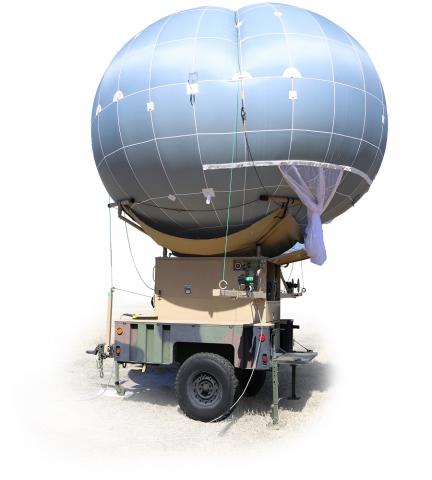
Through a contract valued in excess of $800,000, an existing U.S. Department of Defense (DoD) customer has placed an order for Drone Aviation Holding Corp.’s Winch Aerostat Small Platform (WASP), which was recently upgraded, and is capable of performing multiple missions.
A manufacturer of tethered UAS and lighter-than-air aerostats, Drone Aviation expects to deliver the WASP, which can provide “day/night video and wireless communication range extension from either a fixed, stationary position or while being towed,” to the customer during the fourth quarter of 2017.
From Unmanned Systems magazine: Navy plans 'simpler truck' for its unmanned countermine mission
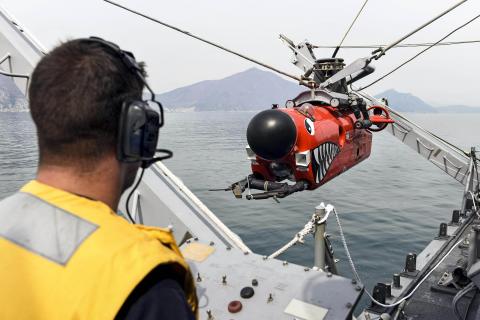
The U.S. Navy still plans to hunt for maritime mines using autonomous craft but the service likely will attack the problem from a different angle, says Adm. John Richardson, the chief of naval operations.
For much of the past decade, the Navy worked off a plan to replace its aging wood-hulled mine-hunting boats mostly with a network of systems launched from the service’s new littoral combat ships (LCS), anchored by an unmanned underwater vehicle called a Remote Multi-Mission Vehicle (RMMV) that would launch from the LCS and lead the mine-finding and destroying operations, relying on the most advanced sensors and associated equipment.
Roboteam unveils Transportable Interoperable Ground Robot during AUSA 2017
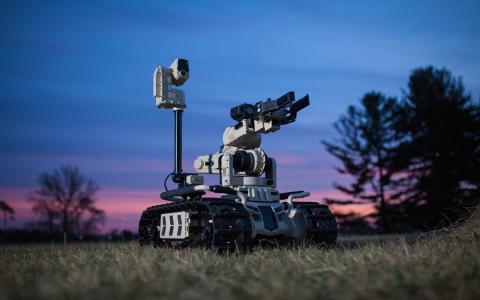
During AUSA 2017 in Washington, D.C., Roboteam, Inc., which provides tactical ground robotic systems and controllers for defense, law enforcement and public safety missions, unveiled its Transportable Interoperable Ground Robot (TIGR).
Described by Roboteam as the “most advanced, groundbreaking robotic platform ever made available to the modern warfighter,” the TIGR is a two-man carried UGV with a modular design. The modular design allows for add-ons, sensors and future technology integration.
Highly mobile and capable of operating in any terrain, the all-weather UGV is capable of a number of different functionalities that are unachievable for other mid-sized robotic platforms in the “theater of war,” according to Roboteam.

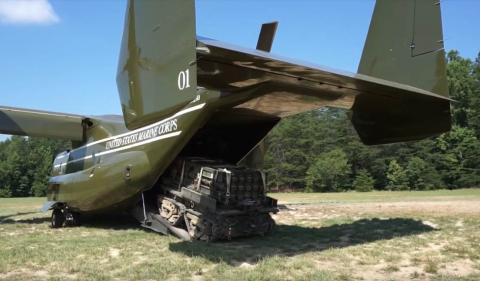
Stratom XR-P demonstrates autonomous loading, unloading from MV-22
Colorado-based Stratom’s new eXpeditionary Robotic-Platform, or XR-P, was recently demonstrated by the U.S. Marine Corps, which used it to autonomously load and unload supplies from an MV-22 Osprey vertical takeoff and landing aircraft.
Stratom has been working on the XR-P for about three years, in response to a Small Business Innovation Research proposal for resupply systems to work with the MV-22.
The main benefit of the XR-P is that it can autonomously drive in and out of the MV-22 while carrying more than 2,400 pounds of supplies, greatly reducing the manpower needed to unload supplies or ammunition from the aircraft. The XR-P can also tow up to 1,800 pounds with a full load.
Israel Aerospace Industries demonstrates capabilities of its unmanned and autonomous systems
Unmanned systems from Israel Aerospace Industries (IAI) have successfully completed a “proof of concept” to high officials of the defense industry and the Israel Defense Forces (IDF).
The Air Hopper unmanned helicopter, which was recently developed by IAI and is mainly used for providing “fast logistic supplies to sites where ground access is difficult or dangerous,” took part in a two-scenario demonstration.
One scenario simulated carrying a soldier that was seriously injured to an extraction point for “life-saving treatment, airborne monitoring of vital signs and real-time dispatch to the ground.”
The second scenario simulated “carrying logistic supplies to an isolated force at the front line” which wouldn't be accessible without putting more troops at risk.