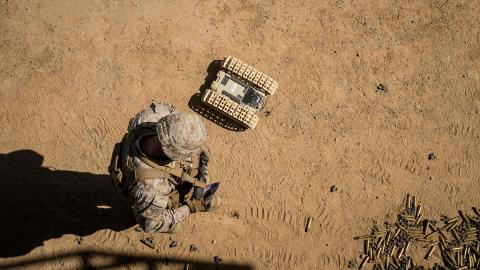
The proliferation of micro, mini and small unmanned aircraft systems is nothing new in the defense community.
However, as the capabilities of so-called “near peer” adversaries continue to advance at a rapid pace, the special operations community in particular is considering next-generation technology, tactics, techniques and procedures to maintain tactical overmatch on the battlefield — including taking some tips and tech from drone racers.
Speaking to Unmanned Systems, defense sources associated with the NATO Special Operations Forces community describe multiple development efforts in this area, designed to increase capacity and skill sets in response to emerging requirements across the current operating environment.
Defense
Defense
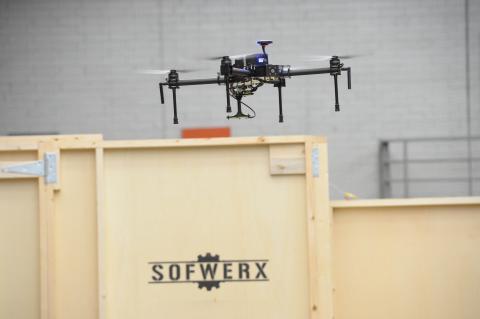
Xponential 2018 to highlight the use of unmanned systems for good
The unmanned systems market is faster and more competitive than ever before, and this year’s Xponential conference and exhibition will be, too. The show starts and ends with a competition, with plenty of innovation featured in between.
On the weekend before the show, AUVSI will host its first XBuild, a new buildathon/hackathon, from April 28-29 at Galvanize Boulder in nearby Boulder, Colorado.
Hackathons have historically been a place where innovative ideas have been transformed into everyday things; in fact, the Facebook “like” button was created at a Facebook hackathon.
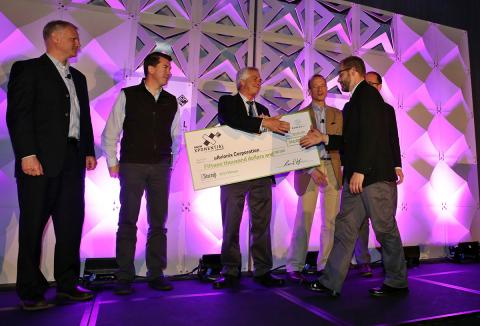
Persistent Systems' new upper C-band module can be used for UAS operations
Persistent Systems has announced the release of its Upper C-Band module for the MPU5 mobile ad hoc networking (MANET) radio, which transmits and relays voice, video, text, and sensor data in a “robust, peer-to-peer fashion.”
Certified for unlicensed use in the Industrial, Scientific, and Medical (ISM) Band, the new 5.1 to 5.9 GHz radio module will allow MPU5 users around the world to utilize the MANET for various commercial applications, including UAS operations, Industrial Internet of Things (IoT) networking, and live event video streaming.

Airspace Systems raises $20 million
Airspace Systems Inc., which manufactures comprehensive drone defense systems, has announced that it raised $20 million from a Series A funding round led by Singtel Innov8, the venture capital arm of Singtel.
As part of its investment, Jeff Karras, Managing Director of Investments at Singtel Innov8, will join Airspace’s board of directors.
“Demand for protecting stadiums, commercial buildings, power plants and, for that matter, any other public venues from potential drone threats is growing rapidly,” Karras says.
WPI students building autonomous security robot for U.S. Air Force
A team of undergraduate students at Worcester Polytechnic Institute (WPI) in Worcester, Massachusetts is attempting to turn a wheelchair into an autonomous security robot that could help protect unmanned installations for the U.S. Air Force.
The students are building this proof-of-concept robot using a tracked all-terrain wheelchair (trackchair)— provided by a company called Action Trackchair Inc.—and about $8,000 for supplies.
According to WPI, the military wants to have robots at unmanned bases that can respond to and investigate intrusion alarms and other warnings within two minutes. The robots would be used to safeguard thousands of unmanned bases, such as missile silos, around the world.
Middle Eastern country awards AeroVironment contract for its Puma AE UAS
A major country in the Middle East has awarded AeroVironment, Inc. a contract valued at $44.5 million (USD) for its Puma II AE small UAS featuring the new Mantis i45 sensor.
Puma AE UAS equipped with the Mantis i45 sensor suite gives operators the ability to “see better and farther than ever before,” which provides more actionable intelligence, so users can proceed with certainty.
Described as rugged, portable and fully waterproof, Puma AE gives operators “unmatched operational flexibility in the small UAS class,” according to AeroVironment.
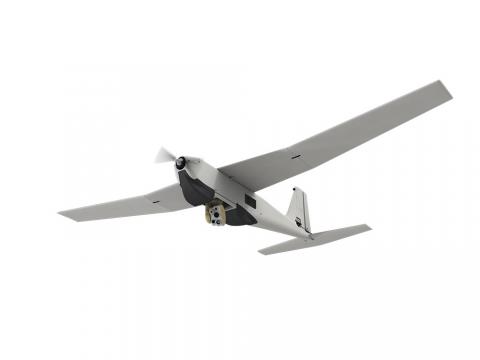
Royal Canadian Navy acquires AeroVironment's Puma II AE UAS
AeroVironment, Inc. and MDA, a Maxar Technologies company, have announced that the Royal Canadian Navy (RCN) has acquired the AeroVironment Puma II AE, which is a maritime mini UAS. MDA partnered with AeroVironment to satisfy the requirement of the Department of National Defence of Canada for the Maritime Miniature Unmanned Aircraft System (MMUAS).
The UAS will be fielded aboard RCN Maritime Coastal Defence Vessels (MCDV), and will include the Mantis i45 sensor and a 360-degree antenna system, which will enhance the Puma II AE's ability to support maritime operations.
Locust USA and U.S. Army to collaborate on development of technology for UAVs
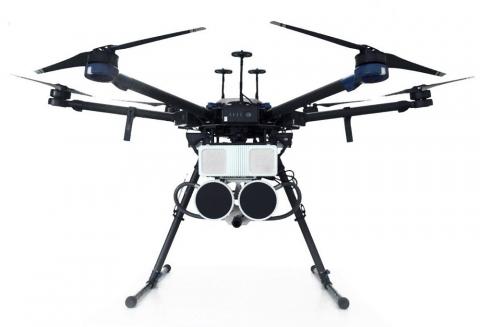
Through its wholly-owned subsidiary UAV Turbines, Inc. (UAVT), Locust USA, Inc has entered into a $19 million Technology Investment Agreement (TIA) with the U.S. Army to collaborate on the development of an “efficient and reliable/durable small turboprop gas turbine engine” for propulsion in the UAV space.
The development goals surround engine capabilities beneficial to both military and commercial markets. This initiative is part of the Army’s “Reliable Advanced Small Power Systems (RASPS) Technology Demonstration” program. The goal of the program is to design, manufacture and test a “200 shp class advanced technology engine to technical readiness level (TRL) 6.”
From Unmanned Systems Magazine: Third Offset: How can the military take advantage of industry work on plug-and-play systems?
In a perfect world, the U.S. military would have a fleet of plug-and-play unmanned ground vehicles that would be simpler to operate and support than the current fleet of thousands of small and medium-size UGVs, which has a variety of logistics trains and electronic architectures. The current fleet works well, but it was fielded quickly without a long-term plan to meet urgent needs, like countering roadside bombs.