
Swift Navigation is currently in a census-designated place in Sumter County, Florida, called The Villages, installing technology to be used for driverless vehicles.
The California-based software company says that in the near future, people in The Villages, a well-known retirement community, will be able to sit in driverless cars, using GPS technology to safely travel.
“Take my wife to work, go back home, maybe pick up the kids at school and drive them home all with a single car,” says Lance Andre with Swift Navigation via News 6/ClickOrlando.com.
Mobility
Mobility
From Unmanned Systems Magazine: Nvidia brings artificial intelligence to automobiles
Imagine cars so fully autonomous that the interiors have no steering wheels, pedals, or rear-view mirrors. Imagine them being able to carry passengers safely along any route in any weather, in any traffic conditions — skillfully spotting, assessing and avoiding hazards even more reliably than human drivers.
It’s a vision that would require immense artificial intelligence computing power to realize. And that is what deep-learning innovator Nvidia says its Drive PX Pegasus provides.
In announcing Pegasus in October, Nvidia billed it as the “world’s first AI computer to make (fully autonomous) robotaxis a reality.” Pegasus is scheduled for distribution to auto manufacturers and other customers in the second half of 2018.
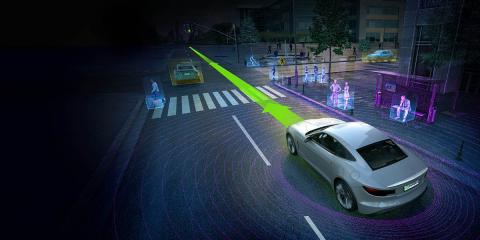
Ohio Governor John Kasich signs executive order authorizing autonomous vehicle testing in Ohio
On May 9, Ohio Governor John R. Kasich signed an executive order to authorize autonomous vehicle testing in Ohio.
The executive order also seeks to “lay out a roadmap” for how the automotive industry can go about testing technologies in the state.
“Ohio is well positioned to lead in developing the cars of the future, and just as Wright Brothers did at Huffman Prairie, our great state stands ready to once again launch a new era in transportation,” Kasich said.

Toyota Research Institute's automated vehicle test facility expected to open in October
The Toyota Research Institute (TRI) has announced that it is constructing a closed-course test facility—expected to be operational in October of this year—to develop automated vehicle technology.
An approximately 60-acre site at Michigan Technical Resource Park (MITRP) in Ottawa Lake will be transformed into a test facility that will be used exclusively by TRI to safely replicate demanding “edge case” driving scenarios that are too dangerous to perform on public roads.
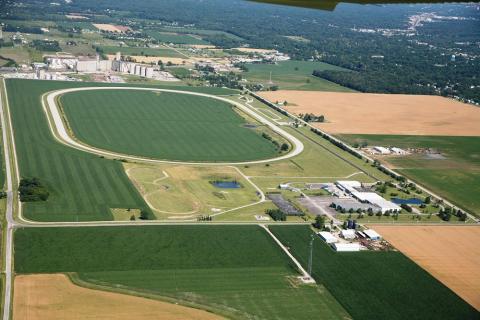
Peachtree Corners' autonomous vehicle track expected to open by 2019
The City of Peachtree Corners, Georgia and Prototype Prime, which is Peachtree Corners’ start-up incubator, have announced plans to create a city-owned and operated 1.4-mile autonomous vehicle track and an Advanced Vehicle Technology Accelerator.
Construction of the track is expected to begin shortly, and it has an anticipated open date of January 2019.
The track will be located just outside of Prototype Prime’s front door. The start-up incubator will serve as the “innovation, collaboration, and testing hub” for the city's advanced vehicle project.

University of Florida study seeks to ensure autonomous cars meet needs of the blind
A University of Florida researcher named Julian Brinkley has developed a program called “Atlas” to figure out the specific needs blind people have using self-driving cars, and using his software to solve problems.
Brinkley uses data he collects from users and others through collaboration with the Florida Center for the Blind in Ocala, Florida.
“If I’m a visually impaired person and I don’t have the ability to verify visually that I’m at the appropriate location, how do I know that it’s not dropping me off in a field somewhere?” Brinkley says via the Gainesville Sun.

Microsoft announced as exclusive data and cloud provider for American Center for Mobility during ACM's grand opening
During the grand opening of the American Center for Mobility (ACM) on April 4, it was announced that Microsoft will be the exclusive data and cloud provider for ACM.
In an effort to advance the testing and development of connected and automated vehicles (CAV), as well as mobility technologies, Microsoft will provide ACM with cloud resources and data infrastructure, according to John Maddox, ACM president and CEO.
“We are excited to collaborate with Microsoft in our efforts to lead the world in the safe development of CAV technologies and to enable the safe deployment of these vehicles onto the nation's roads,” Maddox says.
G7, GLP and NIO Capital form joint venture to develop autonomous driving electric trucks
Internet of Things (IoT) technology company G7, modern logistics technologies provider GLP, and private equity fund NIO Capital have announced a joint venture that will focus on developing next generation smart heavy-duty trucks powered by “autonomous driving, new energy technologies, logistics big data and exploring innovative models of 'vehicle-as-a-service.'”
The joint venture, which is controlled by G7, is built on “G7's massive real-time data and fleet management capabilities, GLP's open logistics ecosystem and NIO Capital's extensive automotive industry partnership.” The aim of the joint venture is to create the “next generation of smart vehicles for logistics and transportation through cross-industry collaboration.”
Jaguar Land Rover and Waymo partner to develop world's first premium self-driving electric vehicle
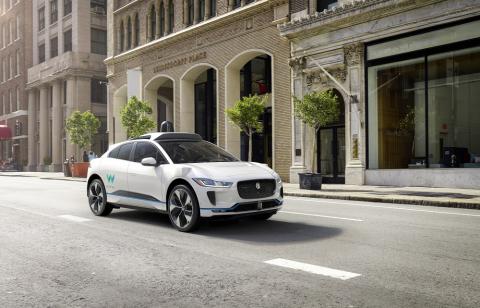
Jaguar Land Rover and Waymo have announced a long-term strategic partnership to further their shared goals of making cars safer, freeing up people’s time, and improving mobility for everyone.
As part of their collaboration, Jaguar Land Rover and Waymo will develop the “world’s first premium self-driving electric vehicle” for Waymo’s driverless transportation service.
Together, the companies will design and engineer self-driving Jaguar I-PACE vehicles. The Jaguar I-PACE, which is Jaguar’s first full-electric SUV, was launched in March. All-new from the ground up, the Jaguar I-PACE is a “no compromise, desirable and practical electric performance car.”
Magna and Lyft partner to develop and manufacture self-driving systems
Magna, which is a mobility technology company and automotive supplier, and Lyft have announced a multi-year collaboration in which the companies will “jointly fund, develop, and manufacture self-driving systems.” Magna will also invest $200 million in Lyft equity.
As a result of the collaboration, Lyft will lead the co-development of the self-driving system at its Palo Alto-based self-driving engineering center; Magna will lead manufacturing and join Lyft's development team onsite, where it will contribute its vehicle systems knowledge, safety and ADAS expertise, and manufacturing capabilities; and Magna and Lyft will share jointly created IP and utilize Lyft data to improve systems.