Uber Advanced Technologies Group (Uber ATG) has selected Washington, D.C. as its next location to collect data for its self-driving vehicles.
Uber ATG’s self-driving cars will begin operating on the roads of D.C. beginning Friday, Jan. 24, to collect data, but the vehicles will be in manual driving mode, so a Mission Specialist—a specially trained vehicle operator—will always maintain control of the vehicle.
“We are using a phased approach to develop and deploy our self-driving vehicles, taking the necessary steps to operate safely in every city,” Uber ATG says.
Software
Software

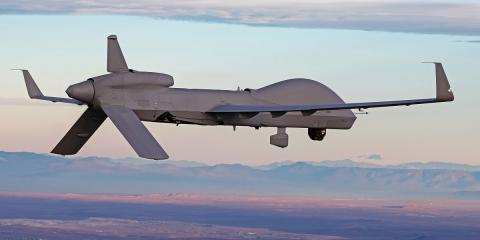
GA-ASI begins Multi-Domain Operations demonstrations with Gray Eagle Extended Range UAS
Using a company-owned Gray Eagle Extended Range (GE-ER) UAS, General Atomics Aeronautical Systems Inc. (GA-ASI) completed the first in a series of internally-funded Multi-Domain Operations (MDO) demonstrations on Nov. 19, 2019, the company has announced.
The flight series will continue in 2020, and is expected to showcase that a GE-ER UAS equipped with long-range sensors and Air Launched Effects (ALE) is able to Detect, Identify, Locate and Report (DILR) targetable data to support Long Range Precision Fires (LRPF) systems.
“Gray Eagle ER is a critical tool, along with the Army’s manned platforms, for operations in an MDO environment,” says David R. Alexander, president, GA-ASI.
Boeing, Tactical Robotics partner to explore development of ducted fan propulsion technology
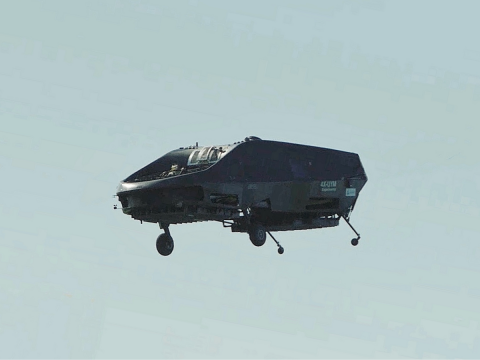
Boeing has signed an agreement with Urban Aeronautics' subsidiary Tactical Robotics to explore the development of a ducted fan propulsion technology, which could potentially be used for piloted and autonomous light aircraft.
The companies will use a joint working group to determine what opportunities may exist for the development, production and marketing of Fancraft–based vertical takeoff and landing (VTOL) products such as Tactical Robotics’ Cormorant.
Thanks to its compact, Humvee-sized footprint, Cormorant is capable of conducting emergency response missions such as delivering food, water and supplies during natural disasters or in combat environments. The vehicle can also carry up to four patients for medical evacuations.
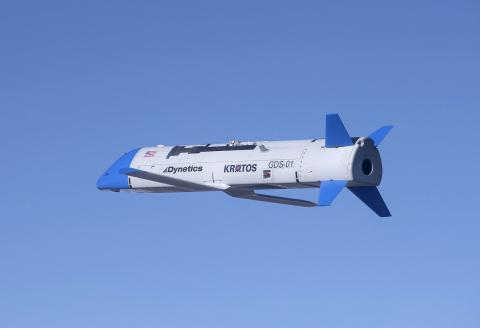
Dynetics' X-61A Gremlins Air Vehicle completes first flight
Dynetics, the performer for the Defense Advanced Research Projects Agency (DARPA) Gremlins program, has announced that in Nov. 2019, it successfully flew its X-61A Gremlins Air Vehicle (GAV) for the first time at Dugway Proving Ground near Salt Lake City, Utah.
Testing operations involved one captive-carry mission aboard a TBM Inc. C-130A and an airborne launch and free flight of the X-61A, which lasted one hour and 41 minutes.
Some of the test objectives included demonstrating a successful launch of the GAV from the C-130, collecting data on GAV subsystem operation and performance, and demonstrating the flight termination and ground (parachute) recovery of the GAV (demonstration system only - not part of the operational system).
Mavoljic Technology's new camera allows UAS developers to get high resolution jello free stable videos
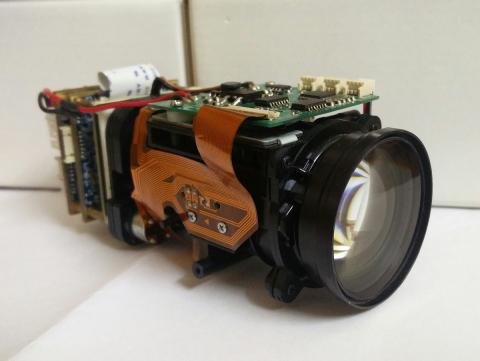
Mavoljic Technology’s new Full HD 30x Optical Zoom Global Shutter Camera is now available. Described as the lightest camera of its kind in the world, the camera allows UAS developers to obtain high resolution jello free stable videos.
According to Mavoljic Technology, the camera (model no. PM1080-GS-30) outputs H264 compressed 1920x1080p video over Ethernet. Weighing just 150 grams, the camera provides ~59° to 2° field of view, and supports low resolution analog secondary stream.
vHive partners with DAS, Consortiq to extend drone software platform offering to enterprise customers
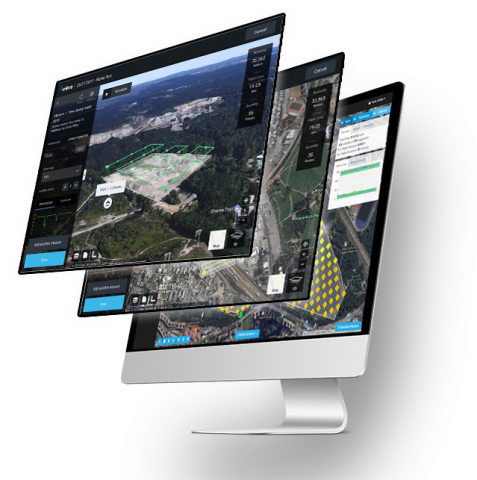
In an effort to extend its drone software platform offering to enterprise customers, global software provider vHive has partnered with DFS Autonomous Systems LLC (DAS) and its subsidiary Consortiq.
According to vHive, it is the only software platform that allows enterprises to digitize their field assets and operations using autonomous drone hives. Enterprises can use vHive’s software platform to deploy autonomous drone hives to capture and analyze data, allowing them to accomplish a variety of tasks including reclaim lost revenue, generate new revenue streams and cut operational costs. All this can be done while keeping field staff safe on the ground.
Simlat delivers small UAS simulation platform to FAA UAS simulation lab
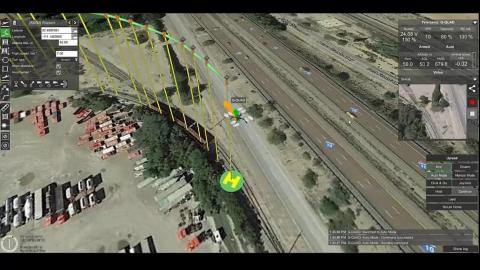
Simlat has announced the delivery of its small UAS simulation platform to the UAS simulation lab at the FAA William J. Hughes Technical Center (WJHTC) NextGen Integration & Evaluation Capability (NIEC).
Compliant with the MAVLink protocol, the Simlat INTER simulator can easily be integrated to UAS control software that supports MAVLink such as UgCS and MissionPlanner.
Using the AviationSimNet standard, INTER was also integrated to the FAA simulation infrastructure as part of this delivery, which will allow distributed exercises and experiments with other FAA simulations.
Echodyne introduces high-resolution imaging radar for autonomous vehicles
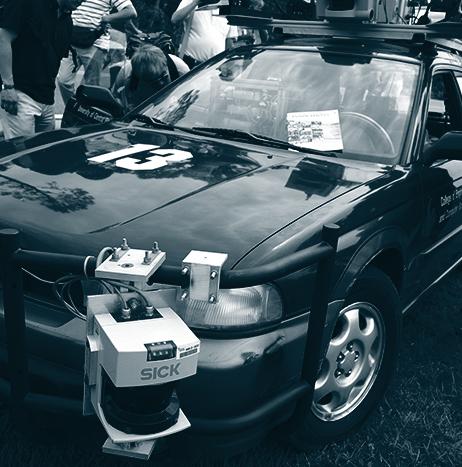
Echodyne has introduced EchoDrive, the company’s high-resolution imaging radar for autonomous vehicles.
Built on MESA technology, EchoDrive offers a new type of sensor functionality that greatly enhances machine perception, Echodyne says. The company adds that EchoDrive delivers what it describes as “unprecedented real-time control” over the radar’s interrogation of the drive scene, which enables a “richer form” of machine perception.

FLIR Systems, ANSYS partner to enhance safety for assisted driving and autonomous vehicles
With a goal of giving automakers the ability to deliver “unprecedented vehicle safety,” FLIR Systems Inc. has partnered with ANSYS to deliver “superior hazard detection capabilities” for assisted driving and autonomous vehicles (AVs).
FLIR says that it will equip ANSYS’ leading-edge driving simulator with a fully physics-based thermal sensor to facilitate the modeling, testing and validation of thermal camera designs within an “ultra-realistic virtual world.”
By optimizing thermal camera placement for use with various tools such as automatic emergency braking (AEB), pedestrian detection, and within future AVs, the new platform is expected to reduce the development time of original equipment manufacturers, the companies say.
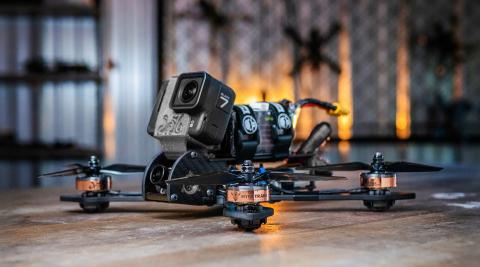
Red Cat to acquire FPV and drone racing hardware provider Rotor Riot
Red Cat Holdings Inc. has entered into an agreement to acquire first person view (FPV) and drone racing hardware provider Rotor Riot.
Red Cat notes that from 2018 to 2019, Rotor Riot’s revenue grew approximately 44 percent year-over-year. Red Cat adds that its acquisition of Rotor Riot will provide the necessary resources and combined expertise to facilitate more growth for both companies.
“We believe this deal is another significant milestone in our strategy to fuel rapid growth,” says Jeff Thompson, CEO of Red Cat.