Autonomous technology developer Vecna Robotics has partnered with supply chain operator GEODIS to equip a GEODIS distribution center in Dallas, Texas with autonomous platforms.
The distribution center in Dallas is currently using Vecna robots and workflow technology to automate the horizontal transport of inbound pallets from a staging area to put-away storage within the 150,000 square foot distribution center. The pallets were previously picked up, delivered and put away using human labor and manual trucks.
Software
Software
Drone Amplified looks to use drones to fight fire with fire
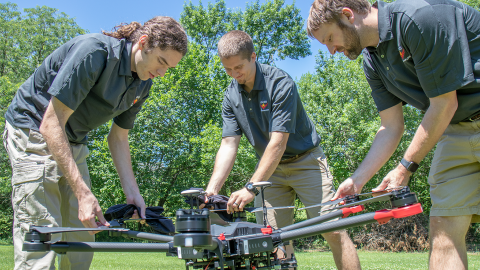
A University of Nebraska–Lincoln startup company called Drone Amplified has taken a unique approach to fight fires.
The company has developed drone-mounted technology that carries chemical spheres the size of pingpong balls, which drop and ignite at the press of a button to intentionally spark small fires that burn vegetation and starve incoming wildfires of potential fuel.
“Our product fills a niche in the market between a helicopter, which is expensive, and hand lighting, where people have to walk or take a four-wheeler,” explains Jim Higgins, chief engineer and Nebraska alumnus.
UAVOS, Polynesian Navigation team up to develop long-distance autonomous UAS for 3D mapping
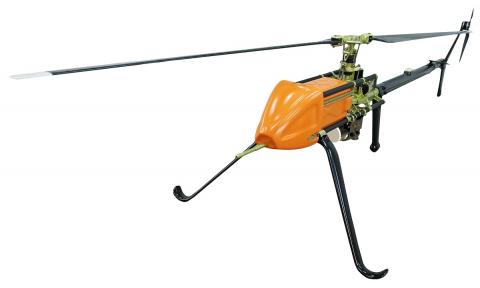
UAVOS and Polynesian Navigation Inc. have collaborated to develop a long-distance autonomous UAS for 3D mapping.
Powered by UAVOS's autopilot, the UVH -25EL unmanned helicopter has increased performance with a carrying capacity, a flying range, and an extended temperature range. A number of its functions are conducted automatically, including take-off and landing, and the actual missions themselves.
“We have been extending into UAV service market to meet its goal of offering state-of-the-art systems that are easy to use and offer excellent cost/performance value to our customers,” says UAVOS CEO Aliaksei Stratsilatau.
Volocopter unveils heavy-lift VoloDrone
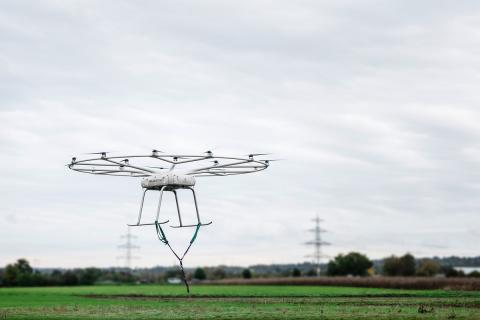
Urban Air Mobility company Volocopter has unveiled the demonstrator of its heavy-lift VoloDrone.
The fully electric utility UAS can carry a payload of up to 440 pounds up to 25 miles. With a standardized payload attachment, the UAS can transport a variety of objects including boxes, equipment and liquids.
“Since the very beginning, we have worked with strategic partners across different industries to develop a product that will provide significant value in their specific use cases,” says Christophe Hommet, chief engineer VoloDrone.
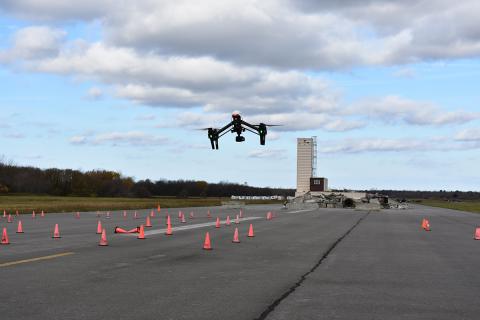
NUAIR hosts first New York UAS Public Safety Fly-In for public safety officials
NUAIR hosted its first New York UAS Public Safety Fly-In on Tuesday, Oct. 29.
During the event, which brought together more than 100 public safety officials from across New York State to the State Preparedness Training Center (SPTC) in Oriskany, New York, participants got the chance to learn about and fly UAS in a variety of emergency scenarios that were set up throughout the SPTC.
“Unmanned Aerial Systems have rapidly become a critical component of emergency response operations, making it essential first responders have the training they need to utilize these devices in the field,” explains New York State Homeland Security and Emergency Services Commissioner Patrick A. Murphy.
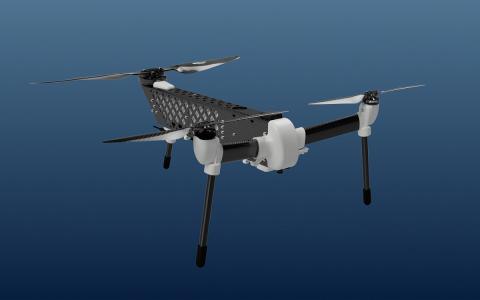
FlightWave Aerospace's new Jupiter tricopter UAS reminiscent of a 'tough-as-nails pickup truck'
FlightWave Aerospace has launched its new Jupiter tricopter UAS.
Air Data Solutions uses SimActive software to determine financial assistance following Hurricane Dorian
In the aftermath of Hurricane Dorian, Air Data Solutions (ADS) in Florida used SimActive’s Correlator3D software to determine financial assistance.
Before the storm, aerial imagery was collected for pre-hurricane assessment, and following the storm, aerial imagery was collected for damage analysis.
“We have been impressed by the accuracy and speed of Correlator3D to support such a time-critical mission,” says Don Cummins, president of ADS.
“Combined with a high-end aerial sensor, SimActive provides the best tool for emergency response.”

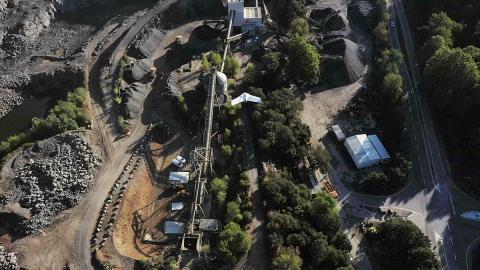
CEMEX to deploy delair.ai platform at its aggregate production sites in France
CEMEX, a supplier of products to the construction industry, will deploy Delair’s delair.ai platform at its 60 aggregate production sites in France, after the two companies announced a new three-year agreement.
A new cloud platform that analyzes and leverages the data collected by UAS, satellites and other aerial methods, delair.ai will provide CEMEX with access to highly accurate, 3D topographic surveys, along with advanced analytics to calculate volumes of materials. This will result in a better forecast of production, improved operations and reduced operational costs.
Robotics company Toggle to use latest funding to further development of technology
A startup that uses robotics and automation to optimize the fabrication and assembly of rebar called Toggle has announced that it has raised $3 million in seed-funding.
Toggle will use the funding to expand its team, and continue the development of its robotics technology.
“Global urbanization is driving demand for ever larger and more complex urban highrise and civil infrastructure construction. At Toggle we believe that part of the solution to delivering these projects will be through leveraging robotics and automation to multiply the productivity of labor,” explains Toggle CEO, Daniel Blank.

UAVOS develops test bed to ensure reliable operations of its UAS
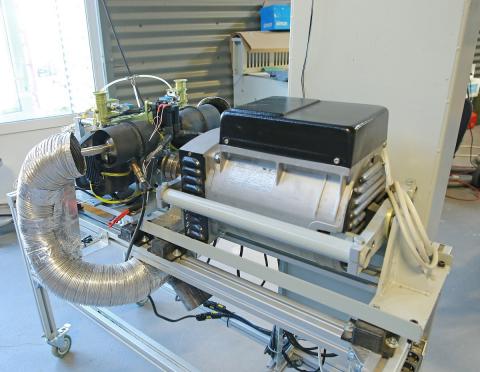
UAVOS has developed a test bed to test and conduct trial runs of internal combustion engines with a maximum power of up to 25hp, to ensure that its UAS operate reliably.
The test bed is designed to take into account the specifics of the operation of engines in UAS.
All critical engine parameters such as torque, power and engine temperature are displayed on a computer monitor. According to UAVOS, some of the capabilities of a multi cylinder engine test bed with remote control include being able to measure the maximum torque and maximum power, being able to analyze part load torque and nominal loads, and being able to determine the optimum ignition timing angle.