Technology
Technology
MetaVista complete nearly 11-hour UAS flight using Intelligent Energy fuel cell power module
Intelligent Energy has announced that a South Korean liquid hydrogen specialist called MetaVista conducted a 10 hour and 50-minute multi-copter test flight using an Intelligent Energy Fuel Cell Power Module.
The flight, which utilized Intelligent Engineering’s lightweight 650-watt Fuel Cell Power Module (FCPM), is believed to be the longest flight time of its kind.

NUAIR Alliance and others test impact of wind on air worthiness and performance of UAS
The New York State UAS Test Site, TruWeather Solutions, the NUAIR Alliance and a company called Windshape have announced that using “industry-leading” micro-weather stimulations, they tested the impact of wind on the air worthiness and performance of various types of UAS.
Testing took place at the New York State UAS Test Site at Rome, New York's Griffiss International Airport.
“We know that weather impacts small drones in a variety of ways and these tests enabled us to evaluate that impact and each platform’s capacity to reject atmospheric disturbances and maintain safe flight,” explains Major General Marke F. “Hoot” Gibson (ret), chief executive officer, NUAIR Alliance.
Colorado's Regional Transportation District deploys autonomous shuttle
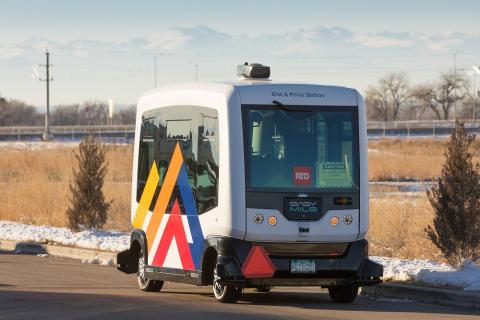
The Regional Transportation District (RTD) in Colorado debuted its autonomous vehicle (AV) shuttle on Tuesday, Jan. 29. The EasyMile autonomous shuttle is expected to operate for the next four to six months.
According to RTD, this was the first on-road deployment of an AV shuttle not only in Denver, but the state of Colorado.
“We’re excited to see how driverless technology will work in Denver and to embrace new, innovative and better mobility options to move more people and improve travel for residents and visitors alike,” says Denver Mayor Michael B. Hancock, who was one of several in attendance for a ribbon cutting and ride aboard the shuttle.
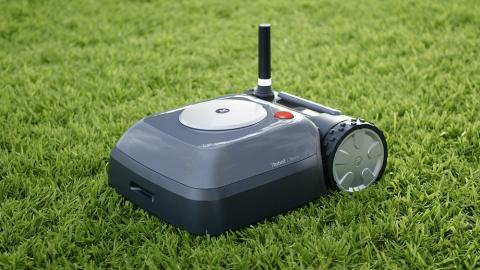
iRobot unveils Terra robot mower
With a mind towards reinventing how people care for their lawn, iRobot Corp. has unveiled its new Terra robot mower, which features state-of-the-art mapping and navigation technologies, high-performance, high-quality mowing, and easy installation.
Using iRobot’s Imprint Smart Mapping technology, Terra learns its environment, and can mow a lawn like a human does, as it navigates a yard and cuts efficiently in straight, back-and-forth lines.
Terra remembers its location in the yard, and where it still needs to cover. If its battery runs low, it will return to its base to recharge, and then pick up where it left off until the yard is complete.
Argo AI receives permit to test autonomous vehicles in California
According to TechCrunch, Pittsburgh-based self-driving car startup Argo AI has received a permit from the California Department of Motor Vehicles that allows the company to test its autonomous vehicles in the state.
The permit is for one vehicle and two drivers.
Launched in 2016, Argo AI received a $1 billion investment from Ford Motor Company in 2017, just months after forming. Together, Ford and Argo AI are looking to develop a virtual driver system for Ford’s fully autonomous, SAE level 4-capable vehicles, which Ford hopes to have on the roads by 2021.
Researchers from MIT and Microsoft uncover "blind spots" of artificial intelligence systems
Researchers from MIT and Microsoft have developed a model that identifies instances where autonomous systems have “learned” from training examples that don’t match what’s actually happening in the real world.
The researchers say that this model could be used by engineers to improve the safety of artificial intelligence (AI) systems, such as driverless vehicles and autonomous robots.
According to the researchers, AI systems that power driverless cars are thoroughly trained in virtual simulations to prepare the vehicle for nearly every event on the road. Sometimes, though, the car makes an unexpected error in the real world because an event occurs that should, but doesn’t, change the car’s behavior.
Airborne Response conducts UAS training exercise with National Guard and others
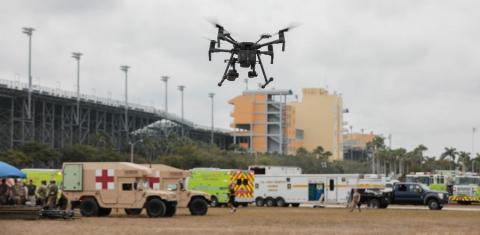
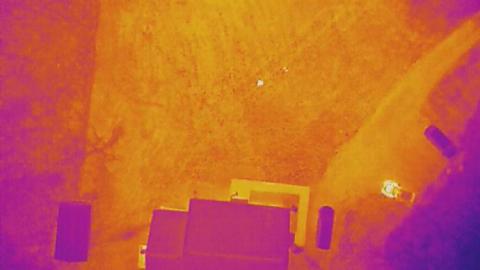
On Jan. 24, Airborne Response completed a full-scale training exercise called Exercise Lightning Shield, during which it provided aerial support for the U.S. Army National Guard, as well as specialized elements of the Miami-Dade Fire Rescue Department, at the Homestead-Miami Speedway in Homestead, Florida.
A Miami-based provider of “Mission Critical Unmanned Solutions” for industry and government, Airborne Response says that by deploying a force made up of UAS and Tethered Aerostat Systems (TAS) flight teams, it was able to provide “comprehensive low-altitude umbrella” capable of delivering aerial intelligence throughout the simulated disaster response exercise.