
Last week, Direct Relief, Merck, AT&T, Softbox and Volans-I tested using UAS to deliver emergency medical supplies in Puerto Rico.
Leveraging each of their respective strengths and capabilities, the organizations tested UAS flights and the coordinated processes needed to provide medical supplies via UAS in a temperature-controlled environment with real-time monitoring.
“Post-Hurricane Maria, Puerto Rico has become a hotbed of innovation in disaster relief and healthcare resiliency,” explains Andrew Schroeder, director of research and analysis at Direct Relief.
Technology
Technology
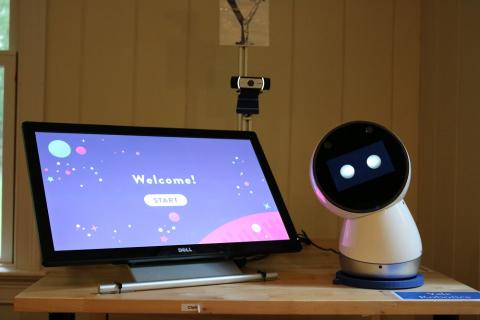
Robots help improve social skills of children with Autism Spectrum Disorder, Yale study shows
The social skills of children with Autism Spectrum Disorder (ASD) greatly improved after a month of working with robots, according to a study led by Yale researchers.
The robots, modeling eye contact and other social behaviors, guided the children through storytelling and interactive games designed to promote social skills such as emotional understanding, taking turns, and seeing things from others’ perspectives.
Children from 12 participating families participated in the study, which was led by Brian Scassellati, professor of computer science.
Weekend Roundup
This Week in the Unmanned Systems and Robotics World
UAS footage captured by two videographers shows the aftermath of a deadly earthquake that hit the island of Lombok, Indonesia. The footage was shared on Instagram by a charity called Project Karma, which is working to supply earthquake relief, and is raising money to help those who lost their homes and possessions. (Metro)
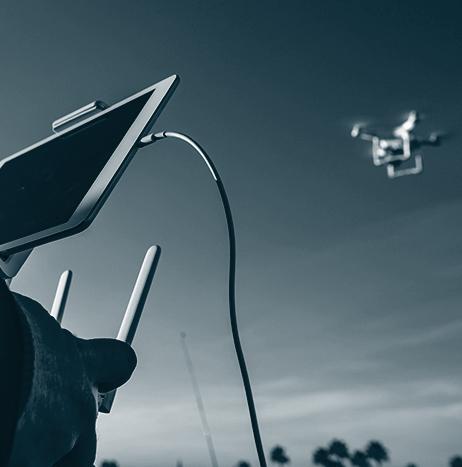
Echodyne receives FCC certification for its EchoFlight radar for UAS
Echodyne has received FCC certification for its EchoFlight radar, which is an airborne detect and avoid radar designed to be integrated into a wide-variety of UAS platforms, and also provides “unprecedented combination of C-SWaP, range, and accuracy.”
According to Echodyne, the EchoFlight radar is a “significant step forward for UAS mission safety,” especially for organizations seeking authorization to operate beyond visual line of sight (BVLOS) or autonomously.
“Echodyne is excited to receive authorization from the FCC and to make EchoFlight available to the many interested UAS partners in the US,” says Eben Frankenberg, CEO of Echodyne.

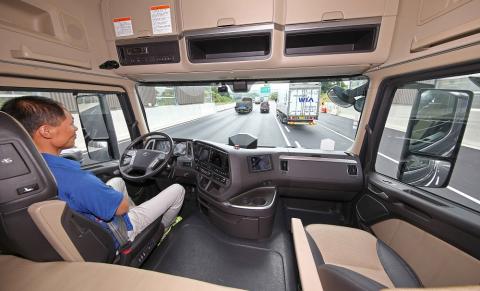
Hyundai Motor makes history in South Korea with autonomously navigated semi-trailer truck
On August 21, Hyundai Motor Company completed South Korea's first domestic highway journey with an autonomously navigated semi-trailer truck.
Hyundai showcased its “innovative technological advancement in future mobility” when its Xcient truck drove approximately 40 kilometers on the highway between Uiwang and Incheon while carrying a large semi-trailer simulating cargo transportation.
“This successful demonstration proves that innovative autonomous driving technology can be used to transform the trade logistics industry,” says Maik Ziegler, Ph.D., Director of Commercial Vehicle R&D Strategy Group at Hyundai Motor Company.
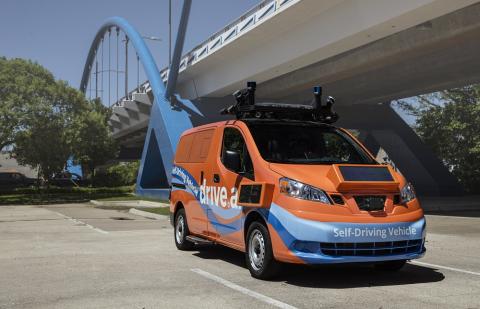
Drive.ai's self-driving vehicles to begin operating in Arlington, Texas starting in October
A few weeks after launching a self-driving pilot program available to the public in Frisco, Texas, Drive.ai and the city of Arlington, Texas have signed a contract initiating a one-year self-driving program for Arlington residents, visitors, and anyone who’s interested in taking a ride in one of Drive.ai’s self-driving vehicles.
Expected to start on October 19, the program will add another transportation option within Arlington's Entertainment District.
“Our partnership with the City of Arlington represents another important milestone: this program marks our first revenue,” Drive.ai says in a company blog post.
Embry-Riddle alumnus turns doodle drawing into award-winning autonomous robotic fish
A recent graduate of Embry-Riddle Aeronautical University named Jefferson Talbot has turned one of his doodle drawings into an autonomous robotic fish created with 3D printing technology, which he hopes can be used in the pet fish industry, and to help researchers who need a close-up view of underwater ecosystems.
Back in 2016, Talbot started drawing a skeleton of a fish in the margins of his notebook during class. Last summer, after watching his roommate “carefully lug” around his fish and bowl whenever leaving the dorm for a few days so the fish would stay healthy, Talbot came up with the idea of a robotic fish, as he thought that a robotic fish would be a lot easier to take care of.
Lyft and Aptiv complete 5,000 self-driving rides
Lyft and Aptiv have announced that they have completed 5,000 rides in Aptiv's self-driving vehicles.
The companies launched their self-driving program at the 2018 Consumer Electronics Show (CES) in January, and after a successful CES run, the program was extended to be an ongoing Lyft mode for Las Vegas in May, with a fleet of Aptiv self-driving vehicles launching on Lyft’s network.
“Hitting 5,000 consumer rides is a major milestone, not just for the Aptiv and Lyft, but for the entire mobility space,” says Glen De Vos, CTO of Aptiv and president of Aptiv’s Mobility and Services group.
“This is the first of its kind commercial self-driving program, and we are proud to be offering AVs for public use today.”

Boeing completes synchronized UAS flight tests using new technology
Boeing has successfully completed the first suite of synchronized UAS flight tests using new on-board autonomous command and control technology developed by Boeing Australia.
During the test flights, which were conducted at a regional Queensland airfield, five UAS test beds equipped with Boeing’s new on-board system safely completed “in-air programmed missions” as a team without input from a human pilot.
The milestone comes six months after the establishment of Boeing's largest international autonomous systems development program in Queensland.
Army Research Laboratory and Bell Helicopter seek to advance development of micro UAS
In June, researchers from the U.S. Army Research Laboratory (ARL) and Bell Helicopter met to further advance the development of a micro UAS.
Described as a “miniature, lightweight reconnaissance vehicle,” the UAS is designed to be carried onto the battlefield by soldiers, and deployed in a confined space.
The relationship between Bell and ARL has roots dating back to November 2016, when Bell representatives attended ARL's open campus event. The two entities spent a year and a half building their relationship and sharing information before signing a five-year cooperative research and development agreement (CRADA) in March 2018.