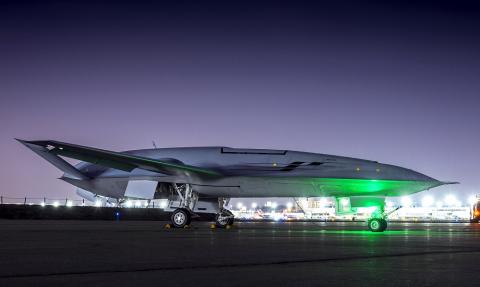
RE2 Robotics will continue developing its LIFELINE system, which is designed to help combat medics in the field, thanks to being awarded a Phase III Small Business Innovation Research (SBIR) grant from the U.S. Army SBIR office and the U.S. Army Medical Research Acquisition Activity (USAMRAA).
Described as a medical module applique kit that can easily be installed on either a manned or unmanned vehicle, the LIFELINE system allows a single person to lift and stow up to two litters (stretchers) on a vehicle to facilitate medical evacuations. According to RE2 Robotics, the system reduces the “cognitive and physical burden” on combat medics as they focus on saving lives.
Defense
Defense
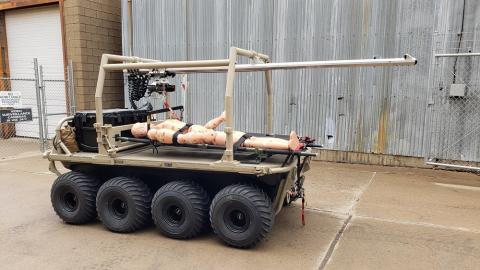
MILTON selects FlightWave Edge UAS as its light tactical drone of choice
MILTON, which is a firm that focuses on technological innovations to strengthen the capabilities of warfighters at home and in the field, has selected FlightWave Aerospace’s Edge UAS as its light tactical drone of ch
Persistent Systems selected to equip U.S. Army's backpackable robot with Wave Relay MANET
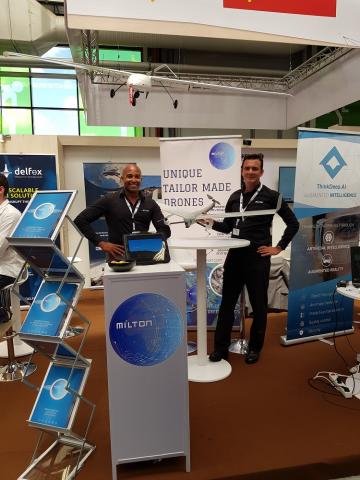
Persistent Systems has announced that it will supply the QinetiQ North America (QNA) team chosen for the U.S. Army’s Common Robotic System-Individual (CRS(I)) program of record with its Wave Relay mobile ad hoc networking technology (MANET).
Weighing less than 25 pounds, CRS(I) is a backpackable robot that dismount users can carry with sensor suites for viewing and detecting threats, which provides greater situational awareness in the field.
“We’re excited to, once again, deliver the Wave Relay MANET to the U.S. Army and help lead the drive towards networking the battlefield,” says Leslie Hulser, director of Programs for Persistent.
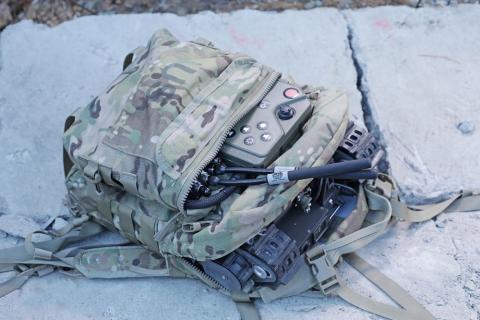
Planck Aerosystems to scale marketing efforts using recently awarded $25,000 voucher
As part of its participation in the inaugural Defense Innovation Voucher Program (DIV) Grand Prize Pitch, Planck Aerosystems, a developer of specialized drone technology, was awarded a $25,000 voucher.
Based on their accomplishments, goals and overall involvement in the program, five DIV companies were chosen to participate in the DIV Grand Prize Pitch. Planck Aerosystems was selected as the winner by a live voting audience and a panel of judges.
The other four finalists were EpiSci (EpiSys Science Inc.), Fuse Integration, Inc., GET Engineering Corporation and Trabus Technologies.

Milrem Robotics delivers THeMIS UGVs to Royal Netherlands Army
Milrem Robotics recently delivered two of its THeMIS UGVs to the Robot and Autonomous Systems (RAS) Unit of the 13th Light Brigade of the Royal Netherlands Army.
The robots were delivered for the Army's Concept Development and Experimentation Project, which examines how to take advantage of the possibilities new unmanned platforms provide for increasing combat power and decreasing risk to soldiers.
The THeMIS UGVs were delivered in transport configuration together with initial spare parts and accessories. Milrem will also provide operator and maintenance training, tactical deployment know-how and life cycle support and upgrades during a two-year period.

MIT, U.S. Air Force launching program to advance artificial intelligence
In an effort to make “fundamental advances” in artificial intelligence (AI) that could improve Air Force operations, while also addressing broader societal needs, MIT and the U.S. Air Force have signed an agreement to launch a new program called the MIT-Air Force AI Accelerator.
Leveraging the expertise and resources of MIT and the Air Force, the effort will be used to conduct fundamental research directed at “enabling rapid prototyping, scaling, and application of AI algorithms and systems.”
Building off of its five-decade relationship with MIT, the Air Force plans to invest approximately $15 million per year in the effort.
Soldiers train with first personal UAS in the U.S. Army
From April 29 to May 3, Program Executive Office Soldier (PEO Soldier) fielded the first personal UAS in the U.S. Army to soldiers of 3rd Brigade Combat Team, 82nd Airborne Division at Fort Bragg, North Carolina.
Along with inventory and taking possession of the technology, soldiers also spent the week-long fielding receiving classroom instruction on the system's capabilities, its controls, and how to operate it.

RE2 Robotics to develop dexterous, underwater robotic hand for U.S. Navy
RE2 Robotics has announced that it has received $3 million in funding to develop a dexterous, underwater robotic hand with tactile feedback for the U.S. Navy.
Known as Strong Tactile mARitime hand for Feeling, Inspecting, Sensing and Handing (STARFISH), the program will create an “advanced end-effector for mine countermeasures (MCM) and explosive ordnance disposal (EOD) missions” for U.S. Naval expeditionary forces.
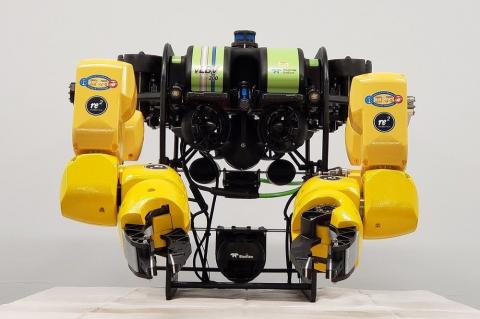
Embry-Riddle professor develops counter-UAS tech that safely grounds unauthorized UAS
Embry-Riddle Aeronautical University and Drone Defense Systems LLC have announced a licensing agreement to commercialize new technology that detects and commandeers unauthorized UAS, and guides them to a safe landing.
Developed by Embry-Riddle faculty member Dr. Houbing Song, the technology suggests a “safe, affordable” way to neutralize rogue UAS without having to shoot them down or force them to crash-land. The technology allows for this to be done even in civilian settings such as large outdoor entertainment arenas and airports.
According to Dr. Stephanie A. Miller, executive director of technology transfer for Embry-Riddle’s Research Park, Drone Defense Systems has received exclusive rights to commercialize the technology under the licensing agreement.
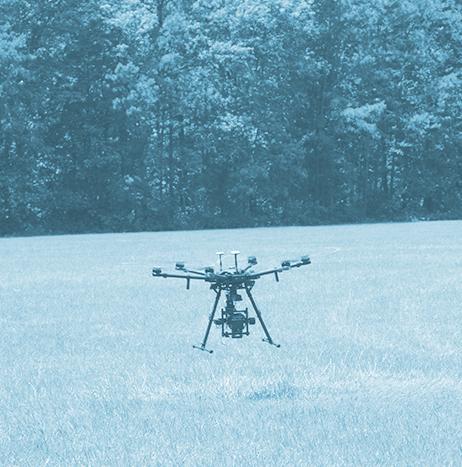
Aitech to supply key mission interface systems for MQ-25 unmanned aerial refueling program
Boeing has awarded Aitech Defense Systems Inc. a contract to supply key mission interface systems for the MQ-25 unmanned aerial refueling program.
Under the contract, Aitech will provide Boeing with an advanced, customized remote I/O interface controller based on the commercial-of-the-shelf (COTS) Ai-RIO remote interface product.
“Ensuring the success of the unmanned MQ-25 Engineering and Manufacturing Development (EMD) test aircraft requires precision electronics and close-knit cooperation among the companies involved,” explains Moshe Tal, CEO, North America of Aitech Group.