In an effort to provide customers who are revolutionizing advanced driver assistance systems (ADAS) and autonomous vehicle research and development with advanced storage solutions, Qumulo, a provider of enterprise-proven hybrid cloud file storage, has partnered with AutonomouStuff, a supplier of component
Research
Research
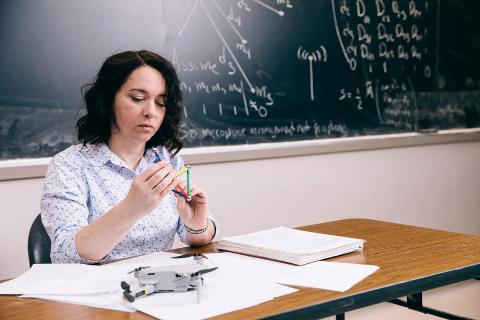
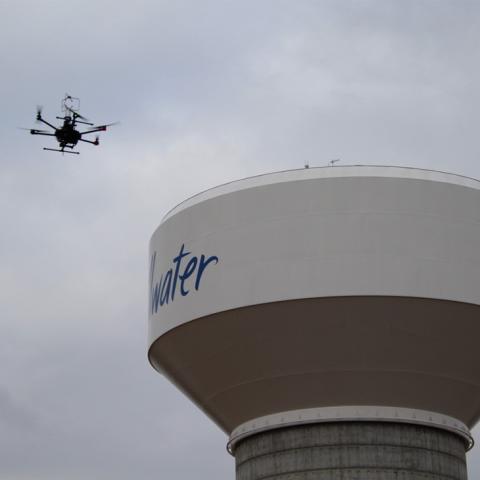
Mathematicians equip drone with speaker and microphones to make it echolocate like bats
Mathematicians have discovered that a drone equipped with microphones and a speaker—with the help of algebra and geometry—can echolocate similarly to how bats use echolocation to orient themselves with their surroundings.
According to Purdue University associate professor of mathematics and electrical and computer engineering Mireille “Mimi” Boutin, this signal processing research could have potential applications for people, underwater vehicles and even cars.
Advanced aerial mobility holds promise, challenges for US aviation leadership, report says
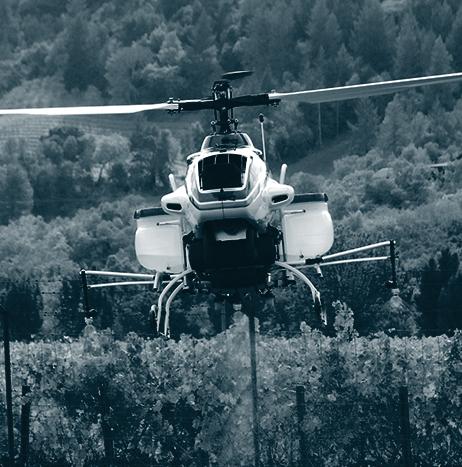
Advanced aerial mobility — including flying taxis and aerial package delivery — gives the United States a unique opportunity to continue its historic leadership in aerospace, says a new report from the National Academy of Sciences, Engineering and Medicine.
In 2018, NASA, which has been a pioneer of urban air mobility, asked the national academy to review the topic. The academy says while the study was underway, NASA and the aviation community began using the term "advanced aerial mobility," of which urban air mobility was the most challenging part.
MIT researchers enables soft robotic arm to understand its configuration in 3D space using "sensorized" skin
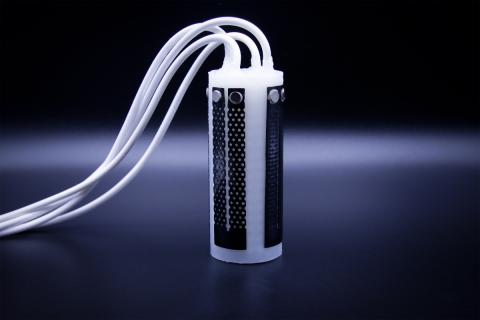
MIT has announced that for the first time, its researchers have leveraged just motion and position data from the “sensorized” skin of a soft robotic arm to enable it to understand its configuration in 3D space.
MIT notes that soft robots made from highly compliant materials—similar to those found in living organisms—are being championed as safer, and more adaptable, resilient, and bioinspired alternatives to traditional rigid robots. Giving these deformable robots autonomous control is considered a “monumental task,” though, because at any given moment, they can move in a virtually infinite number of directions, which makes it hard to train planning and control models that drive automation.
Oklahoma State University drone program awarded $1.49 million grant
As part of its National Robotics Initiative 2.0 program, the National Science Foundation (NSF) has awarded Oklahoma State University’s (OSU) drone program a $1.49 million grant.
Awarded to OSU researchers He Bai, Rushikesh Kamalapurkar, Jamey Jacob and Matt Vance and former faculty member Balaji Jayaraman, the grant, which is the only grant of its kind awarded in Oklahoma, will be used to fund research that uses UAS technology to estimate wind conditions in differing environments.
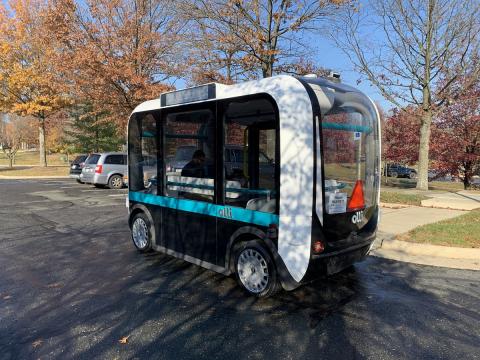
Robotic Research granted permission to operate Olli autonomous shuttle in Maryland
The Maryland Department of Transportation (MDOT) Motor Vehicle Administration recently granted autonomy and robotic technologies provider Robotic Research LLC permission to operate Local Motors’ Olli autonomous shuttle between its two office locations in Clarksburg, Maryland.
The Olli shuttle is driven by Robotic Research’s AutoDrive technology.
After a thorough review of the technology with Montgomery County government, law enforcement, fire/EMS, and public transportation, MDOT granted Robotic Research a Highly-Automated Vehicle (HAV) permit for the Olli shuttle, which will allow the company to continue its research and testing of autonomous vehicle capabilities and technology directly on a half-mile stretch of public roadway in Montgomery County.
TomTom, University of Amsterdam launch research lab focused on developing HD maps for self-driving vehicles
TomTom (TOM2) and the University of Amsterdam (UvA) have announced the launch of the Atlas Lab, which is a new public-private research lab that will focus on using artificial intelligence (AI) to develop “advanced, highly accurate and safe” high definition (HD) maps for self-driving vehicles.
TomTom and UvA are working together to research how AI can be used to create HD maps suitable for all levels of autonomous driving.
“At the UvA we are already doing research on automated recognition of items in images and videos. Yet the recognition of items and creation of HD maps in highly complex situations like a moving car, is still a huge challenge,” explains Theo Gevers, one of the scientific directors at Atlas Lab.

State Farm joins Arizona's Institute of Automated Mobility
State Farm has become the first insurance company to join the Institute of Automated Mobility (IAM), a consortium that is overseen by the Arizona Commerce Authority.
Established by executive order in October 2018 by Arizona Governor Doug Ducey, IAM is a collaborative effort involving experts from private industry, government and academia that are working together to “advance research in automated vehicle science, safety and policy.”
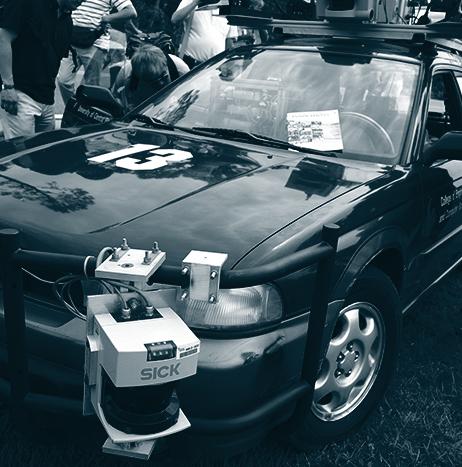
Florida Polytechnic University awarded grant to develop simulation facility for connected and autonomous vehicles
Thanks to a $350,000 grant from the National Science Foundation, Florida Polytechnic University will develop a large-scale Hardware-in-the-Loop (HiL) simulation facility for connected and autonomous vehicles (CAVs), which it expects to be operational by the beginning of the spring semester in 2020.
According to Florida Polytechnic, HiL simulation is a “robust gateway” for the development and testing of complex real-time embedded systems.
“I thank the National Science Foundation for their support of Florida Polytechnic University’s research and development of autonomous vehicle technology,” says Florida Sen. Marco Rubio.
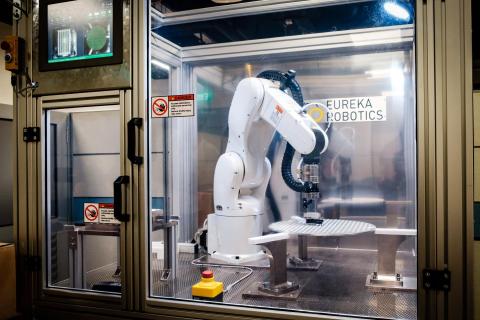
Eureka Robotics unveils robot with the precision and dexterity of a human hand
Eureka Robotics has unveiled Archimedes, a new robot capable of picking up delicate optical lenses and mirrors with the care and precision of a human hand.
A robotics technology start-up from Nanyang Technological University, Singapore (NTU Singapore), Eureka says Archimedes can slot lenses and mirrors of different sizes into a custom loading tray to prepare them for coating.
Archimedes features a six-axis robot arm controlled by algorithms that use Artificial Intelligence (AI) to plan its motion and how much force to exert in its grip, creating a system that can mimic the dexterity of human fingers and the visual acuity of human eyes.