
In an effort to advance autonomous vehicle and infrastructure research, Curiosity Lab at Peachtree Corners has partnered with Georgia Tech and Delta Air Lines.
The entities say that the collaboration between Curiosity Lab and Delta will provide Georgia Tech researchers with “critical seed funding.” Researchers will also have access to the Lab’s 1.5 mile autonomous vehicle test track and living laboratory.
Some of the features of Curiosity Lab include dedicated fiber, smart poles and a network operations center for researchers to track and trend data from connected internet-of-things (IoT) devices.
Research
Research

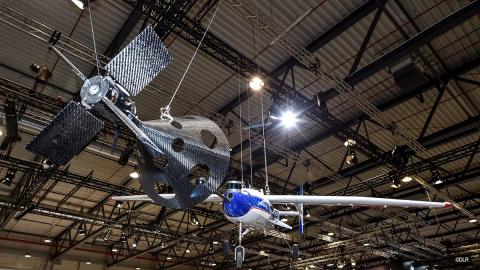
Drone Rescue Systems GmbH supports FALCon research project
Drone Rescue Systems GmbH is supporting the European research project known as Formation flight for in-Air Launcher 1st stage Capturing demonstration (FALCon).
Research is being conducted under the leadership of DLR on how launch vehicles can be returned to the launch site as efficiently as possible for re-use.
“We are proud to be part of the FALCon research project together with five international partners and DLR as part of HORIZON2020 (EC grant 821953), the EU’s largest research and innovation program to date,” says Andreas Ploier, CEO of Drone Rescue Systems GmbH.
“The capture and towing of rocket stages in flight, i.e. an autonomous and safe landing, is a particularly interesting topic for us as a manufacturer of parachute safety solutions.”
ecoSUB robot to perform Arctic research mission considered too dangerous for humans
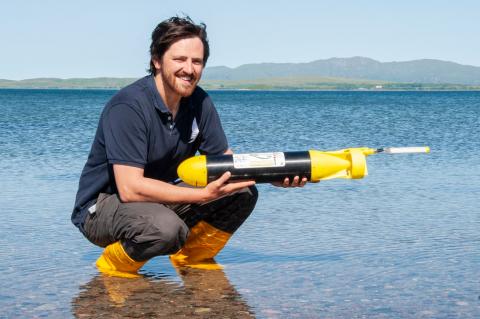
In an effort to help scientists understand the true extent of melting from Arctic glaciers, an ecoSUB underwater robotic vehicle will perform an Arctic research mission that is considered too dangerous for humans.
The ecoSUB will be deployed to the foot of a melting glacier in Arctic Norway. The goal of the mission is to learn more about the effect of meltwater on a process called ‘calving’, which causes huge chunks of ice to break off the glacier edge.
DroneResponders' research offers insight into public safety drone programs
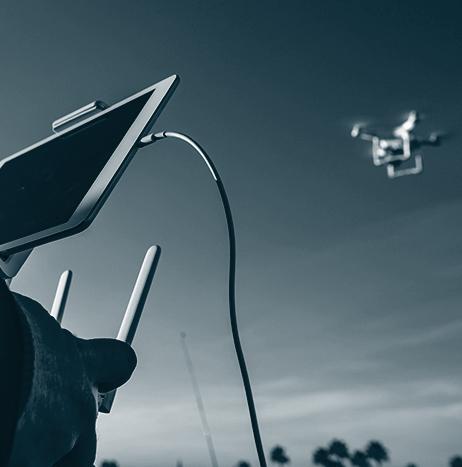
DroneResponders, a non-profit program that supports public safety UAS, has unveiled a new report called the 2019 Mid-Year Public Safety UAS Report, which offers insight into how new public safety UAS programs are developing, and takes a look at the challenges that first responders who are using this techn
MIT researchers develop technique for driverless cars and robots to spot objects amid clutter
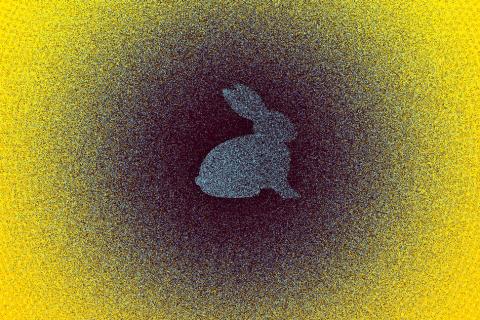
Researchers at MIT say that they have developed a technique that allows robots to quickly identify objects hidden in a three-dimensional cloud of data.
According to the researchers, sensors that collect and translate a visual scene into a matrix of dots help robots “see” their environment. The researchers note, though, that conventional techniques that try to pick out objects from such clouds of dots, or point clouds, can do so with either speed or accuracy, but not both.
Carnegie Mellon University, Argo AI establish center for autonomous vehicle research
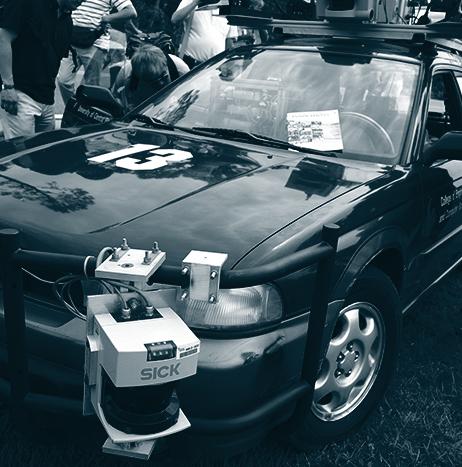
Carnegie Mellon University (CMU) and Argo AI have announced a five-year, $15 million sponsored research partnership that will result in Argo AI funding research into advanced perception and next-generation decision-making algorithms for autonomous vehicles.
CMU and Argo AI will establish the Carnegie Mellon University Argo AI Center for autonomous vehicle research. Through advanced research projects, the center will seek to help overcome the hurdles associated with enabling self-driving vehicles to operate in various real-world conditions.
“We are thrilled to deepen our partnership with Argo AI to shape the future of self-driving technologies,” says CMU President Farnam Jahanian.
Raytheon, United Technologies merge to form Raytheon Technologies Corporation
Raytheon and aerospace company United Technologies have entered into an agreement to combine in an all-stock merger of equals, resulting in a combined company called Raytheon Technologies Corp.
The transaction will create what the companies call a “premier systems provider with advanced technologies to address rapidly growing segments within aerospace and defense.” Together, the companies say that they will offer a complementary portfolio of platform-agnostic aerospace and defense technologies.

Purdue University researchers develop flying robots that emulate hummingbirds
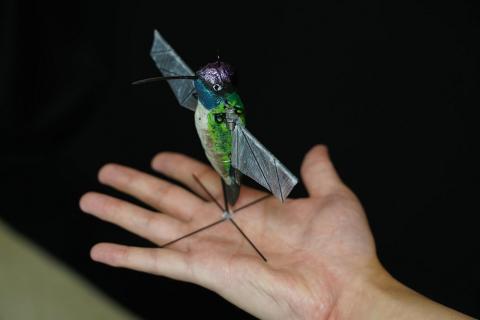
Purdue University researchers have engineered flying robots that behave like hummingbirds, and could ultimately go to places where UAS can't.
The robots are trained by machine learning algorithms based on various techniques the bird uses naturally every day, meaning that after the robot learns from a situation, it “knows” how to move around on its own like a hummingbird would, such as knowing when to perform an escape maneuver.
The robot can also teach itself new tricks, thanks to the combination of artificial intelligence with flexible flapping wings. For example, the robot can’t see as of right now, but it senses by touching surfaces. Each touch alters an electrical current, which the researchers realized they could track.
Grand Sky, Harris create BVLOS 'super corridor'
Grand Sky Business and Aviation Park and Harris Corp. have announced that they have collaborated to enable the country’s first and largest UAS airspace to support beyond visual line of sight (BVLOS) flight operations, as well as UAS Traffic Management (UTM) research.
Described as a “super corridor,” the BVLOS corridor, which stretches up to 100 miles, is the “most technologically sophisticated UAS airspace supported by multiple and redundant systems for cooperative and non-cooperative surveillance,” according to Grand Sky and Harris.
A variety of UAS BVLOS applications are possible thanks to these surveillance capabilities, including in oil and gas, public safety and package deliveries.
Black Swift Technologies' S2 UAS to be deployed in Greenland for atmospheric research studies
Black Swift Technologies (BST) has announced that its Black Swift S2 UAS will be used to conduct high-altitude high-latitude atmospheric research studies in Greenland, as part of the international East Greenland Ice-Core Project (EastGRIP).
With support from the National Science Foundation (NSF), the work will be conducted by the Institute of Arctic and Alpine Research (INSTAAR), which is part of the University of Colorado Boulder.
The Black Swift S2 will operate at temperatures as low as -20 degrees Celsius or colder, and will be flying at altitudes up to 14,000 feet— right on the edge of commercial airspace, Black Swift notes—to make routine atmospheric measurements.