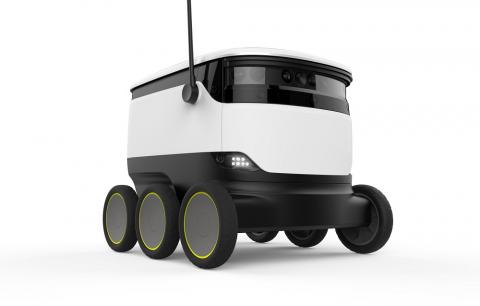
Realtime Robotics, the developer of responsive motion planning for industrial robots and autonomous vehicles, has raised $11.7 million in Series A funding.
This capital will be used for several efforts, including accelerating the development of more commercial product releases, and growing the Realtime Robotics team to support key customers and partners across the world.
“The commitment garnered from strategic investors reflects both the need and the demand for smarter robots,” says Peter Howard, CEO, Realtime Robotics.
Robotics
Robotics
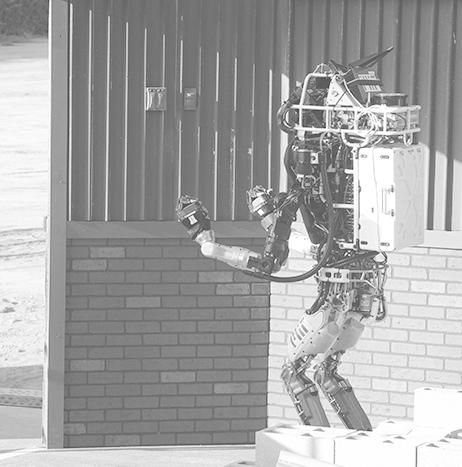
Textron Systems, Howe & Howe and FLIR Systems unveil Ripsaw M5 Robotic Combat Vehicle
During the 2019 AUSA Annual Meeting & Exposition in Washington, D.C., Textron Systems, Howe & Howe and FLIR Systems debuted the Ripsaw M5 Robotic Combat Vehicle (RCV).
The Team Ripsaw offering for the U.S. Army’s RCV program, the Ripsaw M5, which is described as a “low-risk, ready-now solution,” is capable of performing a variety of missions thanks to its aggressive mobility and modularity.
“Bringing together Howe & Howe, Textron Systems and FLIR Systems really represents a dream team,” says President & CEO Lisa Atherton of Textron Systems.
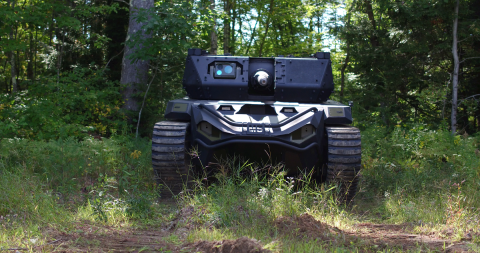
Eureka Robotics unveils robot with the precision and dexterity of a human hand
Eureka Robotics has unveiled Archimedes, a new robot capable of picking up delicate optical lenses and mirrors with the care and precision of a human hand.
A robotics technology start-up from Nanyang Technological University, Singapore (NTU Singapore), Eureka says Archimedes can slot lenses and mirrors of different sizes into a custom loading tray to prepare them for coating.
Archimedes features a six-axis robot arm controlled by algorithms that use Artificial Intelligence (AI) to plan its motion and how much force to exert in its grip, creating a system that can mimic the dexterity of human fingers and the visual acuity of human eyes.
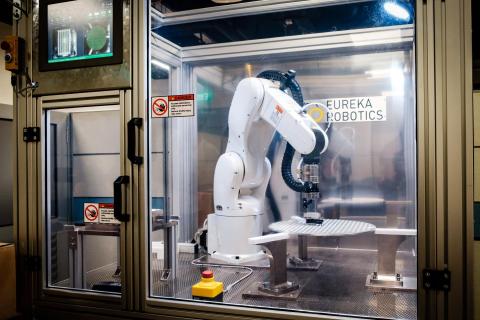
Diligent Robotics launches hospital robot assistant into market
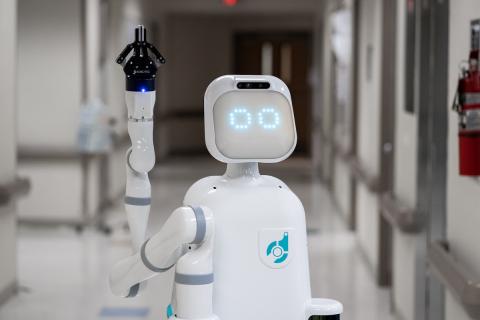
Diligent Robotics has launched its first product, a hospital robot assistant called Moxi, out of beta into market. The robot was expected to be introduced into a hospital in Texas on Wednesday, Oct. 2.
An artificial intelligence company that is building “socially intelligent robots” that help people with their jobs, Diligent Robotics has also announced that it has raised $3 million in seed funding, which the company will use to support its launch of Moxi into its first full-time hospital customers. Funding will also be used to support the company’s continued investment in product strategy and development in both hardware and software.
Built Robotics raises $33 million for autonomous construction technologies
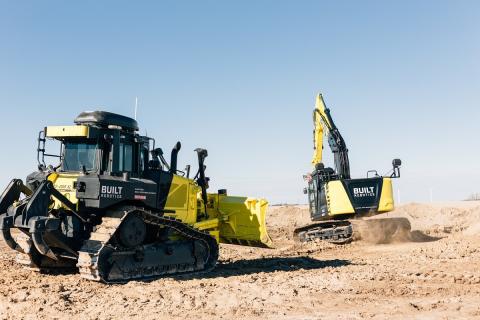
Built Robotics, a developer of technology that transforms construction equipment into fully autonomous robots, has announced the close of a $33 million Series B.
Existing equipment from any manufacturer can be equipped with Built Robotics’ automated guidance systems, while still maintaining the ability to have complete manual operation. The upgraded equipment can perform a variety of tasks fully autonomously including digging trenches, excavating foundations, and grading building pads.
A web-based platform manages the autonomous fleet, which allows the robots to be supervised by remote equipment operators.
Autonomous farming robot developer FarmWise raises $14.5 million
FarmWise, a developer of autonomous farming robots, has raised $14.5 million in a Series A funding round. FarmWise will use the funding to grow its robotic engineering and operation teams, and to boost research and development efforts on plant-level detection and actuation capabilities.
Autonomous and enabled by artificial intelligence, FarmWise’s robots are designed to solve some of the most difficult challenges encountered by farmers. The robots perform a variety of farming functions, beginning with weeding, and providing personalized care to every plant they touch.

Simbe Robotics announces equity and inventory financing that will help expand its fleet of Tally robots
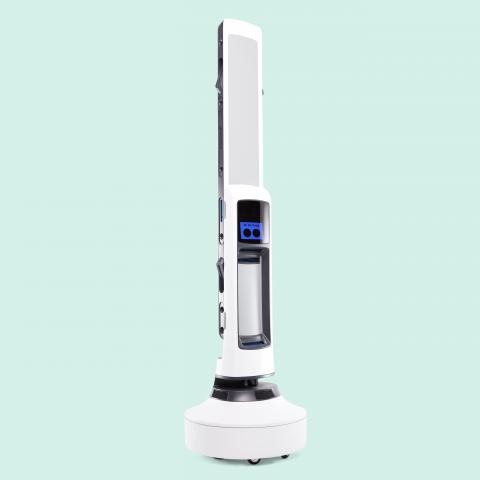
Known for its Tally robot, Simbe Robotics has announced two separate funding deals—a $26 million Series A, and an inventory financing agreement with SoftBank Robotics, which will enhance the company’s ability to “increase efficiencies in production and deployment
Harvard researchers develop underwater gripper that can safely catch and release jellyfish for research purposes
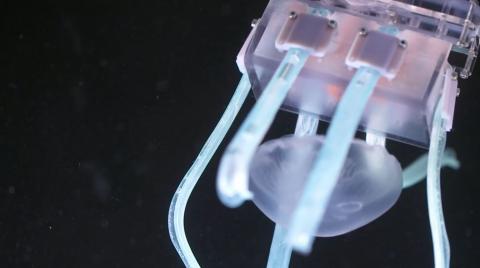
Researchers at Harvard’s Wyss Institute for Biologically Inspired Engineering, the Harvard John A. Paulson School of Engineering and Applied Sciences (SEAS), and Baruch College at City University of New York have developed an “ultra-soft, underwater gripper” that could catch and release jellyfish without harm.
According to the researchers, the gripper would help scientists collect and study an animal that has yielded impressive scientific discoveries such as green fluorescent protein that scientists now use to study gene expression, and life-cycle reversal that could play an integral role in combating aging.
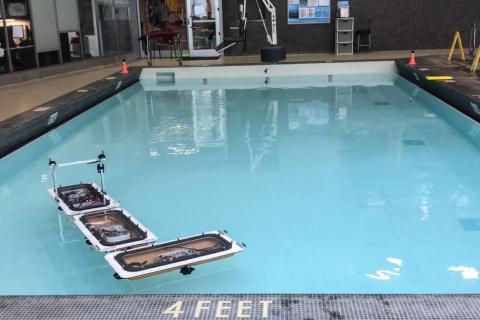
MIT says that its autonomous boats are now capable of shapeshifting
MIT has announced that its fleet of robotic boats has been updated so that it can now “shapeshift” by autonomously disconnecting and reassembling into various configurations to form floating structures in Amsterdam’s many canals.
Described as “rectangular hulls equipped with sensors, thrusters, microcontrollers, GPS modules, cameras, and other hardware,” the autonomous boats are being developed by MIT and the Amsterdam Institute for Advanced Metropolitan Solutions (AMS Institute), as part of an ongoing project known as “Roboat.”
Starship Technologies to use latest funding to expand autonomous delivery service to 100 university campuses
Starship Technologies, known for its autonomous delivery service, has announced it has closed $40 million in Series A funding.
With plans to use this latest round of funding to “rapidly expand its services to more university campuses,” Starship has also announced plans to expand its service to 100 university campuses in the next two years.
“This new investment will see Starship expand onto more campuses as we head towards a goal of offering our service to over one million students,” says Lex Bayer, CEO of Starship Technologies.