
Robotics
Robotics


Aveox unveils Ultimate Torque line of brushless motors and stator/rotor sets
Aveox Inc., a developer of Brushless DC Motors, Controllers and Power Conversion Electronics, has launched its “Ultimate Torque” (UT) line of brushless motors and stator/rotor sets, which can be used for applications such as UAS propulsion and generation and robotics.
According to Aveox, the UT direct drive Torque Motors are characterized by very high motor constants (Kt ∕ ), low inertia and low weight. The company adds that proprietary designs created using Finite Element Analysis software have been optimized to deliver “high peak and continuous” torque while minimizing cogging torque and reducing weight.

FLIR Systems selected to produce Common Robotic System - Heavy for U.S. Army
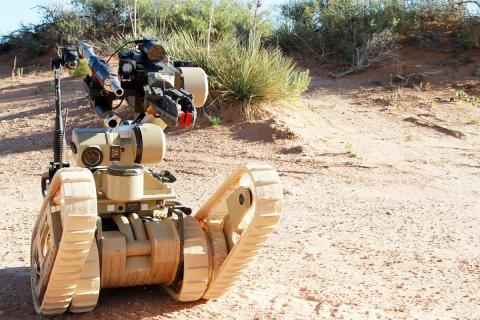
FLIR Systems has been selected by the U.S. Army to produce the Common Robotic System – Heavy (CRS-H).
CRS-H is designed to bolster the protection of EOD Soldiers by increasing standoff to interrogate hazardous devices in various military operations, as well as in homeland defense applications.
The value of the contract is $109 million. The capability is expected to be delivered beginning in the third quarter of Fiscal Year 2020.

University of Houston welcomes Starship Technologies' autonomous delivery robots to its campus
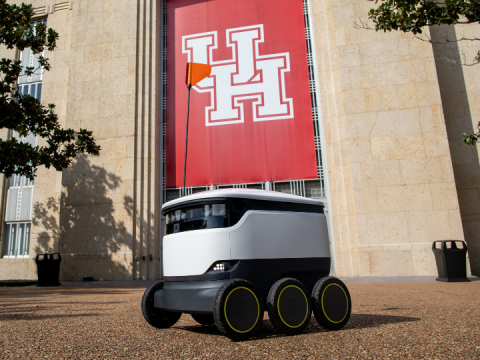
The University of Houston (UH) has become the first institution of higher education in the state of Texas to offer robotic food deliveries on its campus.
The result of a partnership between the University of Houston and Chartwells Higher Education, which manages UH Dining, the robotic delivery service utilizes Starship Technologies’ autonomous delivery robots.
“This revolutionary delivery method will make it more convenient for the campus community to take advantage of our diverse dining program from anywhere on campus while expanding the hours of operation,” says Emily Messa, UH associate vice president for administration.
MIT engineers develop technique that allows robots to find front door without having to map an area in advance
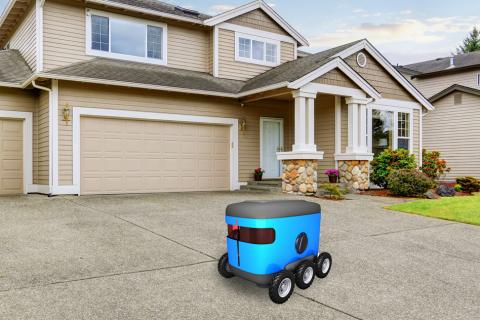
MIT engineers have developed a navigation method that helps last-mile delivery vehicles find the front door without having to map an area in advance.
With the approach developed by MIT engineers, a robot would use clues in its environment to plan out a route to its destination, which wouldn't be described as coordinates on a map, but instead could be described in general semantic terms such as “front door” or “garage.”
So in instances where a robot is charged with the task of delivering a package to someone's front door, it wouldn’t take the robot long to explore the property before identifying its target. The robot also wouldn’t have to rely on maps of specific residences.
University of Wisconsin-Madison launching autonomous delivery robot service
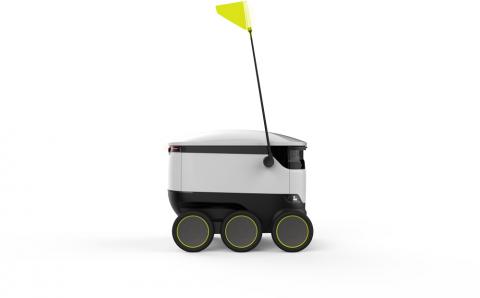
The University of Wisconsin-Madison’s University Housing Dining & Culinary Services is launching a new food delivery service utilizing Starship Technologies’ autonomous delivery robots.
“Our students are juggling more than they ever have before and we are always looking for inventive ways to support their campus dining needs,” says Peter Testory, director of University Housing Dining & Culinary Services.
“This delivery service allows us to reach them in a whole new way with made-from-scratch meals we offer from our dining markets. This added convenience and flexibility of dining for students allows us to provide an affordable option for those on campus.”
GEODIS using Vecna Robotics' robots to transport pallets within distribution center
Autonomous technology developer Vecna Robotics has partnered with supply chain operator GEODIS to equip a GEODIS distribution center in Dallas, Texas with autonomous platforms.
The distribution center in Dallas is currently using Vecna robots and workflow technology to automate the horizontal transport of inbound pallets from a staging area to put-away storage within the 150,000 square foot distribution center. The pallets were previously picked up, delivered and put away using human labor and manual trucks.
Robotics company Toggle to use latest funding to further development of technology
A startup that uses robotics and automation to optimize the fabrication and assembly of rebar called Toggle has announced that it has raised $3 million in seed-funding.
Toggle will use the funding to expand its team, and continue the development of its robotics technology.
“Global urbanization is driving demand for ever larger and more complex urban highrise and civil infrastructure construction. At Toggle we believe that part of the solution to delivering these projects will be through leveraging robotics and automation to multiply the productivity of labor,” explains Toggle CEO, Daniel Blank.