
The U.S. Army's Armament Research, Development and Engineering Center (ARDEC) has awarded Robotic Research a five-year $50 million contract for Autonomous Unmanned Systems Teaming & Collaboration (AUSTC) for the Counter-WMD Mission in challenging subterranean and other environments.
Robotic Research is a Maryland-based engineering and technology company that provides autonomy software and robotic technology to several Federal and commercial customers.
AUSTC builds on prior and ongoing Robotic Research Small Business Innovative Research contracts—also with ARDEC—in support of the Mobile Autonomous Counter-WMD System, Increment B (MACS-B).
Robotics
Robotics
Queensland University of Technology and others collaborate to develop underwater robot reef protector
The Queensland University of Technology (QUT), Google and the Great Barrier Reef Foundation have collaborated to develop an underwater drone that can not only keep watch on reef health, but also accurately identify and inject the crown-of-thorns starfish, which can be especially dangerous.
Known as RangerBot, the underwater robotic system is ready to be tested on the Great Barrier Reef.
RangerBot can “see” underwater thanks to its high-tech vision system. Operated using a smart tablet, RangerBot won the 2016 Google Impact Challenge People’s Choice prize, allowing QUT roboticists to develop innovative robotics technology into a real-life reef protector.

Robots help improve social skills of children with Autism Spectrum Disorder, Yale study shows
The social skills of children with Autism Spectrum Disorder (ASD) greatly improved after a month of working with robots, according to a study led by Yale researchers.
The robots, modeling eye contact and other social behaviors, guided the children through storytelling and interactive games designed to promote social skills such as emotional understanding, taking turns, and seeing things from others’ perspectives.
Children from 12 participating families participated in the study, which was led by Brian Scassellati, professor of computer science.
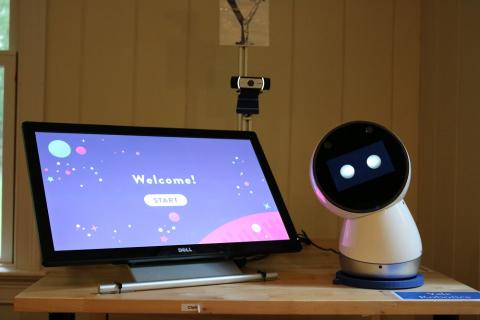
Weekend Roundup
This Week in the Unmanned Systems and Robotics World
UAS footage captured by two videographers shows the aftermath of a deadly earthquake that hit the island of Lombok, Indonesia. The footage was shared on Instagram by a charity called Project Karma, which is working to supply earthquake relief, and is raising money to help those who lost their homes and possessions. (Metro)
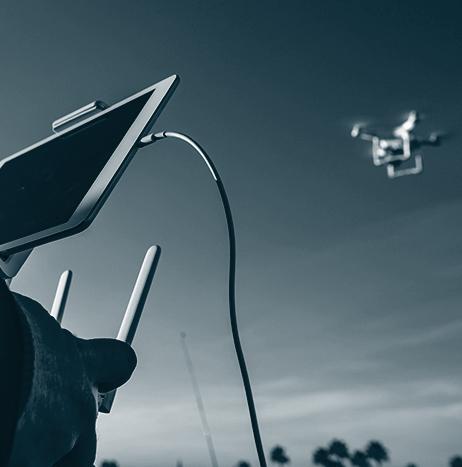
Embry-Riddle alumnus turns doodle drawing into award-winning autonomous robotic fish
A recent graduate of Embry-Riddle Aeronautical University named Jefferson Talbot has turned one of his doodle drawings into an autonomous robotic fish created with 3D printing technology, which he hopes can be used in the pet fish industry, and to help researchers who need a close-up view of underwater ecosystems.
Back in 2016, Talbot started drawing a skeleton of a fish in the margins of his notebook during class. Last summer, after watching his roommate “carefully lug” around his fish and bowl whenever leaving the dorm for a few days so the fish would stay healthy, Talbot came up with the idea of a robotic fish, as he thought that a robotic fish would be a lot easier to take care of.
Gecko Robotics seeks to save lives at power plants with its wall-climbing robots
Via TechCrunch, Pittsburgh, Pennsylvania-based Gecko Robotics, which is developing wall-climbing robots to help save lives at power plants in the United States, has announced that it has secured $7 million from a group that includes Founders Fund, Dallas Mavericks’ owner Mark Cuban, and Y Combinator.
Gecko Robotics’ robots are considered “an important part of ensuring safety in industrial and power plant facilities,” being that they can go ahead of humans to check for potential hazards.
Mobilicom's SkyHopper tech for UAS and robotics completes first year of activity
After launching in August 2017, Mobilicom Ltd.’s SkyHopper technology has completed its first year of activity.
A provider of “global mission-critical-communications” systems, Mobilicom describes SkyHopper as a “holistic solution” for commercial and industrial UAS and robotics.
In its first year of activity, SkyHopper was sold to, and successfully operated by, customers in 14 different countries, and integrated with 45 UAS manufacturers.
“I am proud to say that SkyHopper has exceeded its aggressive first-year goals plan, and evolved from concept to business success in only one year,” says Mobilicom’s CEO, Oren Elkayam.
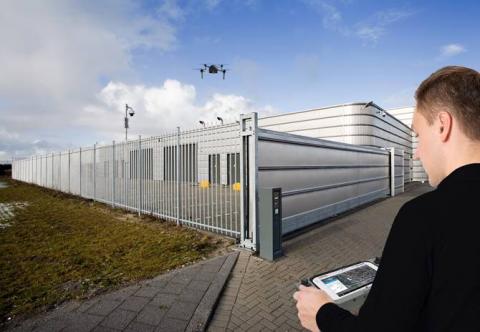
Minority Serving Institutions to use grants from NASA to focus on UAS and robotics-related education
In an effort to build the interest, skills and knowledge necessary for K-12 students to pursue science, technology, engineering, and mathematics (STEM) careers, NASA's Minority University Research and Education Program (MUREP) Aerospace Academy (MAA) is providing nearly $2.3 million in grants to seven Minority Serving Institutions (MSIs).
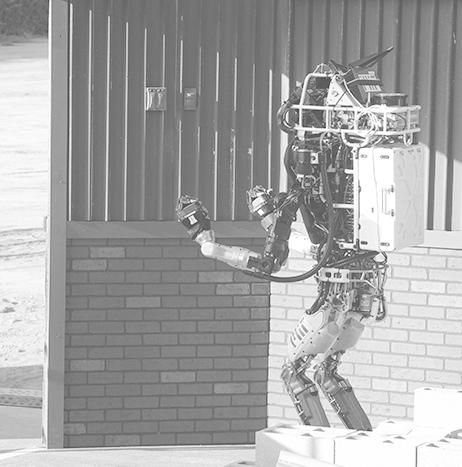
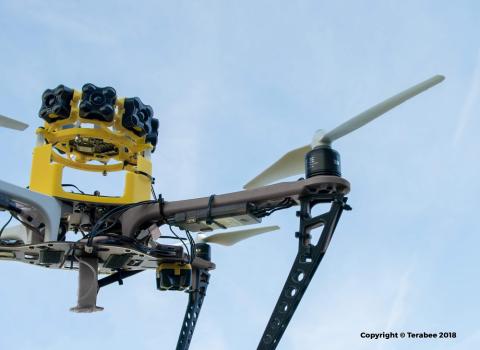
Terabee's new TeraRanger Tower Evo ideal for collision avoidance on UAS and robots
Terabee has announced TeraRanger Tower Evo, its new generation 360 degree solid-state LiDAR.
Lightweight, compact and ideal for collision avoidance on UAS and robots, TeraRanger Tower Evo has up to eight detection zones monitored simultaneously and at high-speeds.
After using the TeraRanger One sensors to launch its first-generation Tower in 2016, Terabee is now using the latest TeraRanger Evo sensors for this new version. As a result, the maximum range indoors has increased from 14 meters up to 60 meters, while outdoors in strong sunlight, 20 to 30 meters in range is possible.
Lockheed Martin selected as Integrated Systems Developer for US Army's TARDEC ExLF program
The U.S. Army's Tank Automotive Research, Development and Engineering Center (TARDEC) has selected Lockheed Martin as the Integrated Systems Developer for its Expedient Leader Follower (ExLF) program.
Under this role, Lockheed Martin will lead a three-year effort to develop, integrate and test “unmanned prototype systems” that support leader/follower convoy activities within an asymmetric threat environment.
Using the prototypes developed in the ExLF program, soldiers will conduct operational technology demonstrations to not only establish operating procedures, but also shape future programs of record.