This Week in the Unmanned Systems and Robotics World
The Airborne Law Enforcement Association (ALEA) has announced the adoption and release of the Standards for Public Safety Small Unmanned Aircraft System (sUAS) Programs, which were developed by the Public Safety Aviation Accreditation Commission (PSAAC), “under contract to ALEA for use by the public safety aviation community.” Public safety agencies considering using small UAS as a part of their operations are encouraged to use these standards as a guiding document. Public safety agencies already using small UAS as a part of their operations are encouraged to “review these standards and perform an internal gap analysis to determine their compliance with industry best practices.” (ALEA)
Robotics
Robotics
U.S. Navy selects RE2 Robotics to develop an autonomous robotic cargo handling system
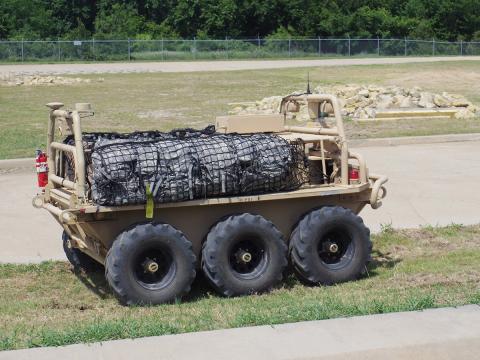
Being that personnel are still responsible for manually loading and unloading cargo from an air vehicle for cargo missions today, the U.S. Navy has tasked RE2 Robotics with developing an Autonomous Robotic Cargo Handling (ARCH) system.
This system will be demonstrated in concurrence with the Autonomous Aerial Cargo Utility System (AACUS) equipped UH-1H Optionally Piloted Aircraft (OPA), which will provide the ability to deliver supplies autonomously.

Deadline for XPONENTIAL 2018 Speaker Proposals is Friday, Oct. 20
FOR IMMEDIATE RELEASE: Oct. 10, 2017
Contact: Tom McMahon, tmcmahon@auvsi.org, (571) 255-7786
Milrem Robotics developing new robotic systems for defense applications
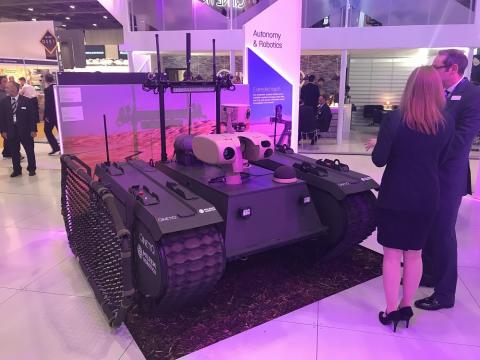
In an effort to give soldiers new robotic systems for defense applications, Milrem Robotics, which is a provider of defense technologies, will expand the capabilities of its THeMIS UGV.
One of Milrem Robotics’ goals is to enhance the situational awareness of warfighters, so several systems are being developed, including the TITAN SENTRY concept, which was developed in collaboration with QinetiQ.
University of Maryland opens outdoor flight laboratory for testing UAS and robotics
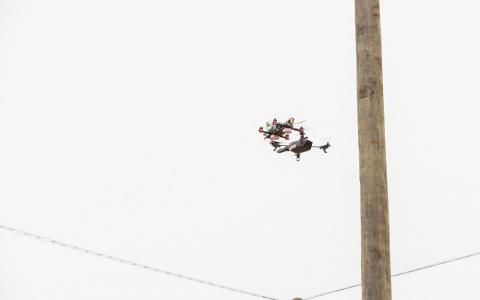
The University of Maryland (UMD) A. James Clark School of Engineering has opened the only “university outdoor flight laboratory” for testing UAS in the D.C.-Maryland-Virginia region, and it is located just minutes away from the main College Park campus in the UMD Discovery District.
Known as the Fearless Flight Facility (F3), the facility, which is netted, will “serve as a catalyst for innovation in the areas of flight control, sensing, autonomy, collaboration, and counter-UAS.”
Drones, Droids and Unmanned Systems
Please join us at the beautiful Kah-Nee-Ta Resort and Spa for the Pacific Northwest's premier unmanned systems and robotics event. Celebrate the grandeur of central Oregon, enjoy superb hospitality, hear from industry leadership, see live UAS demonstrations and engage in awesome networking opportunities! We hope you will choose to support our 2nd Annual AUVSI Cascade Chapter STEM Benefit Dinner, the proceeds from which go to support STEM activities in Oregon and Washington. You'll even have a chance to take home a DJI drone! And please join us on Friday morning for our workshop on Part 107 to hear about common challenges for Remote Operators and then head for the Kah-Nee-Ta Golf Course to round out the conference activities. We look forward to seeing you there!
UAVOS launches projects for industrial use of UAS in Eastern Europe
UAVOS Inc., which a Mountain View, California-based developer of UAS and robotics, has announced the launch of several projects for the industrial use of UAS in Eastern Europe, which will feature UAVOS-developed UAS.
By introducing unmanned technologies, this long-term initiative by UAVOS will look to ultimately “increase the safety of inspection activities” by using robotic technologies to replace traditional methods of inspection in the oil, gas and energy sectors.
Another objective of the initiative is to reduce the budget that is typically spent by oil, gas and energy companies for “monitoring the use of ground vehicles, manpower, and manned equipment.”
Endeavor Robotics to provide improved UGV capabilities for the US Government
Endeavor Robotics is responding to an order worth more than $15 million for the US Government for upgrades and accessories to support fielded robot systems.
The company says that it is prepared to “rapidly deliver all items and remains dedicated to providing solutions to the US Government and global customers” as quickly as possible due to the “lifesaving nature of the company’s products.”
“We are a highly responsive, customer-focused, agile company that stands positioned to rapidly provide upgrades, accessories, and new platforms whenever called upon by our customers,” says CEO Sean Bielat.
From Unmanned Systems Magazine: Strategy Lays Out Army Plan for Moving Forward with Unmanned Ground Vehicles
The United States is moving to a new generation of military unmanned ground vehicles, but it won’t be easy — the effort faces technical and doctrinal challenges along the way.
The current generation of about 7,000 UGVs of various types has proven its worth in Iraq and Afghanistan, where the robots have been used in more than 125,000 missions to identify objects, clear routes, and locate and defuse improvised explosive devices. More than 11,000 IEDs have been found and rendered ineffective by Army, Navy and Marine Corps teams, the Pentagon says.